How to Repot a ZZ Plant: A Stress-Free Step-by-Step Guide
By Sara Linwood, houseplant writerLast updated
Repot a ZZ plant every 2 to 3 years, ideally in spring, moving it into a pot only 1 to 2 inches (2.5 to 5 cm) wider using a chunky, fast-draining mix of 4 parts potting mix, 3 parts pumice, and 3 parts orchid bark. The rhizomes already store plenty of water, so the goal is airflow around the roots, not a bigger reservoir of soil.
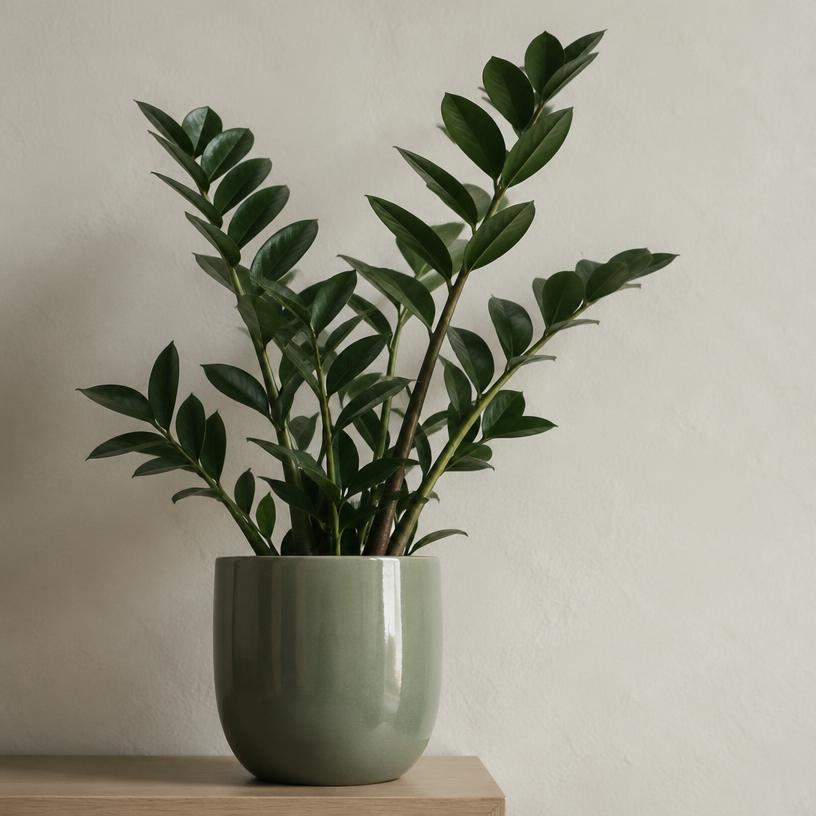
When should you repot a ZZ plant?
ZZ plants (Zamioculcas zamiifolia) are among the slowest growing houseplants you can own, and that slow pace means they rarely need repotting. Most ZZ plants only need a new pot every 2 to 3 years, and a healthy plant is often fine being left slightly root-bound for an extra season rather than disturbed too early. Crowded rhizomes actually tend to push out more new shoots, so resist the urge to size up just because the plant looks snug.
The clearest signals that it is finally time are rhizomes pushing up and cracking the pot, water running straight through without being absorbed, or roots circling visibly at the surface. For a full rundown of what to look for, see signs your plant needs repotting. Spring and early summer are the best windows, since the plant is entering active growth and can recover from any root disturbance more quickly.
What is the best soil ratio for repotting a ZZ plant?
The single biggest risk to a ZZ plant is wet soil sitting around its rhizomes, which rot quickly once waterlogged. The ideal repotting mix is 4 parts potting mix, 3 parts pumice, and 3 parts orchid bark. That works out to roughly 40% potting mix, 30% pumice, and 30% orchid bark by volume, which is noticeably chunkier and faster draining than a standard houseplant mix.
| Ingredient | Parts | Approx. Percentage | Function |
|---|---|---|---|
| Potting mix | 4 | 40% | Organic base holding some nutrients and moisture |
| Pumice | 3 | 30% | Permanent aeration that will not compact over time |
| Orchid bark | 3 | 30% | Chunky structure that keeps air pockets around rhizomes |
For a 10-inch (25 cm) pot you will need roughly 12 cups (about 2840 ml) of total mix, split into about 4.75 cups (1125 ml) potting mix, 3.5 cups (830 ml) pumice, and 3.5 cups (830 ml) orchid bark. Use the soil mix calculator to get exact amounts for your own pot size, and read best soil for ZZ plant for more on ingredient substitutions. If you are unsure how pumice compares to perlite for this job, perlite vs pumice breaks down the difference.
How do you repot a ZZ plant step by step?
Step by step
ZZ Plant Repotting Process
Time: about 25 minutes
You'll need
- A new pot (1 to 2 inches or 2.5 to 5 cm wider than the current one) with drainage holes
- Fresh ZZ plant soil mix (4 parts potting mix, 3 parts pumice, 3 parts orchid bark)
- Gardening gloves (the sap and tissue are toxic if eaten, so keep plant and trimmings away from pets and children)
- Clean, sharp scissors or pruning shears
- A small trowel
- Loosen and remove the plant. Put on gloves, then tip the pot sideways and gently work the root ball free. Avoid pulling on the stems, since they snap off the rhizome easily.
- Inspect the rhizomes. Brush away old soil and look at the potato-like rhizomes. Firm, pale tan rhizomes are healthy; mushy, dark, or foul-smelling ones indicate rot and need to be cut away.
- Trim any rot or dead roots. Use sanitized scissors to remove soft rhizome tissue and dead roots, cutting back to clean, firm material. Let any cut surfaces air dry for about an hour before repotting.
- Add a base layer of fresh mix. Place about 1 to 2 inches (2.5 to 5 cm) of your chunky mix in the bottom of the new pot.
- Position and fill around the rhizomes. Set the plant in so the top of the rhizomes sits at or just below the soil surface, then fill in around the sides with the mix, tapping the pot gently to settle it without compacting it.
- Hold off on watering. Place the plant in bright, indirect light and wait 2 to 3 days before the first watering, giving any disturbed roots time to callous over.
What size and type of pot is best for a ZZ plant?
Because ZZ plant rhizomes already hold a reserve of water, the pot's job is to let excess moisture leave quickly rather than to hold a large volume of wet soil. Terracotta or other unglazed, porous pots are a good match because they wick moisture out through the walls. Whatever material you choose, always make sure it has a drainage hole; this plant does not forgive standing water.
Keep the size increase modest. Jumping several inches at once leaves a ring of soil around the root ball that stays wet far longer than the plant can use, which is a common cause of rhizome rot. For general sizing logic you can apply to any plant, see what size pot for repotting.
| Current pot diameter | Recommended new diameter | Notes |
|---|---|---|
| 6 inches (15 cm) | 7 to 8 inches (18 to 20 cm) | Typical move for a young plant with a few stems |
| 10 inches (25 cm) | 11 to 12 inches (28 to 30 cm) | Common size for an established, multi-stem plant |
| 14 inches (35 cm) | 15 to 16 inches (38 to 40 cm) | Large floor specimens; use a heavy pot for stability |
How do you care for a ZZ plant after repotting?
For the first week or two, keep the plant in bright, indirect light and skip fertilizer entirely, since freshly disturbed rhizomes are more vulnerable to fertilizer burn while they are settling in. Wait the full 2 to 3 days before the first watering, then water thoroughly and let the top 2 to 3 inches (5 to 7.5 cm) of soil dry out between waterings going forward.
It is normal for one or two older stems to yellow or droop slightly as the plant adjusts; this usually resolves within a few weeks as new growth emerges from the rhizomes. If you also keep a pothos or a snake plant, you will notice the aftercare routine is very similar: minimal water, no fertilizer, and patience while roots settle into the new soil mix.
Advice by situation
Small or young plants
For a plant still in a 4 to 6 inch (10 to 15 cm) nursery pot, a modest size-up of just 1 inch (2.5 cm) is plenty; these young rhizomes do not need extra room yet.
Large floor plants
For mature plants in pots 12 inches (30 cm) or larger, repotting can be a two-person job. Use a sturdy, heavier pot like ceramic or terracotta so the top-heavy foliage does not tip it over.
Dry homes or climates
In low-humidity homes the mix will dry faster already, so you can stick with the standard 4:3:3 ratio and simply water a bit more often rather than adding extra moisture-holding ingredients.
Humid homes
In humid rooms or bathrooms, lean toward the higher end of pumice and bark in your mix and consider an unglazed terracotta pot to help the chunky mix dry out between waterings.
Over-waterers
If you tend to water on a fixed schedule rather than checking the soil, increase the orchid bark slightly and choose terracotta; the extra airflow buys you a wider margin for error.
Common mistakes to avoid
- Repotting every year just out of habit. Leave the plant alone unless you see rhizomes cracking the pot or water running straight through; ZZ plants prefer being slightly snug.
- Using a dense, moisture-retentive potting mix. Stick to the chunky 4 parts potting mix, 3 parts pumice, 3 parts orchid bark ratio so air reaches the rhizomes.
- Jumping up 4 to 6 inches (10 to 15 cm) in pot size at once. Limit the increase to 1 to 2 inches (2.5 to 5 cm) so the soil does not stay wet longer than the roots can use it.
- Watering immediately after repotting. Wait 2 to 3 days to let any nicked rhizome tissue dry and callous over before the first watering.
- Handling the rhizomes bare-handed and tossing trimmings where pets can reach them. Wear gloves while repotting and dispose of trimmed rhizome pieces where children and pets cannot get to them, since the plant is toxic if eaten.
- Burying the rhizomes too deep in the new pot. Keep the top of the rhizomes level with or just below the soil surface, the same depth they sat at before.
Quick checklist
- Confirm the plant actually needs it: cracked pot, rhizomes visible, or water running straight through.
- Mix soil at 4 parts potting mix, 3 parts pumice, 3 parts orchid bark.
- Choose a pot only 1 to 2 inches (2.5 to 5 cm) wider, with drainage holes.
- Wear gloves and sanitize your cutting tools before starting.
- Trim any soft, dark, or smelly rhizome tissue back to healthy growth.
- Settle the plant with the rhizome tops at the original soil level.
- Wait 2 to 3 days before the first watering.
Frequently asked questions
How often does a ZZ plant need repotting?
Most ZZ plants only need repotting every 2 to 3 years. They grow slowly and actually do well slightly root-bound, so there is rarely a need to rush.
Can I use regular potting soil for a ZZ plant?
Plain potting soil alone holds too much water for the rhizomes. Blend it with pumice and orchid bark at a 4:3:3 ratio to get the drainage this plant needs.
Is ZZ plant sap actually toxic?
Yes, all parts of the plant contain calcium oxalate crystals that are toxic if chewed or swallowed and can irritate skin, so wear gloves when repotting and keep trimmings away from pets and children.
Why does my ZZ plant look droopy after repotting?
Some drooping or yellowing of a stem or two is normal transplant stress and usually clears up within a few weeks as the plant settles in and produces new growth.
Should I divide my ZZ plant when repotting?
If you have several separate clusters of rhizomes with their own stems, you can gently pull them apart at repotting time and pot each cluster separately.
Can a ZZ plant be too root-bound?
It tolerates being root-bound longer than most houseplants, but once rhizomes are cracking the pot or roots are completely solid with no soil visible, it is time to move up a size.