Signs Your Plant Needs Repotting: When to Refresh Your Soil
By Sara Linwood, houseplant writerLast updated
A houseplant needs repotting when roots begin growing through the drainage holes, water runs straight through without being absorbed, or the plant stops growing during its active season. These signs indicate the plant has become root-bound and has exhausted the nutrients and space in its current soil mix.
Why are roots growing out of the drainage holes?
One of the most obvious signs that your plant has outgrown its home is when the roots start looking for a way out. In a pot that is too small, the root system will eventually fill all available space and begin to spiral around the inside of the container. Once they run out of room there, they will push through the drainage holes at the bottom or even appear on the surface of the soil.
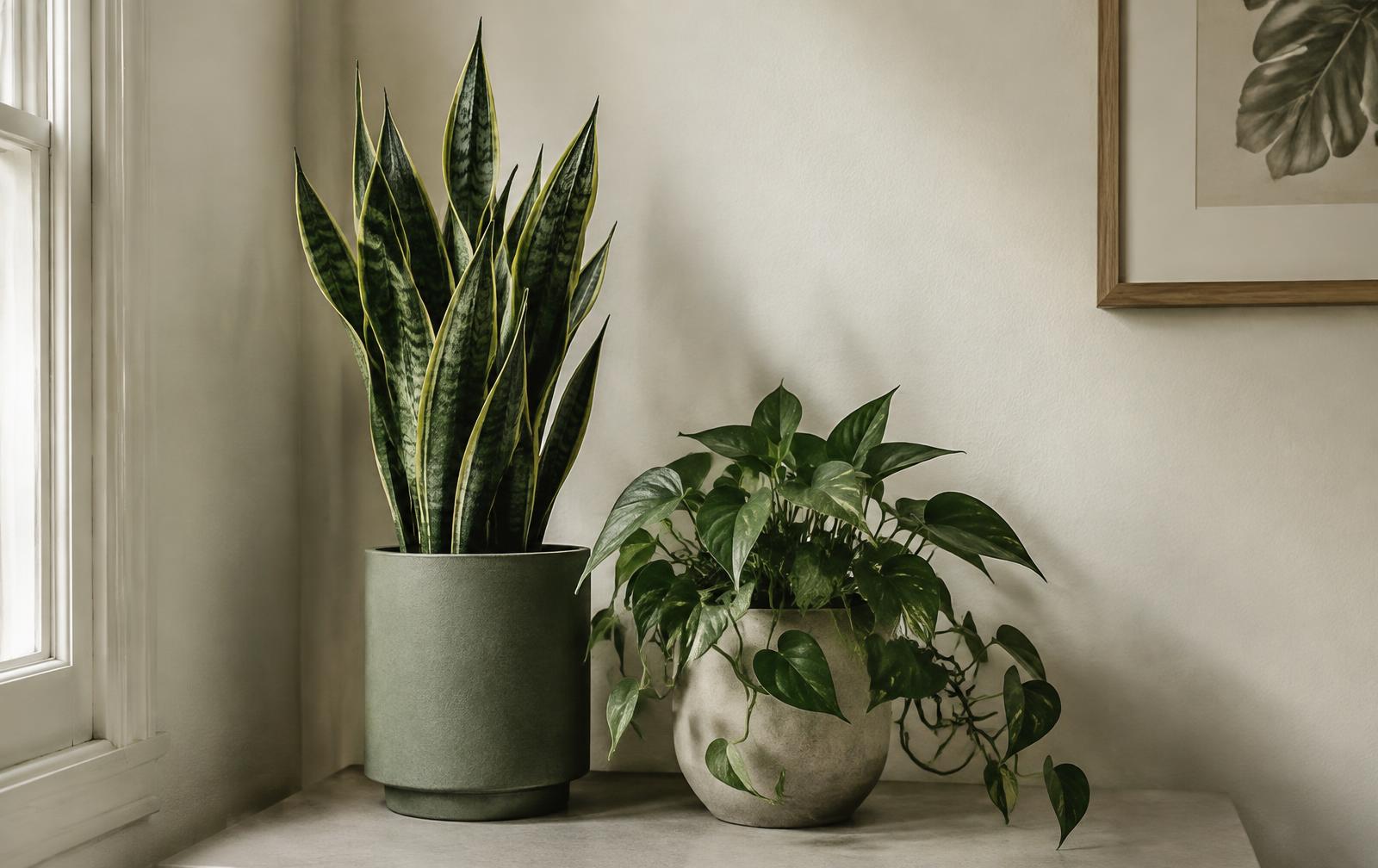
Visible roots at the bottom of the pot are a clear signal that the plant is root-bound. While some species like the snake plant actually enjoy being slightly crowded, most tropicals like the pothos will start to suffer as the lack of soil makes it impossible for the plant to store the water and nutrients it needs to thrive.
Does your plant need water more often than before?
As a plant grows, its water requirements increase, but the amount of soil available to hold that water stays the same. If you find yourself watering your plant every two or three days when you used to water once a week, it is a strong sign that the root-to-soil ratio is out of balance. There simply isn't enough substrate left to act as a reservoir.
| Observation | What it means | Urgency |
|---|---|---|
| Water runs out instantly | Soil is compacted or roots are too dense | High |
| Soil dries in 48 hours | Root mass is consuming all available water | Medium |
| Water pools on top | Soil structure has collapsed and lost drainage | High |
If you are unsure about the drainage speed, you can compare your current soil's performance against the ideal ratios in our best soil for pothos guide or use the soil mix calculator to see what a fresh batch of soil should look like.
How to check if your plant is root-bound?
Sometimes the signs are not visible from the outside. The best way to be sure is to take the plant out of its pot and inspect the root ball directly. This should be done gently to avoid damaging the plant, especially if it is not actually ready for a move yet.
Step by step
Root Health Inspection
Time: about 10 minutes
You'll need
- A clean surface or tray
- A small butter knife or spatula
- A watering can (to moisten soil beforehand)
- Moisten the soil. Give the plant a light watering to make the soil stick together, which makes it easier to remove the plant in one piece.
- Loosen the edges. Gently run a butter knife around the inside rim of the pot to break any suction or roots that have attached to the walls.
- Tilt and slide. Place one hand over the soil surface with the plant stem between your fingers. Tilt the pot upside down and gently slide the plant out.
- Inspect the pattern. Look for roots that are thick, white, and circling the outside of the soil. If you see more roots than soil, it is time to repot.
- Return or repot. If the roots still have plenty of soil around them, slide the plant back in. If they are circling tightly, proceed with a full repotting.
Is your plant stopped growing during the spring?
Every plant has an active growing season, usually from early spring through late summer. If your plant is in a bright spot and you are fertilizing regularly, but you haven't seen a new leaf in months, the roots may have run out of space to expand. Without room for new root tips to grow, the plant cannot support new foliage growth.
Stunted growth is often accompanied by smaller-than-usual leaves or a general 'tired' look. This happens because the soil has become exhausted of its micronutrients and the physical structure has broken down, leading to poor aeration. When you finally decide to move the plant, make sure to read what size pot for repotting to avoid the common mistake of choosing a container that is too large.
How does soil compaction indicate a need for repotting?
Over time, the organic components in potting soil (like peat moss or coco coir) naturally decompose and flatten. This causes the soil to lose its fluffiness and become a dense, hard brick. Compacted soil prevents oxygen from reaching the roots and can actually repel water, causing it to run down the sides of the pot rather than soaking into the center.
| Soil Sign | The Problem | The Fix |
|---|---|---|
| Pulling away from edges | Soil is hydrophobic and shrinking | Repot with fresh coco coir |
| White crust on top | Mineral and fertilizer salt buildup | Repot or flush thoroughly |
| Moss or mold on surface | Soil is stayng wet too long due to density | Repot with more perlite |
Advice by situation
New Purchases
Most plants from big-box stores are already root-bound and should be repotted into a better soil mix within a few weeks of bringing them home.
Slow Growers
For plants like succulents, you might only see signs every 3 to 4 years, so don't rush the process if the plant looks happy.
Top-Heavy Plants
If your plant keeps tipping over, the root system may be too large for the current base, and a larger, heavier pot is needed for stability.
Recovery Plants
If a plant has just recovered from a pest infestation, a fresh pot of soil can help remove any remaining larvae or eggs and provide a nutrient boost.
Seasonal Changes
Avoid repotting in the dead of winter unless it is an emergency, as the lack of light makes it harder for the plant to recover from the stress.
Common mistakes to avoid
- Repotting every single year automatically. Only repot when the plant shows signs of being root-bound; some plants prefer to stay in the same pot for years.
- Ignoring the drainage holes. Check the bottom of your pots every few months for emerging roots.
- Mistaking dormancy for stunted growth. Remember that most plants stop growing in winter; wait for spring to see if growth resumes before deciding to repot.
- Waiting until the pot cracks. Try to repot before the root pressure gets high enough to damage the container or the plant's health.
- Thinking fertilizer can replace repotting. Fertilizer adds nutrients, but it cannot fix the lack of space or poor soil structure in a root-bound plant.
- Using the same soil for years without checking. Soil breaks down physically; even if a plant isn't root-bound, the soil might need a refresh every 2 years.
Quick checklist
- Check for roots growing out of the drainage holes.
- Observe if water is running straight through the pot.
- Test if the soil has become hard and compacted.
- Monitor the frequency of watering compared to previous months.
- Look for a lack of new growth during the spring and summer.
- Inspect the roots by gently sliding the plant out of its pot.
- Assess if the plant has become top-heavy and unstable.
Frequently asked questions
Is it bad to repot a plant that isn't root bound?
It's not necessarily bad, but it can be unnecessary stress. However, refreshing old, compacted soil is always beneficial even if the roots have space.
What happens if I never repot my plant?
The plant will eventually stop growing, the leaves may yellow and drop, and the roots may eventually rot due to poor soil aeration.
Can a plant be too root bound to save?
Rarely. Even extremely root-bound plants can usually be saved by soaking the roots, gently untangling them, and moving them to a larger pot with fresh soil.
How much bigger should the new pot be?
Typically, you should only go up 1 to 2 inches (2.5 to 5 cm) in diameter. A pot that is too large can lead to over-watering issues.
Should I shake off all the old soil?
You don't need to remove every bit, but shaking off the loose, old soil helps the roots make better contact with the fresh, nutrient-rich mix.
Do all plants show the same signs?
Most do, but some 'dramatic' plants like peace lilies will wilt almost immediately when they become slightly dry, which is a very early sign of being root-bound.