Best Soil for Snake Plants: Mix, Ratio & DIY Recipe
By Sara Linwood, houseplant writerLast updated
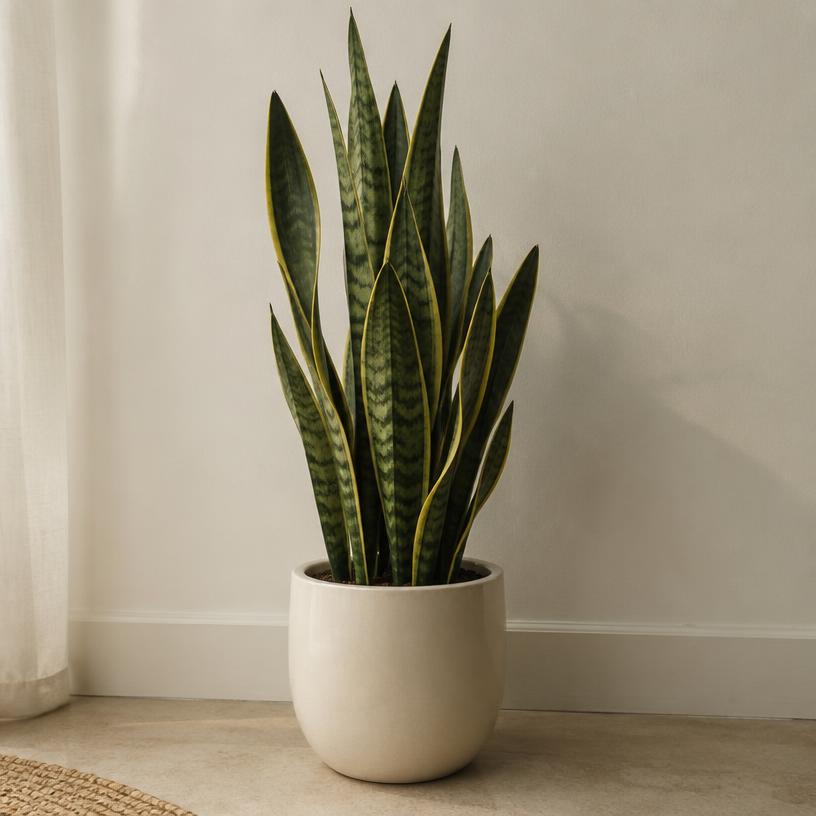
The best soil for snake plants is a fast-draining mix of 40% potting soil, 30% coarse perlite or pumice, and 30% coarse sand or fine grit, which should dry out within 7 to 14 days after a thorough watering. Snake plants (Dracaena trifasciata) evolved in rocky, semi-arid soils in West Africa, so they rot quickly in any mix that stays wet for more than two weeks.
Why does soil drainage matter so much for snake plants?
Snake plants store water in thick, fibrous leaves, which means their roots are adapted to long dry spells, not constant moisture. In the wild, Dracaena trifasciata grows in rocky, sandy soil across Nigeria and the Congo, where rainfall drains away within hours. When you pot the same plant in a dense, moisture-holding mix like standard potting soil straight from the bag, the roots sit in wet, low-oxygen soil for days or weeks, and that is when root rot sets in.
Root rot is the single leading cause of snake plant death, far more common than underwatering. A fast-draining mix is cheap insurance: it lets you water generously without the lingering risk of soggy roots.
What is the best soil mix ratio for a snake plant?
A reliable baseline ratio is 40% regular potting soil, 30% perlite or pumice, and 30% coarse sand or poultry grit. This gives you organic matter for nutrients while keeping roughly 60% of the volume mineral and fast-draining. You can compare the benefits of different drainage materials in our guide to perlite vs pumice if you are unsure which mineral to choose.
| Ingredient | % of mix | Role |
|---|---|---|
| Potting soil | 40% | Holds some moisture and nutrients between waterings |
| Perlite or pumice | 30% | Creates air pockets, speeds drainage, prevents compaction |
| Coarse sand or grit | 30% | Adds weight and mineral drainage, mimics native rocky soil |
If you want to check whether a mix you've already made is draining fast enough, run the ratio through the soil mix calculator to estimate its drainage percentage before you pot up your plant.
Your snake plant soil, measured
Snake Plant recipe
6 inch (15 cm) plastic pot, normal home
- Potting mix 40%2.75 cups (652 ml)
- Perlite 30%2 cups (474 ml)
- Coarse sand or grit 30%2 cups (474 ml)
Total about 7 cups. Gritty and fast-draining so it dries in 7 to 14 days.
How do I make my own snake plant soil mix at home?
Step by step
DIY Snake Plant Soil Mix
Time: about 15 minutes
You'll need
- 4 cups standard potting soil
- 3 cups perlite or pumice
- 3 cups coarse sand or poultry grit
- Large mixing tub or bucket
- Trowel or scoop
- Spray bottle with water
- Measure the dry ingredients. Scoop 4 cups of potting soil, 3 cups of perlite or pumice, and 3 cups of coarse sand into a large tub. Using a measuring cup keeps the ratio consistent batch after batch.
- Mix thoroughly. Combine with a trowel or your hands until the color and texture look uniform, with no pockets of pure sand or pure soil left.
- Moisten lightly. Mist the mix with a spray bottle until it is faintly damp, not wet. This helps it settle evenly around roots without dry air pockets.
- Check drainage. Fill a pot with drainage holes and pour a cup of water through; it should run out the bottom within 10 to 20 seconds.
- Pot the plant. Settle the snake plant's roots into the mix, firm gently, and water lightly to settle the soil around the roots.
Can I just use a store-bought cactus mix instead?
Yes, most bagged cactus or succulent mixes are a reasonable shortcut. The catch is that many commercial cactus mixes are still heavier on peat or coir than ideal for snake plants, so amend a bag of cactus mix with an extra 20% perlite by volume to push drainage further. You can see how these compare in our cactus soil vs potting soil breakdown.
| Product type | Drainage speed | Needs amending? |
|---|---|---|
| Standard potting soil | Slow, holds moisture 2-3 weeks | Yes, add 50 to 60% perlite/grit |
| Cactus/succulent mix | Fast, holds moisture 7 to 10 days | Optional, add 20% extra perlite |
| Pre-made aroid mix | Medium, holds moisture 10 to 14 days | Yes, add 20 to 30% sand or grit |
What pH and nutrient level does snake plant soil need?
Snake plants prefer a slightly acidic to neutral pH of 6.0 to 7.0. Most commercial potting soils already fall in this range, so you rarely need to adjust pH unless you are using a lot of garden soil or well water with high mineral content.
Feed sparingly: a balanced, diluted liquid fertilizer (roughly 10-10-10 or similar, diluted to half strength) once every 6 to 8 weeks during spring and summer is plenty. Snake plants are light feeders, and excess fertilizer salts build up quickly in a fast-draining mix because there is less organic matter to buffer them.
How do I know my soil mix is wrong for my snake plant?
Keep a close watch on your plant for any signs your plant needs repotting or if the soil is staying wet for too long, which is a major red flag.
| Sign | Likely cause | Fix |
|---|---|---|
| Mushy, dark base of leaves | Mix holds too much water, root rot starting | Unpot, trim rotten roots, repot in fresh fast-draining mix |
| Soil stays wet past 14 days | Too much organic matter, not enough mineral content | Amend with 20 to 30% more perlite or grit |
| Soil dries out in under 3 to 4 days | Mix is too gritty, not enough water-holding capacity | Add 10 to 15% more potting soil or coco coir |
| White crust on soil surface | Mineral salt buildup from fertilizer or hard water | Flush soil with distilled water, reduce fertilizer frequency |
When and how should I repot a snake plant into new soil?
Repot every 2 to 3 years, or sooner if roots are circling tightly at the bottom of the pot or pushing the plant up out of the soil. For a step by step guide, see how to repot a snake plant to ensure you do not damage the root system during the move.
- Water the plant a day before repotting so roots are less brittle.
- Remove the plant and gently shake off at least half the old soil.
- Trim any mushy, brown, or hollow roots with clean shears.
- Choose a pot only 1 to 2 inches (2.5 to 5 cm) wider than the root ball; oversized pots hold excess moisture.
- Fill with fresh, fast-draining mix, firm gently, and wait 3 to 5 days before the first watering to let any root wounds callus over.
This same drainage-first logic applies across most indoor plants; see our guides on soil for pothos and soil for peace lily if you are mixing soil for a mixed plant shelf.
Advice by situation
Beginners
Buy a bagged cactus mix and add 20% extra perlite rather than measuring out a DIY recipe from scratch. It is a fast, forgiving way to get drainage right without owning multiple soil amendments.
Dry homes
In low-humidity homes, you can lean slightly more toward the 40% soil side of the ratio, since the mix will dry out faster anyway from evaporation into dry air.
Humid homes
In humid climates, push toward 50% mineral material (perlite plus sand) and only 35 to 40% soil, since ambient humidity slows surface evaporation and the mix stays wet longer than the same ratio would in a dry climate.
Over-waterers
Use the full 30/30/40 ratio with coarse sand, and consider terracotta pots instead of plastic, since unglazed terracotta wicks excess moisture out through its walls and adds a second layer of drainage insurance.
Common mistakes to avoid
- Using straight potting soil with no amendments. Mix in at least 50% perlite, pumice, or coarse sand by volume before potting.
- Choosing a pot with no drainage hole. Always use pots with drainage holes for snake plants; cover holes with a coffee filter, not rocks, to prevent soil loss without blocking flow.
- Watering on a fixed calendar regardless of soil dryness. Check soil moisture 2 inches (5 cm) down with a finger before every watering.
- Repotting into an oversized pot. Size up by only 1 to 2 inches (2.5 to 5 cm) in diameter at a time.
- Skipping drainage checks after mixing soil. Test by pouring a cup of water through the empty pot's mix; it should drain within 20 seconds.
- Overfertilizing in a lean, fast-draining mix. Feed at half strength every 6 to 8 weeks during the growing season only.
Quick checklist
- Mix 40% potting soil, 30% perlite/pumice, 30% coarse sand or grit.
- Confirm pH between 6.0 and 7.0.
- Use a pot with drainage holes.
- Test drainage speed before potting (water should run through within 20 seconds).
- Water only when top 2 in / 5 cm of soil is fully dry.
- Repot every 2 to 3 years into a pot just 1 to 2 in / 2.5 to 5 cm larger.
- Feed at half strength every 6 to 8 weeks in spring and summer only.
Frequently asked questions
Can I use regular potting soil alone for a snake plant?
You can, but it will likely hold too much moisture and raise the risk of root rot. Amend straight potting soil with at least 50% perlite, pumice, or coarse sand to get drainage closer to what the plant needs.
Is cactus soil good enough on its own for snake plants?
Most bagged cactus mixes work well with one small tweak: add an extra 20% perlite by volume, since many commercial cactus mixes still contain more peat or coir than ideal for snake plants.
How often should I water a snake plant in a well-draining mix?
Expect to water every 10 to 14 days in bright indirect light and every 3 to 4 weeks in darker areas, always checking that the top 2 inches (5 cm) of soil are fully dry first.
Does snake plant soil need added nutrients?
A balanced, half-strength liquid fertilizer every 6 to 8 weeks during spring and summer is enough. Snake plants are slow growers with modest nutrient needs.
What's the biggest soil mistake with snake plants?
Using a mix that holds moisture for more than 2 weeks is the most common and most damaging mistake, since it invites root and base rot, the leading cause of snake plant death.