Best Soil for Pothos: Ideal Mix, Ratio & DIY Recipe
By Sara Linwood, houseplant writerLast updated
The best soil for pothos is a well-aerated mix of 50% potting soil, 30% perlite or orchid bark, and 20% coco coir, which holds some moisture for the vine's fast growth while still draining within 5 to 9 days. Pothos (Epipremnum aureum) is an epiphyte-leaning vine that grows on tree bark in the wild, so its roots want oxygen as much as they want water.
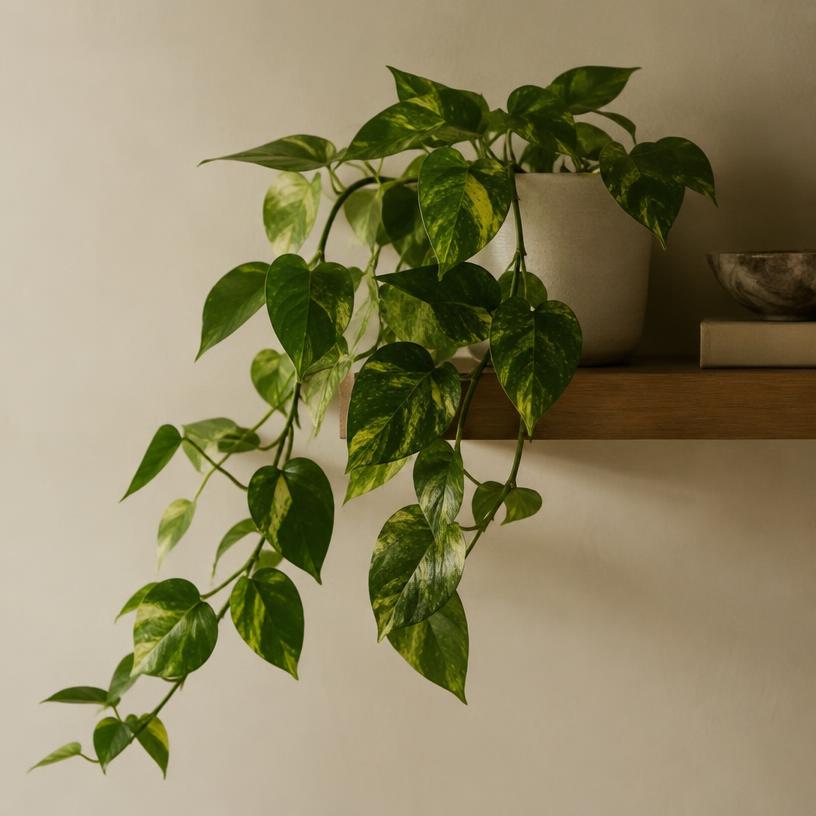
What kind of soil does pothos actually need?
Pothos grows as a climbing epiphyte in its native Solomon Islands habitat, rooting into loose, debris-rich bark and leaf litter rather than dense earth. That means its roots are adapted to plenty of airflow and only moderate, consistent moisture, not the compacted, water-retentive soil found in many all-purpose potting mixes straight out of the bag.
A good pothos mix should feel light and slightly chunky in your hand, not dense or muddy. It should hold enough moisture to support pothos's fast vining growth, often 12 to 18 inches (30 to 45 cm) of new vine per month in good light, while still letting excess water drain within a few days. If your soil has become hard and difficult to water, check our guide on how to fix compacted soil to restore airflow.
What is the best soil mix ratio for pothos?
A dependable baseline is 50% regular potting soil, 30% perlite or small orchid bark, and 20% coco coir. This keeps enough organic matter for pothos's appetite for nutrients while adding the air pockets its roots need.
| Ingredient | % of mix | Role |
|---|---|---|
| Potting soil | 50% | Supplies nutrients and moderate water retention |
| Perlite or orchid bark | 30% | Adds air pockets, mimics bark-rooting habit, prevents compaction |
| Coco coir | 20% | Holds moisture evenly, supports fast vine growth |
If you're combining your own ingredients from bulk bags, run the percentages through the soil mix calculator to confirm the blend lands in a safe drainage range before potting.
Your pothos soil, measured
Pothos recipe
6 inch (15 cm) plastic pot, normal home
- Potting mix 50%3.5 cups (830 ml)
- Perlite 30%2 cups (474 ml)
- Coco coir 20%1.5 cups (356 ml)
Total about 7 cups. Holds some moisture for fast growth but drains in 5 to 9 days.
How do I make a DIY pothos soil mix at home?
Step by step
DIY Pothos Soil Mix
Time: about 15 minutes
You'll need
- 5 cups standard potting soil
- 3 cups perlite or small-grade orchid bark
- 2 cups coco coir (pre-hydrated)
- Large mixing tub
- Trowel or scoop
- Watering can
- Hydrate the coco coir. If using dry coco coir brick, soak it in warm water for 10 to 15 minutes until it expands and crumbles apart, then squeeze out excess water.
- Combine dry ingredients. Add 5 cups potting soil and 3 cups perlite or orchid bark to a large tub.
- Add coir and mix. Fold in the hydrated coco coir and mix thoroughly with a trowel until the texture looks even throughout.
- Test moisture feel. Squeeze a handful; it should hold a loose clump that crumbles apart easily, not drip water or stay dense and compacted.
- Pot the pothos. Fill the pot partway, center the root ball, backfill around the sides, and water lightly until it runs from the drainage hole.
What's the easiest store-bought soil option for pothos?
A standard indoor potting mix amended with 25 to 30% extra perlite by volume is the simplest shortcut and performs almost identically to the DIY recipe above. Pre-made aroid or houseplant mixes sold specifically for tropical foliage plants are also a solid choice without any amending.
| Product type | Drainage speed | Needs amending? |
|---|---|---|
| Standard potting soil | Slow, holds moisture 10 to 14 days | Yes, add 25 to 30% perlite |
| Pre-made aroid/houseplant mix | Good, holds moisture 5 to 9 days | No, ready to use |
| Cactus/succulent mix | Too fast, holds moisture 3 to 5 days | Yes, add 20% coco coir |
What pH and feeding schedule suits pothos soil?
Pothos prefers a mildly acidic pH between 6.1 and 6.8. Most bagged potting soils and peat-based mixes already sit in this range naturally, so dedicated pH testing is rarely necessary unless growth stalls for no obvious reason.
Feed with a balanced liquid houseplant fertilizer (around 20-20-20 or similar) diluted to half strength every 4 weeks during spring and summer, tapering to every 8 weeks in fall and winter when growth slows.
How can I tell if my pothos soil mix is wrong?
| Sign | Likely cause | Fix |
|---|---|---|
| Yellow leaves, mushy stems | Soil stays wet too long, early root rot | Repot into fresh mix with more perlite, trim rotten roots |
| Crispy brown leaf edges | Mix dries out too fast, underwatering | Add 10 to 15% more coco coir to improve water retention |
| Stunted or no new growth | Compacted, old soil with no air pockets | Repot and refresh mix, break up compacted roots gently |
| White mineral crust on surface | Fertilizer salt buildup | Flush soil with distilled water every few months |
When should I repot pothos into new soil?
Repot every 1 to 2 years, since pothos is a fast grower and will bind up a pot with roots sooner than slower species. When it's time for a move, follow our guide on how to repot pothos and make sure you're using the right container by checking what size pot for repotting first.
- Water a day ahead so roots are pliable, not brittle.
- Slide the plant out and loosen the outer roots gently by hand.
- Trim any blackened or mushy roots with clean scissors.
- Choose a pot only 1 to 2 inches (2.5 to 5 cm) wider in diameter.
- Backfill with fresh mix, firm lightly, and water thoroughly once.
If you keep a mixed shelf of tropicals, the same air-and-moisture balance applies to peace lily and to most aroids like philodendron.
Advice by situation
Beginners
Buy a pre-made aroid or houseplant mix rather than DIY-ing your first batch. It removes the guesswork and already balances moisture and aeration well for pothos.
Dry homes
Lean toward 25% coco coir instead of 20% to help the mix hold moisture a bit longer between waterings, since dry indoor air pulls moisture out of soil faster.
Humid homes
Push perlite or orchid bark up to 35% and coir down to 15%, since ambient humidity already slows evaporation and extra moisture retention in soil is not needed.
Over-waterers
Use a terracotta pot with the standard 50/30/20 mix; unglazed terracotta wicks excess water through its walls, adding a buffer against overly frequent watering.
Common mistakes to avoid
- Using heavy garden soil instead of potting mix. Stick to a labeled indoor potting soil as your base; garden soil compacts and drains poorly in containers.
- Letting the pot sit in a saucer of standing water. Empty the saucer within 30 minutes of watering so roots are not sitting in excess water.
- Skipping perlite or bark entirely. Include at least 25 to 30% perlite or bark by volume for adequate aeration.
- Repotting into a pot that is much too large. Size up only 1 to 2 inches (2.5 to 5 cm) at a time to avoid excess moisture sitting in unused soil.
- Watering on a fixed schedule instead of checking soil. Test the top 1 to 2 inches (2.5 to 5 cm) of soil with a finger before every watering.
- Never refreshing old, compacted soil. Repot every 1 to 2 years even if the plant looks fine, since soil structure breaks down over time.
Quick checklist
- Mix 50% potting soil, 30% perlite or bark, 20% coco coir.
- Confirm pH between 6.1 and 6.8.
- Use a pot with drainage holes, ideally terracotta for over-waterers.
- Water when the top 1 to 2 in / 2.5 to 5 cm of soil is dry.
- Feed at half strength every 4 weeks in spring/summer, every 8 weeks in fall/winter.
- Repot every 1 to 2 years into a slightly larger pot.
- Flush soil with plain water every few months to clear mineral salts.
Frequently asked questions
Can pothos grow in plain potting soil with no amendments?
It can survive short term, but straight potting soil tends to compact and hold too much water over time, raising the risk of root rot. Adding 25 to 30% perlite solves most of the issue.
Is succulent or cactus soil good for pothos?
Cactus mix drains too fast for pothos on its own, often drying out within 3 to 5 days. Amend it with 20% coco coir to slow drainage closer to what pothos actually needs.
Can pothos grow in water instead of soil?
Yes, pothos roots adapt well to water propagation and can live in water indefinitely, though growth is generally slower and leaves tend to stay smaller than soil-grown plants.
How do I know when to repot my pothos?
Repot when roots circle visibly at the drainage holes, when water runs straight through without being absorbed, or roughly every 1 to 2 years regardless of visible signs.
What pH is too far off for pothos?
Below 5.5 or above 7.5 can start to lock out nutrients like iron and manganese, showing up as pale or yellowing new growth even when watering and light are correct.