Best Soil for Peace Lily: Mix, Ratio & DIY Recipe
By Sara Linwood, houseplant writerLast updated
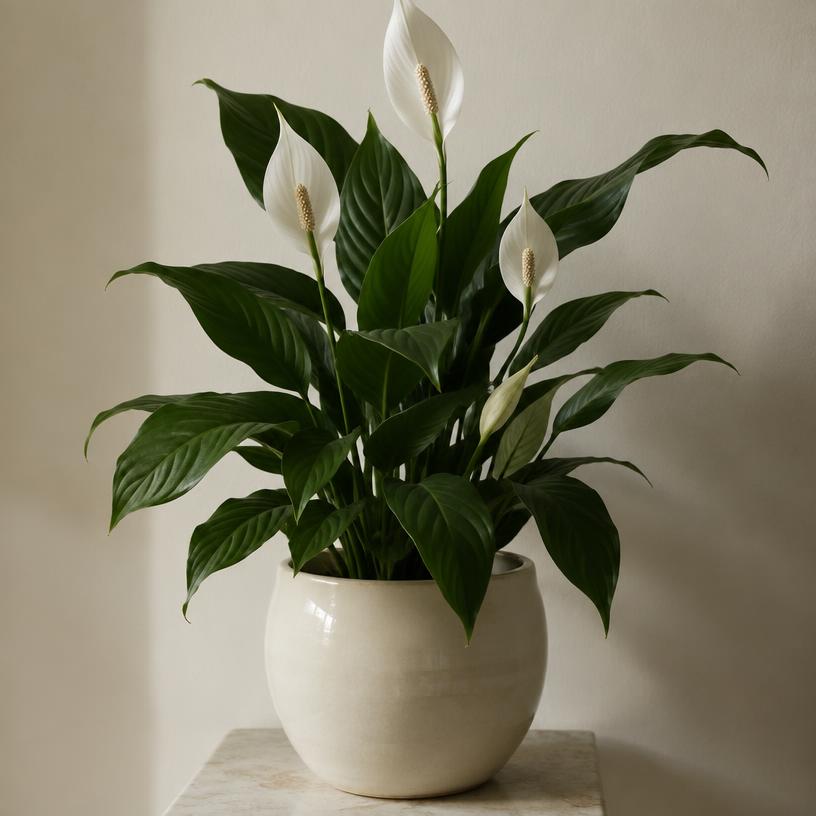
The best soil for peace lily is a moisture-retentive but airy mix of 50% potting soil, 25% perlite, and 25% coco coir, which holds consistent moisture for 5 to 8 days without becoming waterlogged. Peace lily (Spathiphyllum wallisii) grows naturally on humid, shaded rainforest floors, so its roots want steady moisture and good aeration rather than either drought or standing water.
What soil conditions does a peace lily actually need?
Peace lilies grow in the understory of tropical Central and South American forests, where leaf litter and humus hold moisture evenly while staying loose and oxygen-rich. This is why peace lily is famous for its dramatic wilt when thirsty: it is adapted to consistently damp, never bone-dry soil, and the leaves droop as an early warning sign rather than waiting until real damage occurs. Keep a look out for signs your plant needs repotting if the soil is no longer absorbing water properly.
Unlike snake plant or ZZ plant, peace lily soil should never be allowed to dry out completely for extended periods, but it still needs enough aeration to avoid the soggy, anaerobic conditions that cause root rot.
What is the best soil mix ratio for peace lily?
A reliable baseline is 50% potting soil, 25% perlite, and 25% coco coir. This ratio gives more water retention than a pothos or snake plant mix while still including enough perlite to prevent compaction. For a detailed look at why we use perlite, see our perlite vs pumice comparison.
| Ingredient | % of mix | Role |
|---|---|---|
| Potting soil | 50% | Provides structure, nutrients, and baseline moisture |
| Perlite | 25% | Adds aeration and prevents compaction over time |
| Coco coir | 25% | Boosts water retention for peace lily's higher moisture needs |
You can check any custom blend's expected drainage behavior with the soil mix calculator before committing a plant to it.
Your peace lily soil, measured
Peace Lily recipe
6 inch (15 cm) plastic pot, normal home
- Potting mix 50%3.5 cups (830 ml)
- Perlite 25%1.75 cups (415 ml)
- Coco coir 25%1.75 cups (415 ml)
Total about 7 cups. Moisture-retentive but airy, so it stays evenly damp without going soggy.
How do I make a DIY peace lily soil mix?
Step by step
DIY Peace Lily Soil Mix
Time: about 15 minutes
You'll need
- 5 cups standard potting soil
- 2.5 cups perlite
- 2.5 cups coco coir (pre-hydrated)
- Large mixing tub
- Trowel or scoop
- Watering can
- Hydrate the coir. Moisten coco coir with warm water until evenly damp but not dripping, which keeps it from repelling water once potted.
- Combine ingredients. Add 5 cups potting soil and 2.5 cups perlite to a tub, then fold in the moistened coir.
- Mix until uniform. Stir thoroughly until the blend looks consistent, with no dry soil clumps or pure perlite pockets.
- Check texture. Squeeze a handful; it should hold its shape briefly then crumble, feeling moist but not muddy.
- Pot the plant. Fill the pot, center the root ball, backfill, firm gently, and water thoroughly until it drains from the bottom.
Is a regular potting mix good enough for peace lily?
A standard indoor potting mix with 20% extra perlite added works well and is the easiest shortcut if you do not want to combine three separate ingredients. African violet mix is also a workable substitute since it is formulated for similar moisture-retentive, airy conditions.
| Product type | Moisture retention | Needs amending? |
|---|---|---|
| Standard potting soil | High, holds moisture 10 to 14 days | Yes, add 20% perlite |
| African violet mix | Good, holds moisture 6 to 9 days | No, ready to use |
| Cactus/succulent mix | Too low, dries in 3 to 5 days | Yes, add 25 to 30% coco coir |
What pH and fertilizer schedule does peace lily soil need?
Peace lily prefers slightly acidic soil, with a pH between 5.8 and 6.5. Coir-based mixes naturally trend toward a neutral or slightly acidic range, which suits this plant well without extra adjustment in most cases.
Feed with a balanced liquid fertilizer at half strength every 6 weeks during spring and summer. Overfeeding causes brown leaf tips faster in peace lily than in most other common houseplants, so err on the side of less.
How do I know if my peace lily soil is causing problems?
| Sign | Likely cause | Fix |
|---|---|---|
| Drooping daily even after watering | Soil dries out too fast between waterings | Add 10% more coco coir for retention |
| Yellow leaves, soggy soil smell | Mix stays wet too long, root rot risk | Repot with more perlite, trim rotten roots |
| Brown, crispy leaf tips | Fertilizer salt buildup or low humidity | Flush soil monthly, raise humidity to 50% |
| Stunted growth, no new leaves | Old, compacted soil with no nutrients left | Repot in fresh mix, resume feeding schedule |
When should I repot a peace lily into fresh soil?
Repot every 1 to 2 years, or when you see roots circling the pot's edge or pushing the plant upward. Peace lilies also benefit from division at repotting time if the clump has grown crowded, since splitting it reduces competition for water and nutrients. Before you start, make sure you know what size pot for repotting is best for your specific plant.
- Water the day before to soften the root ball.
- Remove the plant and gently tease apart the roots.
- Divide into smaller clumps if desired, keeping at least 3 to 4 healthy roots per division.
- Repot each division into a pot 1 to 2 inches (2.5 to 5 cm) wider than its root mass.
- Water thoroughly and keep out of direct sun for a week while it settles.
The same moisture-retentive logic benefits other humidity-loving aroids like Chinese evergreen and calathea, which also dislike drying out fully between waterings.
Advice by situation
Beginners
A standard potting mix with 20% extra perlite is the easiest reliable choice. Watch for the characteristic wilt as your natural cue to water, which makes peace lily one of the easier plants to learn watering timing on.
Dry homes
Increase coco coir to 30% of the mix to help it retain moisture longer between waterings, since dry indoor air pulls water out of soil quickly.
Humid homes
Keep perlite at a full 25 to 30% to ensure the mix does not stay soggy, since high ambient humidity already slows evaporation from the soil surface.
Over-waterers
Use a pot with multiple drainage holes and the standard 50/25/25 ratio; avoid adding extra coir, which would make overwatering risk worse for this already moisture-loving plant.
Common mistakes to avoid
- Letting the soil dry out completely for days at a time. Water as soon as the top 1 inch (2.5 cm) of soil feels dry, or when leaves just begin to droop.
- Using a fast-draining cactus mix straight from the bag. Amend cactus mix with 25 to 30% extra coco coir for better moisture retention.
- Ignoring repeated daily wilting as 'normal.' Check if soil is drying too fast; amend with more organic matter if wilting happens every single day.
- Overfertilizing to chase faster growth. Feed at half strength every 6 weeks only during the growing season.
- Skipping repotting for many years. Repot every 1 to 2 years to refresh nutrients and prevent compaction.
- Using tap water heavy in fluoride or chlorine. Use filtered or distilled water, or let tap water sit out 24 hours before use, since peace lily is sensitive to leaf tip burn.
Quick checklist
- Mix 50% potting soil, 25% perlite, 25% coco coir.
- Confirm pH between 5.8 and 6.5.
- Water when the top 1 in / 2.5 cm of soil is dry, not bone dry.
- Use filtered or rested tap water to avoid leaf tip burn.
- Feed at half strength every 6 weeks in spring and summer.
- Repot every 1 to 2 years, dividing crowded clumps if needed.
- Watch for daily wilting as a sign the mix needs more organic matter.
Frequently asked questions
Can peace lily grow in regular potting soil without amendments?
It can survive short term, but straight potting soil often compacts and either holds too much water or dries unevenly. Adding 20 to 25% perlite improves long-term results noticeably.
Why does my peace lily wilt even though the soil is damp?
Occasional wilting despite damp soil can signal root rot, where damaged roots cannot take up water even though it is present. Check for mushy, blackened roots and repot into fresh, airier mix if found.
What pH is too far off for a healthy peace lily?
Below 5.0 or above 7.0 can interfere with nutrient uptake, often showing as pale new growth or stunted leaves even with correct watering and light.
Does peace lily need peat moss specifically, or can I use coco coir?
Coco coir works as a renewable, slightly more sustainable substitute for peat moss and holds moisture similarly well, matching our canonical recipe of 25% coir.
How long should peace lily soil take to dry out?
The top 1 inch (2.5 cm) should dry out in about 5 to 8 days under typical indoor conditions; if it takes much longer, the mix likely needs more perlite for drainage.