Best Soil for Monstera: The Ideal Chunky Mix & DIY Recipe
By Sara Linwood, houseplant writerLast updated
The best soil for a Monstera is a chunky, aerated mix of 40% potting soil, 30% orchid bark, and 30% perlite to allow oxygen to reach the roots while maintaining consistent moisture. Monsteras are vining epiphytes that naturally attach to trees, requiring a medium that drains quickly but provides structural support for their large leaves.
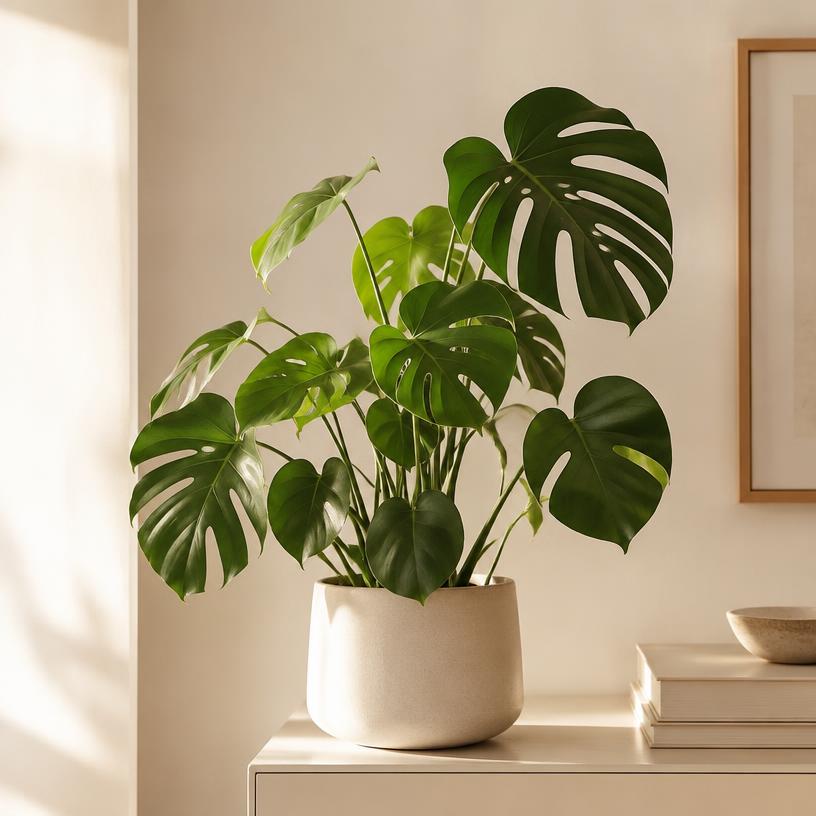
What kind of soil do Monsteras actually require?
In their native tropical forest habitats, Monstera deliciosa and other Monstera species grow as hemiepiphytes. This means they start their lives in the soil but eventually climb high into the tree canopy, where their roots are exposed to the air and draped over damp bark and moss. As a result, they have adapted to a life with high oxygen availability around their root systems. They do not thrive in dense, heavy earth that stays muddy for long periods.
When you grow a Monstera in an indoor pot, you are essentially trying to replicate that forest floor and tree bark environment. A proper Monstera mix should feel chunky and loose in your hand. When you water the plant, the water should travel through the soil and begin exiting the drainage holes within a matter of seconds. If the water pools on the surface for more than a few moments, the soil is likely too dense and needs amending.
What is the perfect soil ratio for Monstera?
The golden ratio for a healthy Monstera is 40% high-quality potting soil, 30% orchid bark, and 30% perlite. This combination provides a stable base for the plant to stand in while ensuring there are enough large air pockets for the roots to breathe. The orchid bark adds the necessary chunkiness, while the perlite ensures the mix remains lightweight and well-drained.
| Ingredient | % of mix | Reason |
|---|---|---|
| Potting soil | 40% | Provides the main nutrient source and moderate moisture |
| Orchid bark | 30% | Mimics tree bark, creates air pockets, and prevents compaction |
| Perlite | 30% | Ensures rapid drainage and keeps the mix light and airy |
For larger plants, you might even consider increasing the bark content slightly to give the roots more to grab onto. Our soil mix calculator is a great tool to help you adjust these ratios based on the specific size of your plant and the environmental conditions of your home, such as low humidity or high heat.
Your monstera soil, measured
Monstera recipe
6 inch (15 cm) plastic pot, normal home
- Potting mix 40%2.75 cups (652 ml)
- Orchid bark 30%2 cups (474 ml)
- Perlite 30%2 cups (474 ml)
Total about 7 cups. Chunky aroid mix with plenty of air for thick roots.
How to make a DIY Monstera soil mix at home
Step by step
DIY Monstera Soil Mix
You'll need
- 4 cups standard indoor potting soil
- 3 cups medium-grade orchid bark
- 3 cups coarse perlite
- Large mixing bin
- Small hand trowel
- Gather materials. Ensure your potting soil is free of pests and that your orchid bark is clean. Use coarse perlite rather than the fine, dusty variety for better aeration.
- Combine ingredients. Add all three components to your mixing bin. If you want an extra boost, you can add a handful of worm castings at this stage.
- Mix thoroughly. Use your hands or a trowel to blend the ingredients until you see an even distribution of bark and perlite throughout the soil.
- Watering test. Take a handful of the dry mix and pour a little water over it. It should pass through the grit quickly without turning into a muddy paste.
- Pot the plant. Fill the bottom of your pot with the mix, position the Monstera, and fill in the sides, gently tapping the pot to settle the soil.
What are the ideal pH and nutrient needs for Monstera soil?
Monsteras prefer a slightly acidic environment, ideally between 5.5 and 6.5 on the pH scale. Most peat-based or coco coir-based potting mixes will naturally fall within this range, but it is worth checking if you are using a lot of specialized amendments. Maintaining this acidity level is important because it allows the plant to absorb nutrients like nitrogen and phosphorus more efficiently.
During the peak growing seasons of spring and summer, you should supplement the soil with a balanced liquid fertilizer every 4 weeks. Monsteras are relatively fast growers, especially when provided with a moss pole to climb, and they will quickly deplete the nutrients in a small pot of soil.
What are common Monstera soil mistakes to avoid?
One of the most frequent errors is using garden soil or cheap, heavy potting mixes that are designed for outdoor flower beds. These soils are far too dense for a Monstera's roots and will lead to rot very quickly. Another common mistake is neglecting to refresh the soil; over time, the organic components break down and the mix becomes compacted, losing the air pockets that the plant depends on.
| Mistake | Result | Fix |
|---|---|---|
| Using garden soil | Heavy, muddy mess and root rot | Switch to high-quality indoor aroid base |
| Too much peat moss | Soil stays wet for 10 to 14 days | Add more perlite or orchid bark to speed drainage |
| Not repotting | Old soil degrades and loses air | Repot every 1 to 2 years to refresh structure |
| No drainage hole | Water pools at bottom | Use a pot with at least one large hole |
Advice by situation
Young plants
You can slightly increase potting soil to 50% as young plants have smaller, more delicate roots that may need a bit more moisture to establish themselves.
Very large plants
Use 40% orchid bark to ensure the mix does not compact under the significant weight of the plant's massive root system and large stems.
Terracotta pots
Terracotta wicks moisture away; you can reduce orchid bark to 20% or add a bit of coco coir to help keep the plant hydrated in dry climates.
Indoor heat
In dry indoor air during winter, mulch the top of the soil with a thin layer of moss to slow surface evaporation while keeping the roots airy.
Common mistakes to avoid
- Watering too often. Let the top 2-3 inches (5-7.5 cm) of soil dry completely before adding more water.
- Leaving the pot in water. Empty the saucer within 15 minutes of watering to prevent the soil from re-absorbing excess moisture.
- Using old, fine soil. Always add perlite and bark to refresh the mix when you see it becoming dense or compact.
- Ignoring yellow leaves. This is often a sign of water-logged soil; check the roots for mushy spots immediately.
- Repotting in winter. Only repot during the active growth season to ensure the plant recovers quickly from the stress.
- Using a pot that is too big. Size up only 1-2 inches (2.5-5 cm) to avoid a large volume of unused, wet soil.
Quick checklist
- Use 40% potting soil, 30% orchid bark, 30% perlite.
- Ensure pH is between 5.5 and 6.5.
- Always check top inches of soil before watering.
- Repot every 18 to 24 months to maintain aeration.
- Use a pot with multiple drainage holes.
- Fertilize every 4 weeks in spring and summer.
- Check for signs of compaction every few months.
Frequently asked questions
Is perlite better than pumice for Monsteras?
Both work well. Perlite is lighter and cheaper, while pumice lasts longer without breaking down and provides a bit more weight to the pot.
Why are my Monstera leaves drooping?
It could be underwatering or the start of root rot from poor soil drainage. Check the soil moisture levels carefully.
Can I use worm castings in my Monstera mix?
Yes, adding 5% to 10% worm castings to the mix for a gentle organic nutrient boost is highly recommended for growth.
How often should I fertilize my Monstera?
Every 4 weeks in spring and summer, and then stop or reduce significantly during the dormant winter months.
What should I do if my soil smells bad?
This is a sign of bacteria or root rot. Remove the plant, wash the roots, and repot in a fresh, chunky mix immediately.