Best Pots for Succulents: Size, Material, and Drainage Guide
By Sara Linwood, houseplant writerLast updated
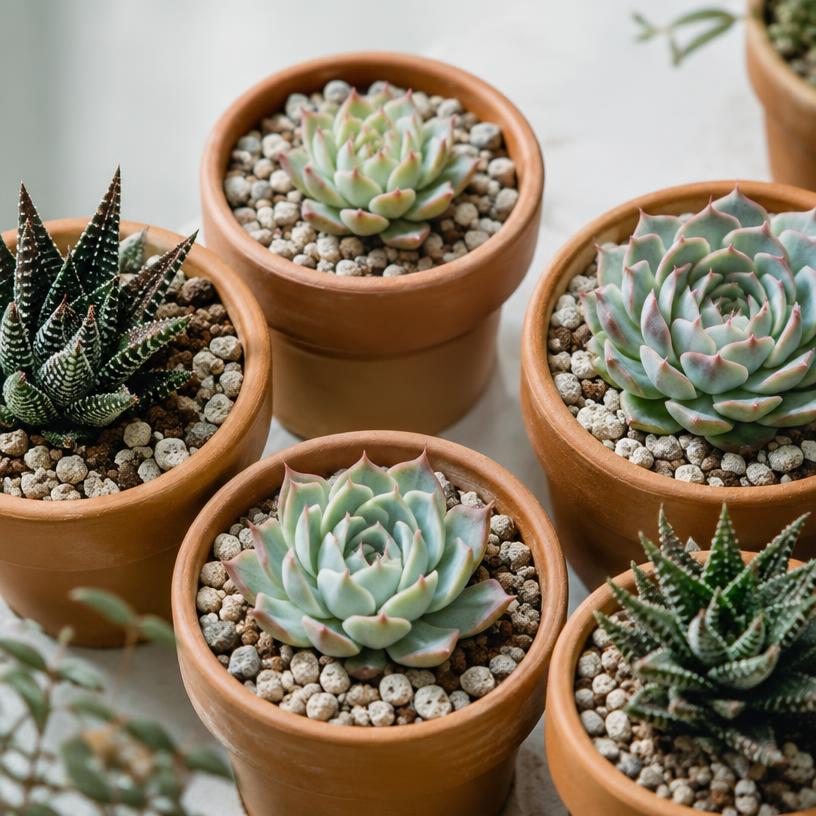
The best pot for a succulent is an unglazed terracotta container that features at least one large drainage hole. This porous material allows moisture to evaporate through the walls, which prevents the soil from staying wet for too long and causing root rot.
What is the best pot size and depth for succulents?
Selecting the correct size is the most important decision you make when repotting a succulent. While it is tempting to give a plant plenty of room to grow, succulents actually prefer a snug fit. A pot that is too large holds a high volume of soil, and that soil acts like a giant sponge. If the plant cannot drink all the water in that sponge within a few days, the roots sit in a cold, wet environment that leads to decay.
As a general rule, look for a container that is about 1 to 2 inches (2.5 to 5 cm) wider than the current diameter of the plant or its root ball. For a small echeveria that is 3 inches (7.5 cm) wide, a 4 inch (10 cm) pot is perfect. If you are dealing with very small offsets or propagation starts, you might only need a tiny 2 inch (5 cm) pot. Using a pot that is too large is one of the most common reasons why indoor succulents fail to thrive.
Depth is just as important as width. Most succulents have relatively shallow root systems. They do not need a deep bucket to thrive. In fact, deep pots are dangerous because the bottom half of the soil often stays saturated long after the top half feels dry. This is why many growers prefer 'bulb pans' or 'azalea pots,' which are shorter than standard nursery pots. Keeping the soil depth to around 3 to 4 inches (7.5 to 10 cm) for most medium succulents ensures the entire root zone can dry out evenly and stays healthy.
| Succulent Width | Ideal Pot Diameter | Maximum Pot Depth |
|---|---|---|
| 2 inches (5 cm) | 2.5 to 3 inches (6 to 7.5 cm) | 3 inches (7.5 cm) |
| 4 inches (10 cm) | 5 to 6 inches (12.5 to 15 cm) | 4 inches (10 cm) |
| 6 inches (15 cm) | 7 to 8 inches (17.5 to 20 cm) | 5 inches (12.5 cm) |
| 8+ inches (20+ cm) | 10 inches (25 cm) | 6 inches (15 cm) |
Terracotta vs plastic vs ceramic: which is better for succulents?
The material of your pot dictates how often you will need to water and how much air reaches the roots. Succulents evolved in arid environments where soil dries quickly after a rain event. To replicate this, you need a pot that helps, rather than hinders, the drying process. The choice between terracotta, plastic, and ceramic is not just about looks; it is about the physics of moisture.
Terracotta is the gold standard for succulent care. Because it is unglazed and porous, water can actually wick through the clay walls and evaporate into the air. This provides a safety net against overwatering. If you accidentally add too much water, the pot itself helps to remove the excess. It also allows for gas exchange, ensuring that oxygen reaches the roots, which is vital for preventing anaerobic bacteria from taking hold. The natural orange hue also looks great with desert plants.
Plastic pots are cheap and lightweight, but they are entirely non-porous. They trap every drop of moisture inside. If you use plastic, you must be much more careful about your watering schedule and ensure your soil is incredibly gritty. Glazed ceramic pots behave similarly to plastic because the glass-like glaze seals the clay. While they are beautiful and come in many colors, they lack the breathability of raw terracotta. If you use ceramic, make sure it has a large drainage hole and that you are using a best soil for succulents to compensate for the lack of wall evaporation. This is critical for success.
| Material | Porosity | Drying Speed | Best For |
|---|---|---|---|
| Unglazed Terracotta | High | Very Fast | Beginners and over-waterers |
| Plastic | None | Slow | Propagations and nursery use |
| Glazed Ceramic | None | Slow | Ornate displays and dry climates |
| Wood / Cedar | Medium | Medium | Outdoor rustic arrangements |
| Metal | None | Slow | Not recommended (heat issues) |
Can you grow succulents in pots without drainage holes?
Technically, you can grow a succulent in a pot without a hole, but it is like playing a game of chance with your plant's life. Without an exit point for water, any excess liquid pools at the bottom of the container. This creates a stagnant zone where roots will eventually rot. Even if the top inch of soil feels dry, the bottom might be a muddy mess. This 'wet feet' condition is the number one killer of indoor succulents globally.
If you have a beautiful decorative pot that lacks a hole, the best strategy is to use it as a cachepot. Keep the succulent in a slightly smaller plastic nursery pot that does have holes, and tuck that inside the decorative one. When it is time to water, take the plastic pot to the sink, let it drain completely, and then place it back in the decorative container. This gives you the aesthetic look you want without the risk of drowning the plant. It also makes it easier to inspect the roots later.
Are shallow bowls good for succulent arrangements?
Shallow bowls are excellent for succulents, especially for creating colorful arrangements. Because succulents have horizontal root systems that do not go very deep, a wide, shallow bowl mimics their natural habitat in rocky crevices. These bowls allow for a larger surface area of soil to be exposed to the air, which speeds up evaporation and helps the soil stay fresh.
When building an arrangement, ensure the bowl is at least 3 inches (7.5 cm) deep. If it is shallower than that, the soil may dry out too rapidly, or there might not be enough room for the roots to anchor the plant properly. A common mistake is crowding too many plants into a small bowl. Leave about 0.5 to 1 inch (1 to 2.5 cm) of space between each plant to allow for future growth and airflow. This also makes it easier to water individual plants.
If you are using a large arrangement bowl, you will need to prepare a significant amount of mix. Using our soil mix calculator can help you determine exactly how many cups (ml) of ingredients you need. For succulents, remember the standard recipe: 40% potting mix, 40% pumice, and 20% coarse sand. This ensures that even in a large bowl, the water moves through quickly and the roots remain oxygenated. This specific ratio is key to preventing compaction.
Does a gravel layer at the bottom of the pot help drainage?
There is a persistent myth that adding a layer of gravel, rocks, or broken pottery to the bottom of a pot without a hole creates drainage. This is not only false but actually harmful. In physics, this creates what is known as a perched water table. Water does not move easily from a fine-textured material like soil into a coarse-textured material like gravel until the soil is completely saturated and heavy with moisture.
By adding rocks to the bottom, you are effectively raising the floor of the pot and moving the 'saturated zone' closer to the roots of your succulent. Instead of the water draining away, it sits in the soil just above the rocks. This significantly increases the risk of root rot because the roots are constantly touching the wettest part of the pot. If you want better drainage, do not add rocks to the bottom; instead, mix more grit into the soil itself. Use ingredients like perlite or pumice throughout the entire mix to create air pockets. Check our guide on perlite vs pumice to see which is best for your specific pot type and climate.
Advice by situation
Beginners
Start with a 4 inch (10 cm) unglazed terracotta pot. It is the most forgiving option and will help you learn the watering needs of your plant without the high risk of rot. It is much harder to overwater a plant in terracotta.
Dry homes
If your indoor humidity is below 30%, you might find that terracotta dries out too fast, causing the leaves to wrinkle. In this case, a glazed ceramic pot or a thick plastic pot can help keep the succulent hydrated for a few extra days.
Humid homes
In humid environments, succulents are at high risk. Use terracotta exclusively and consider adding a small fan to improve airflow around the pots to help the soil dry between waterings. Avoid any pots that trap moisture.
Over-waterers
If you cannot resist the urge to water, use the smallest terracotta pot possible and a mix that is 60 to 70 percent grit. This combination makes it almost impossible to keep the roots wet for too long even if you water daily.
Common mistakes to avoid
- Using glass jars or terrariums Glass has no drainage and no airflow, creating a humid microclimate that succulents hate. Swap to terracotta or a wooden planter with holes.
- Choosing a pot that is much too large The excess soil stays wet for weeks. Only go up 1 inch (2.5 cm) in diameter when repotting to keep the soil to root ratio balanced.
- Leaving decorative moss on top Moss holds moisture against the stem of the plant and prevents evaporation. Replace it with a thin layer of chicken grit or fine gravel top dressing.
- Using a pot with a tiny, clogged drainage hole Check the hole before planting. If it is smaller than a pencil, use a drill to enlarge it or clear out any debris like leftover labels.
Quick checklist
- Verify the pot has at least one drainage hole at the bottom.
- Measure the root ball to ensure the pot is only 1 to 2 inches (2.5 to 5 cm) wider.
- Clean old pots with a mild soap solution to remove salts and pathogens before reuse.
- Avoid using a gravel layer at the bottom; mix grit into the soil instead.
- Ensure the pot is made of a breathable material like terracotta if you are a beginner.
- Check that the depth is appropriate for the succulent shallow root system.
- Confirm the pot is not made of metal if it will sit in direct hot sun.
Frequently asked questions
Can I use a deep pot for a succulent if I only fill it halfway?
It is not recommended. The empty space at the top reduces airflow to the plant and can trap humidity around the leaves, leading to rot or fungal issues. Always fill the pot to within half an inch of the rim.
Should I put a screen over the drainage hole?
Yes, a small piece of mesh or a coffee filter can prevent the gritty succulent soil from falling out while still allowing water to flow freely. This keeps your saucer and windowsill clean.
Is it okay to paint a terracotta pot?
Painting the outside of a terracotta pot seals the pores, making it behave more like a glazed ceramic pot. If you paint it, remember that it will dry out more slowly and you must adjust your watering.
How do I know if my succulent needs a bigger pot?
Look for roots growing out of the drainage hole, or if the plant has become so top-heavy that it tips over. Check our guide on signs your plant needs repotting for more details.
Do hanging pots work for succulents?
Yes, trailing succulents like String of Pearls look great in hanging pots, but ensure they have drainage. Hanging pots often dry out faster due to increased airflow on all sides, so watch for signs of thirst.
What is the best pot for a cactus?
Cacti have similar needs to succulents. A small terracotta pot is usually the best choice to ensure the soil dries completely between waterings. Avoid plastic pots for desert cacti whenever possible.