How to Repot Succulents Without Killing Them
By Sara Linwood, houseplant writerLast updated
To repot succulents, move them in spring or early summer into a shallow terracotta pot using a mineral heavy mix of 4 parts potting mix, 4 parts pumice, and 2 parts coarse sand that drains in minutes. Wait 3 to 7 days before watering so any broken roots can callous over instead of rotting in wet soil.
When is the best time to repot succulents?
Succulents should be repotted while they are actively growing, which for most species means spring or early summer. During this window the plant pushes out new roots quickly and recovers from any root damage within a couple of weeks instead of sitting stalled for months. Repotting in late fall or winter, when many succulents are semi-dormant, leaves fresh wounds exposed with little root growth happening to heal them.
You do not need to repot on a fixed yearly schedule. Most succulents are happy in the same pot for 1 to 2 years. Look for roots circling the drainage hole, a plant that tips over because it has outgrown its base, or soil that has gone hard and water-repellent. Our guide to signs your plant needs repotting covers these cues for any houseplant, and they apply just as well to a jade plant or echeveria.
What is the best soil ratio for repotting succulents?
Succulents store water in their leaves and stems, which means their roots are built for brief soaking and fast drying, not for sitting in moist organic soil. The mix needs to be mineral heavy so water runs through in minutes rather than hours. A reliable ratio is 4 parts potting mix, 4 parts pumice, and 2 parts coarse sand.
| Ingredient | Parts | Role in the mix |
|---|---|---|
| Potting mix | 4 parts | Holds a small amount of moisture and nutrients |
| Pumice | 4 parts | Lightweight mineral grit that keeps the mix open and airy |
| Coarse sand | 2 parts | Adds weight and speeds up drainage further |
In practical terms, if you are filling a 6 inch (15 cm) pot that needs about 3 cups (710 ml) of soil total, that works out to roughly 1.2 cups (285 ml) of potting mix, 1.2 cups (285 ml) of pumice, and 0.6 cups (140 ml) of coarse sand. For the exact amount your pot needs, run the numbers through the soil mix calculator. If you want to compare this approach against a store-bought bag, read cactus soil vs potting soil and best soil for succulents for more background on ingredient choices.
| Trait | Pumice | Perlite |
|---|---|---|
| Weight | Heavier, anchors shallow pots | Very light, can float to the surface |
| Durability | Does not break down or crush | Can crumble over a few years |
| Water behavior | Holds a thin film of moisture inside pores | Mostly air, drains almost instantly |
If you only have perlite on hand, it will work, but pumice is the better long-term choice for succulents because it does not compress or float out of the pot over time. See perlite vs pumice for a full side by side comparison.
How do you repot succulents step by step?
Step by step
Repotting a Succulent
Time: about 25 minutes
You'll need
- A shallow, wide terracotta pot with a drainage hole
- Fresh succulent mix (4 parts potting mix, 4 parts pumice, 2 parts coarse sand)
- A soft brush or chopstick for cleaning roots
- Clean scissors or a knife
- Gloves if handling spiny varieties
- Stop watering a few days ahead. Let the soil dry out before you start. Dry succulent leaves are firmer and less likely to snap off during handling.
- Remove the plant. Turn the pot on its side and ease the plant out by the base, not the leaves. Tap gently to loosen if the roots are snug.
- Brush away old soil. Use a dry brush or your fingers to remove as much of the old soil as you can. Old soil often hides mealybugs or fungus gnat eggs, so inspect the roots and crown closely before replanting.
- Trim and separate. Cut away any mushy or blackened roots. If the plant has offsets or pups attached, this is also the time to separate them so each can go into its own small pot.
- Set the plant and backfill. Add a base layer of fresh mix to the new pot, position the plant so its base sits at the same depth as before, then fill in around the roots and tap the pot to settle the soil.
- Let it rest before watering. Place the pot in bright, indirect light and wait 3 to 7 days before the first watering so any cut or broken roots can callous over and resist rot.
What type and size of pot works best for succulents?
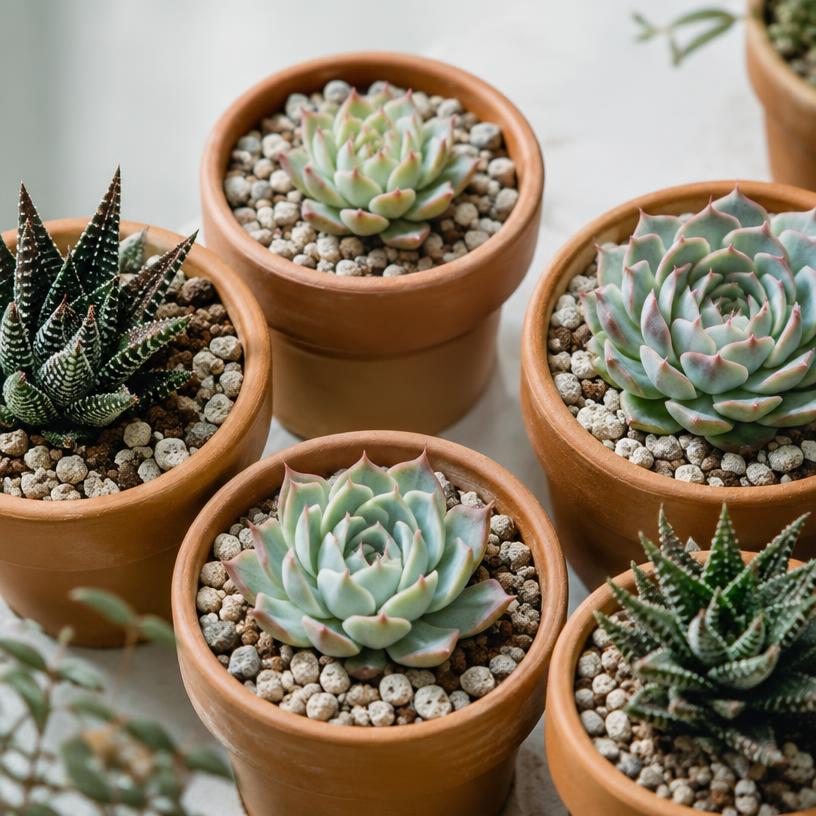
Terracotta is the best pot material for succulents because its porous walls let excess moisture evaporate from the sides, not just the drainage hole. This dries the soil faster and makes it much harder to overwater by accident. Glazed ceramic or plastic pots hold moisture longer, which can work if you are careful, but they remove your margin for error.
Shape matters as much as material. Most succulents have shallow, spreading root systems, so a shallow wide pot usually suits them better than a tall deep one. Depth beyond what the roots need just means more soil staying wet longer with nothing using that moisture. For sizing guidance that applies across plant types, see what size pot for repotting.
| Plant situation | Pot width increase | Notes |
|---|---|---|
| Single rosette (echeveria, haworthia) | 0.5 to 1 inch (1 to 2.5 cm) | Stay shallow; roots rarely go deep |
| Clumping plant with offsets | 1 to 2 inches (2.5 to 5 cm) | Leave room for pups to fill in over a season |
| Tall columnar cactus | 1 inch (2.5 cm), but deeper pot | Needs depth for anchorage, not width |
How do you care for succulents after repotting?
The biggest mistake after repotting is reaching for the watering can too soon. Broken roots are open wounds, and wet soil around them invites rot before the cuts have a chance to seal. Wait 3 to 7 days, longer in cool or humid conditions, before giving the first drink, and even then water lightly at first.
Keep the newly repotted plant out of direct harsh sun for about a week and give it bright, indirect light instead, since stressed roots cannot yet support the transpiration that full sun demands. If the plant was stretched and leggy (etiolated) before repotting, this is also a good time to behead it: cut the rosette off the stretched stem, let the cut end callous for a few days, and replant the top as a fresh, more compact plant. The old stem will often sprout new pups from its base.
Advice by situation
Stretched or Leggy Growth
If low light caused the plant to stretch, behead the rosette, let it dry and callous for 3 to 5 days, then replant it shallowly in fresh mix for a more compact look.
Offsets and Pups
When you find baby offsets attached to the main plant during repotting, gently twist or cut them free and pot each one separately once any cut has calloused over.
Mealybug Infestation
If you spot white, cottony clusters in the old soil or crevices, discard that soil entirely, rinse the roots, and let them dry before potting in fresh mix.
Rootbound Nursery Plants
Succulents bought in small nursery pots often arrive in dense peat based soil; bare-root the plant and switch it fully to a gritty mix rather than just sizing up the pot.
Outdoor Succulents in Rainy Climates
For plants kept outside where rain is frequent, lean toward the higher end of the pumice and sand ratio and always use terracotta to help the mix dry between showers.
Common mistakes to avoid
- Repotting in late fall or winter dormancy. Wait for spring or early summer when active root growth can heal any damage quickly.
- Watering right after repotting. Wait 3 to 7 days so broken roots callous over before they meet moist soil.
- Using regular potting soil straight from the bag. Cut it with pumice and coarse sand so the mix drains in minutes, not hours.
- Choosing a deep pot for a shallow-rooted rosette. Pick a shallow, wide pot since most succulent roots stay close to the surface.
- Reusing old soil without inspecting it. Discard old soil and check the roots closely, since mealybugs and fungus gnat eggs often hide in it.
- Pulling the plant out by its leaves. Support the base or stem instead, since succulent leaves detach and bruise easily.
Quick checklist
- Confirm it is spring or early summer before starting.
- Mix 4 parts potting mix, 4 parts pumice, and 2 parts coarse sand.
- Choose a shallow, wide terracotta pot with a drainage hole.
- Brush away all old soil and inspect roots for pests or rot.
- Separate any offsets or pups into their own small pots.
- Trim mushy or blackened roots with clean scissors.
- Wait 3 to 7 days before the first watering.
Frequently asked questions
Can I repot succulents in winter?
It is best avoided. Succulents are semi-dormant in winter and heal much more slowly, so repotting then raises the risk of rot and stalled recovery. Wait for spring or early summer whenever possible.
How long should I wait to water a newly repotted succulent?
Wait 3 to 7 days. This gives any roots that were trimmed or torn during the move time to callous over, which makes them far less likely to rot once soil moisture returns.
Do succulents need special soil or will regular potting soil work?
Regular potting soil alone holds too much moisture. Blending it with pumice and coarse sand, such as the 4:4:2 ratio, creates the fast-draining mix succulents need.
What pot material is best for succulents?
Terracotta is the best choice because its porous walls let moisture evaporate from the sides as well as the bottom, which helps the mix dry quickly between waterings.
Can I replant a succulent that has stretched and gotten leggy?
Yes. Cut the rosette off the stretched stem, let the cut callous for a few days, then plant it shallowly in fresh mix. The old stem often produces new pups at its base.
Should I separate offsets when I repot a succulent?
Yes, this is an ideal time. Twist or cut pups free from the mother plant, let any cut ends callous for a couple of days, and pot each offset separately in its own gritty mix.