Best Pot for a Spider Plant: Size, Material and Drainage
By Sara Linwood, houseplant writerLast updated
The best pot for a spider plant is a sturdy plastic or glazed ceramic pot with a drainage hole, only 1 to 2 inches (2.5 to 5 cm) wider than the root ball. Terracotta suits people who tend to overwater, and hanging baskets show off the runners as long as they drain freely.
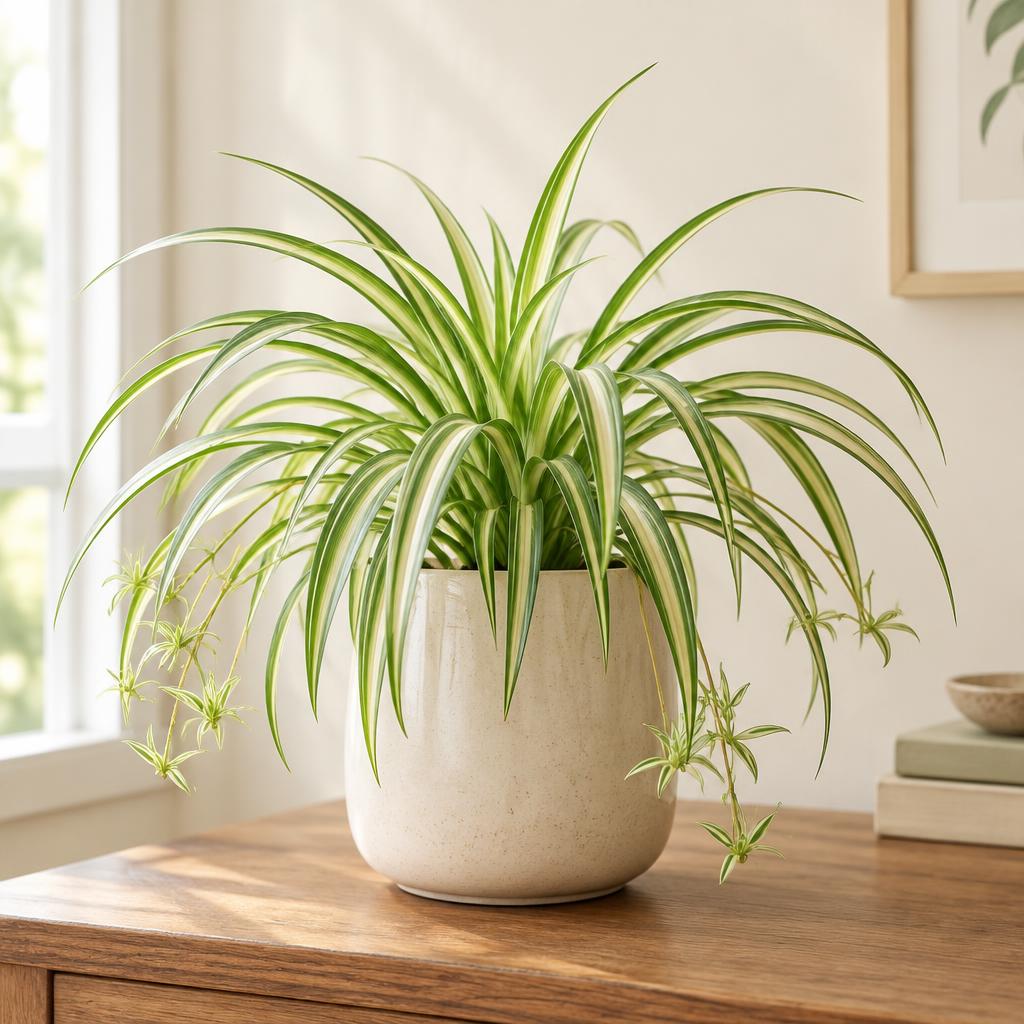
What kind of pot does a spider plant need?
Spider plants have thick, white, tuberous roots that store water. That makes them tough during dry spells but vulnerable in waterlogged soil. The pot's main job is to let excess water leave quickly, so a drainage hole matters more than the material or style.
These roots are also strong. In a thin plastic nursery pot, a mature spider plant can push the sides out of shape or even split the pot. A pot with sturdy walls and a slightly wider top than base makes the next repot much easier, because the root ball slides out instead of jamming.
| Feature | Why it matters | Ideal choice |
|---|---|---|
| Drainage hole | Stops water pooling around storage roots | At least one hole, bigger is better |
| Width | Roots spread outward as they fill the pot | 1 to 2 inches (2.5 to 5 cm) wider than root ball |
| Shape | Tapered pots release the root ball easily | Wider at the top than the base |
| Wall strength | Tuberous roots can crack thin plastic | Thick plastic, ceramic or terracotta |
| Weight | Arching leaves and runners can tip light pots | Moderate weight or a wide base |
Is terracotta, plastic or ceramic best for spider plants?
All three work, and the right one depends on how fast your home dries soil and how often you water. Unglazed terracotta is porous, so water evaporates through the walls and the mix dries faster. Plastic and glazed ceramic hold moisture longer, which suits warm, dry rooms or people who forget to water.
| Material | How fast mix dries | Best for | Watch out for |
|---|---|---|---|
| Unglazed terracotta | Fastest | Over-waterers, humid rooms | Salt crust on the outside; dries fast near heaters |
| Plastic | Slower | Dry homes, beginners, hanging baskets | Thin pots can bulge or crack from roots |
| Glazed ceramic | Slow | Display, dry homes | Often no hole; heavy to move |
| Self-watering pot | Stays moist | Rarely a good fit | Constantly damp mix can rot storage roots |
Pot material changes how much drainage you need in the soil. In terracotta, the standard spider plant mix of 5 parts potting mix, 3 parts perlite and 2 parts orchid bark dries well within a week. In plastic or ceramic, the soil mix calculator nudges the perlite and bark up slightly to make up for the walls that hold water. See best soil for spider plant for why this mix suits the plant.
What size pot is best for a spider plant?
Choose a pot 1 to 2 inches (2.5 to 5 cm) wider than the current root ball. Spider plants tend to put energy into roots when given lots of space, and tend to send out flowering stems and babies when slightly snug. A modest step up keeps that balance and stops a large volume of soil staying wet around the roots.
| Plant size | Pot diameter | Approximate mix needed |
|---|---|---|
| Rooted baby (plantlet) | 3 to 4 inches (8 to 10 cm) | About 2 to 3 cups (475 to 710 ml) |
| Young plant | 5 to 6 inches (13 to 15 cm) | About 7 cups (1.65 L) for 6 inches |
| Mature tabletop plant | 7 to 8 inches (18 to 20 cm) | About 16.5 cups (3.9 L) for 8 inches |
| Large clump | 10 inches (25 cm) or divide | Dividing is usually better |
The 6 and 8 inch amounts come from the calculator for a plastic pot in a normal home. For a 6 inch (15 cm) pot that is about 3.5 cups (830 ml) potting mix, 2 cups (474 ml) perlite and 1.5 cups (356 ml) orchid bark. For more general guidance on stepping up, read what size pot for repotting.
Are hanging baskets good for spider plants?
Yes, and they are a classic choice because the runners and babies cascade over the edge. The trade-offs are drying speed and watering mess. Air near the ceiling is often warmer and drier than at table height, so a hanging spider plant may need water every 4 to 6 days instead of every week.
- Plastic hanging pots with a clip-on saucer are the easiest option: light, slow to dry, and they catch drips.
- Wire baskets lined with coir look natural and drain well but dry out fast, so they suit humid rooms or bathrooms.
- Ceramic hanging pots are heavy, so check the hook and ceiling fixing can take the wet weight.
- Avoid baskets with no drainage; water collects at the bottom where you cannot see it.
Whatever you hang it in, take it down every few weeks and check that the drainage hole is clear and the mix is not staying wet at the bottom.
How do you make sure a spider plant pot drains well?
A hole in the base is the starting point. Skip the layer of gravel or pebbles in the bottom: it does not improve drainage and actually raises the wet zone of soil closer to the roots. A light, airy mix throughout the pot does far more.
Step by step
Set up a spider plant pot for good drainage
Time: about 20 minutes
You'll need
- Pot 1 to 2 inches (2.5 to 5 cm) wider than the root ball, with a drainage hole
- 3.5 cups (830 ml) potting mix for a 6 inch (15 cm) pot
- 2 cups (474 ml) perlite
- 1.5 cups (356 ml) orchid bark
- A piece of mesh or a coffee filter
- Check the hole. Make sure the pot has at least one drainage hole. If it has none, use it as a cover around a plastic nursery pot instead.
- Cover the hole. Lay mesh or a coffee filter over the hole so the mix stays in while water still flows out. Do not add a gravel layer.
- Mix the soil. Blend the potting mix, perlite and bark so the perlite and bark are spread evenly throughout.
- Pot the plant. Set the plant so its crown sits level with the soil surface, about 1 inch (2.5 cm) below the rim, and fill around the sides.
- Test the drainage. Water slowly. Water should start leaving the hole within a minute or so. If it pools on top, the mix is too dense.
If water now runs straight through without soaking in, the plant is probably rootbound and ready for repotting a spider plant. If the mix stays soggy and leaves go limp, check for spider plant root rot.
Advice by situation
Beginners
A thick plastic pot with a drainage hole and a saucer, one size up from the nursery pot, is the safest setup.
Dry homes
Use plastic or glazed ceramic and keep the plant away from radiators; a hanging plant near a warm ceiling dries even faster.
Humid homes
Terracotta or a coir-lined basket works well, since the extra evaporation keeps the mix from staying damp.
Over-waterers
Go with unglazed terracotta and a pot only 1 inch (2.5 cm) bigger, so the mix dries before you are tempted to water again.
Pets in the home
Spider plants are listed as non-toxic to cats and dogs, but cats love chewing the leaves. A hanging pot keeps them out of reach.
Common mistakes to avoid
- Using a pot with no drainage hole. Pick a pot with a hole, or use the decorative pot only as a cover.
- Adding gravel to the bottom for drainage. Skip it and use a light mix with perlite and bark all the way through.
- Picking a pot far too big. Go up 1 to 2 inches (2.5 to 5 cm) so the mix dries in about a week.
- Leaving water in the cover pot or saucer. Empty it 15 minutes after watering.
- Using a self-watering pot. Spider plant storage roots prefer drying slightly between waterings, so a standard pot is a better fit.
Quick checklist
- Pot has at least one drainage hole.
- Diameter is 1 to 2 inches (2.5 to 5 cm) wider than the root ball.
- Material suits your home: terracotta for humid or over-watered, plastic or ceramic for dry.
- Walls are sturdy enough not to bulge as roots grow.
- Mix is 5 parts potting mix, 3 parts perlite, 2 parts orchid bark.
- No gravel layer in the bottom.
- Saucer or cover pot is emptied after watering.
Frequently asked questions
Do spider plants need drainage holes?
Yes. Their thick storage roots rot if they sit in water, so a pot with at least one drainage hole is the single most important feature.
Is terracotta good for spider plants?
It works well, especially if you tend to overwater or live in a humid home. In warm, dry rooms it can dry the mix too quickly, so plastic may suit better.
Do spider plants like small pots?
They like being slightly snug, which often encourages flowers and babies. Move up 1 to 2 inches (2.5 to 5 cm) once roots lift the plant or crack the pot.
Can a spider plant live in a hanging basket?
Yes, hanging baskets are ideal for showing off the runners. Just check moisture more often, since air near the ceiling tends to be warmer and drier.
Why did my spider plant crack its pot?
The tuberous roots expand as they fill the pot and can split thin plastic. It is a clear sign the plant needs repotting or dividing.