Spider Plant Root Rot: Signs, Fixes and the Soil That Stops It
By Sara Linwood, houseplant writerLast updated
If your spider plant's leaves go limp and yellow, the center of the crown turns brown and soft, and the soil stays wet, it has root rot. Cut out the mushy roots and any rotten crown, then repot into a light mix of 50% potting mix, 30% perlite and 20% orchid bark, or root its babies if the crown is lost.
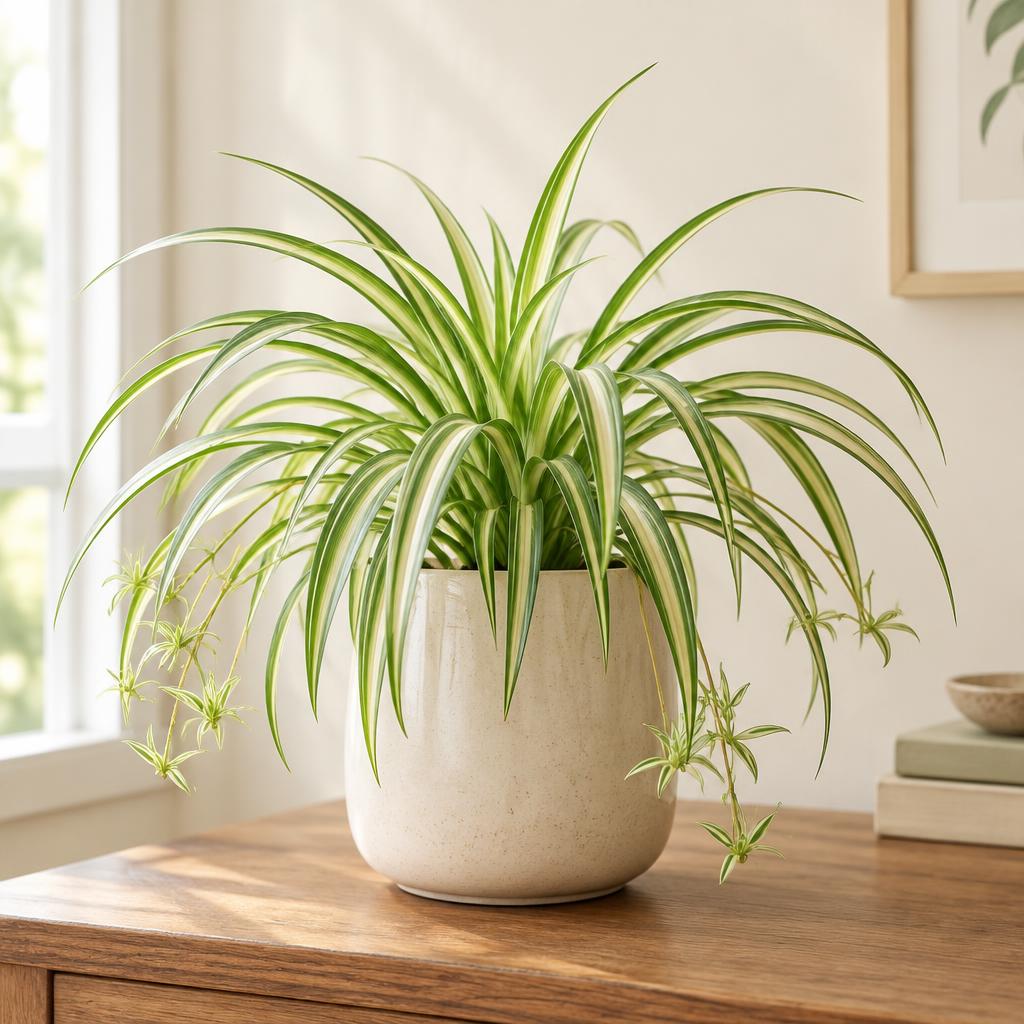
What does root rot look like on a spider plant?
Spider plant root rot shows first as limp, yellowing leaves, especially near the center, while the soil is still damp. Healthy spider plant leaves arch with some spring to them. Rotting plants have leaves that flop and feel soft.
The crown, where all the leaves meet at the soil, is the key place to look. When rot reaches it, the base of the leaves turns brown or black and mushy, and leaves pull out easily. The plant may stop producing babies.
- Limp, yellow leaves starting from the center.
- Brown, mushy crown at the soil line.
- Leaves that pull out with little effort.
- No new runners or babies in the growing season.
- Sour smell from wet soil.
Why does a spider plant get root rot?
Spider plants rot when their soil stays wet longer than about 5 to 8 days. Their thick, tuberous roots store water, so the plant can handle a missed watering easily. What it cannot handle is roots that sit in soggy soil.
- Dense soil with no perlite. The best soil for spider plants is light and airy.
- Hanging baskets without drainage, or with a built-in saucer that holds water.
- Watering often because the plant drinks a lot in summer, then not slowing down in winter.
- Oversized pots. Spider plants do best slightly snug.
- Watering into the crown, which keeps the center wet.
| Season | Typical dry time | Watering |
|---|---|---|
| Spring and summer | 5 to 7 days | About weekly, check first |
| Fall | 7 to 10 days | Every 1 to 2 weeks |
| Winter | 10 to 14 days | Only when dry 2 inches down |
Spider plants grown in hanging baskets are the most common rot cases. Many baskets come with a built-in saucer or a plastic liner with no holes, and water collects out of sight. When you unpot, check the bottom of the basket for standing water and a dark, smelly layer of soil. If you find one, switch to a basket with real drainage holes or keep the plant in a nursery pot inside the basket.
How do you check spider plant roots?
Slide the plant out of its pot. Spider plants often pack their pots so full of thick roots that you need to squeeze or cut a plastic pot to free them.
Healthy roots are thick, white, and often have fat tubers that look a bit like small white carrots. Those tubers are normal water stores. Rotten roots and tubers are brown, soft, and squash easily. Check the crown too. It should be firm and pale.
| Feature | Healthy | Rotten |
|---|---|---|
| Color | White to cream | Brown to black |
| Tubers | Plump and firm | Soft, collapsed |
| Crown | Firm, pale | Brown, mushy |
If the plant has several crowns, check each one on its own. Rot often hits one side of a crowded clump first, where water collects. The other crowns may be perfectly healthy and can be split off and replanted right away in fresh mix.
How do you save a spider plant with root rot?
Cut out the rot, repot in fresh airy mix, and root any babies as backup. Spider plants are tough and often bounce back if the crown is still firm.
Step by step
How to treat spider plant root rot
Time: about 40 minutes
You'll need
- Clean, sharp scissors
- Rubbing alcohol
- Potting mix, 3 1/2 cup (830 ml) for a 6 inch pot
- Perlite, 2 cups (474 ml)
- Orchid bark, 1 1/2 cup (356 ml)
- Pot with a drainage hole
- Glass of water for babies
- Unpot and rinse. Remove the plant and rinse the roots with lukewarm water.
- Cut the rot. Sterilize your scissors. Cut all brown, soft roots and tubers. Remove limp, yellow leaves at the base.
- Save the babies. Snip off any babies with small root nubs and stand their bases in water. Roots grow in 1 to 2 weeks. If the crown is mushy, the babies are your new plants.
- Divide if needed. Large clumps often have several crowns. Pull apart and keep only firm crowns with healthy roots.
- Repot in light mix. Mix 50% potting mix, 30% perlite and 20% orchid bark. Use a clean pot sized to the remaining roots.
- Water after 3 to 5 days. The tuberous roots hold water, so wait 3 to 5 days, then water around the edge of the pot, not into the crown.
Use the soil mix calculator for exact amounts. For timing future repots, see signs your plant needs repotting.
What other soil problems do spider plants get?
Spider plants are sensitive to minerals in water and pack their pots with roots fast. Most soil problems come from one of those two things.
| Problem | Cause | Fix |
|---|---|---|
| White mold on soil | Damp surface | Scrape off, water less |
| Fungus gnats | Wet top layer | Dry top inch, sticky traps |
| Brown leaf tips | Fluoride or salts | Flush soil, use rain water |
| Water runs straight through | Pot full of roots | Repot or divide |
| White crust | Mineral buildup | Flush and scrape top layer |
How do you stop root rot coming back?
Light mix, a snug pot and watering around the edge keep spider plants rot-free.
- Water when the top 2 inches (5 cm) are dry. The tuberous roots cover you if you run late.
- Pour water around the edge of the pot, not into the crown, so the center dries quickly.
- Check hanging baskets for drainage. Many have built-in saucers that hold water; empty them after watering.
- Repot or divide every 1 to 2 years, before roots fill the pot so tightly that the mix compacts.
Spider plants also need less water in winter. Growth slows and runners stop, so checking every 10 to 14 days is usually enough.
Hanging baskets deserve extra attention. You cannot see the soil easily, so it is tempting to water on a schedule. Instead, lift the basket from below. A wet basket feels heavy. A dry one feels light. Water only when it feels light, and let it drip in the sink before you hang it back up. If babies hang from the plant, they do not need extra water at the roots. They feed from the mother.
Advice by situation
Beginners
Water when the top 2 inches (5 cm) are dry and always use a pot with a hole. A spider plant handles dryness better than wet.
Dry homes
Soil may dry in 5 days. Water deeply, then let it drain fully.
Humid homes
Allow 8 days or more between waterings and add extra perlite.
Over-waterers
Lift the pot and learn its dry weight. Water only when it feels light.
Common mistakes to avoid
- Watering into the center of the plant. Water around the edge of the pot.
- Hanging baskets with no drainage. Use a basket with holes and an inner pot.
- Removing healthy tubers. Plump, firm tubers are normal. Keep them.
- Reusing old soil. Use fresh 50/30/20 mix.
- Ignoring the babies. Root a few as backup during the rescue.
Quick checklist
- Check the crown for brown, soft tissue
- Unpot and rinse the roots
- Cut brown roots and soft tubers
- Root babies in water as backup
- Repot in fresh 50/30/20 mix
- Wait 3 to 5 days before watering
- Water at the edge, not into the crown
Frequently asked questions
Can a spider plant recover from root rot?
Yes, if the crown is still firm. Trim the rot and repot. If the crown is mushy, root the babies to start new plants.
Should I use hydrogen peroxide on spider plant roots?
It is optional. A quick rinse in 3% peroxide diluted with 2 parts water is fine, but trimming and airy mix do the real work.
Does root rot spread to other plants?
It can, through shared soil, trays and tools. Throw out old soil and clean everything.
Why are my spider plant leaves limp?
Limp leaves in wet soil usually mean rot. Limp leaves in dry soil mean it needs water.
Are the white lumps on spider plant roots a problem?
No. Those are tubers that store water. Firm white tubers are healthy.
How long do spider plant babies take to root?
Usually 1 to 2 weeks in water. Pot them in light mix once roots are about 1 inch (2.5 cm) long.