Best Pot for a Snake Plant: Size, Material, Drainage
By Sara Linwood, houseplant writerLast updated
The best pot for a snake plant is a porous terracotta container with at least one large drainage hole that is only 1 to 2 inches (2.5 to 5 cm) wider than the root ball. This setup ensures that the gritty soil mix dries out quickly and prevents the stagnant moisture that lead to root rot in Sansevieria species.
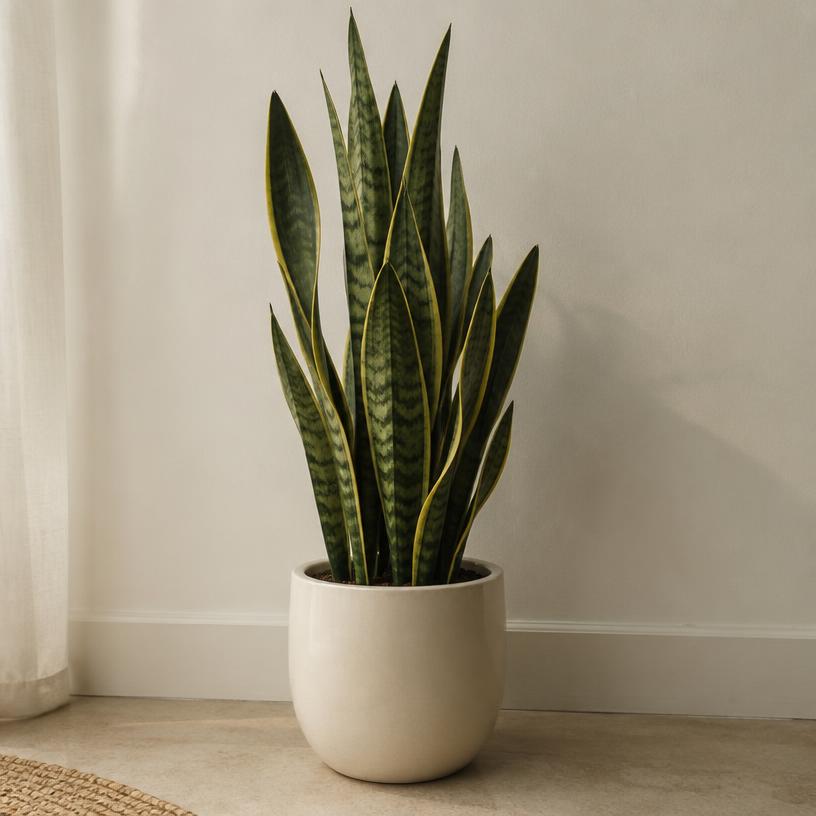
What size pot does a snake plant need?
When it comes to snake plants, bigger is almost never better. These plants have a relatively small and shallow root system compared to their tall, heavy leaves. If you put a small snake plant into a massive pot, the large volume of soil will hold onto water far longer than the plant can drink it. This creates a dangerous zone of cold, wet soil at the bottom of the pot that eventually leads to rot.
The ideal pot size is one that provides about 1 inch (2.5 cm) of space between the root ball and the edge of the container. If you are repotting a snake plant, you should only increase the diameter by 1 to 2 inches (2.5 to 5 cm). For example, if your plant is currently in a 6 inch (15 cm) pot, move it to a 7 or 8 inch (18 or 20 cm) pot. This small increase allows the roots to expand and produce 'pups' without being overwhelmed by excess moisture sitting in unused soil.
Snake plants actually prefer to be slightly root-bound. This stress often encourages them to grow faster and produce more babies. If the pot is too wide, the plant may focus its energy on growing roots to fill the space rather than producing the beautiful upright foliage you want to see. You can check for signs that it is time for a move in our guide on signs your plant needs repotting.
| Plant Height | Current Pot Size | Recommended New Pot Size |
|---|---|---|
| Under 1 foot (30 cm) | 4 inches (10 cm) | 5 to 6 inches (13 to 15 cm) |
| 1 to 2 feet (30 to 60 cm) | 6 inches (15 cm) | 7 to 8 inches (18 to 20 cm) |
| 2 to 3 feet (60 to 90 cm) | 8 to 10 inches (20 to 25 cm) | 10 to 12 inches (25 to 30 cm) |
| Over 3 feet (90 cm) | 12 inches (30 cm) | 14 inches (35 cm) |
Terracotta vs. plastic vs. ceramic: which is best?
The material of your pot significantly impacts how often you need to water and how healthy the roots stay. Because snake plants are succulents that store water in their leaves, they are sensitive to over-watering. Choosing a breathable material can act as a safety net against accidental over-watering.
Terracotta: The Gold Standard
Unglazed terracotta is the best choice for almost all snake plants. It is porous, meaning it allows air and moisture to pass through the clay walls. This helps the soil dry out evenly from all sides. If you tend to be a 'heavy-handed' waterer, terracotta is your best friend. It also has a nice natural weight that prevents tall, top-heavy plants from falling over.
Plastic: Durable and Moisture-Retentive
Plastic pots are inexpensive and durable. However, they hold moisture much longer than clay. If you use a plastic pot, you must ensure your best soil for snake plant mix is extra gritty (at least 50% drainage material like perlite or sand). Plastic is ideal if you live in an extremely dry climate where terracotta might dry out too fast.
Ceramic: Beauty with Responsibility
Glazed ceramic pots are beautiful and heavy, but the glaze seals the clay, preventing airflow. If you use a ceramic pot, it MUST have a drainage hole. Without one, you are creating a stagnant environment at the bottom of the pot. Never plant a snake plant directly into a glazed pot that lacks a drainage exit.
| Material | Porosity | Weight | Best For... |
|---|---|---|---|
| Terracotta (Unglazed) | High | Heavy | Beginners and over-waterers |
| Plastic | None | Light | Dry homes and hanging displays |
| Ceramic (Glazed) | None | Very Heavy | Top-heavy plants (with drainage) |
| Fiberglass | Low | Medium | Modern aesthetics |
Do snake plants need drainage holes?
Yes, a drainage hole is a non-negotiable requirement. Without a way for excess water to escape, every drop you pour into the pot stays trapped. Over time, this water displaces the oxygen in the soil. Roots need to breathe; when they are submerged in stagnant water, they drown and begin to rot.
A drainage hole also allows you to 'flush' the soil. Minerals from tap water and salts from fertilizers build up over time. If you always water in small sips because the pot has no hole, these salts accumulate and can burn the roots. With a drainage hole, you can water deeply until the liquid runs out the bottom, washing away those harmful deposits.
If you love a pot without a hole, use it as a decorative cover. Keep the plant in its plastic nursery pot and place that inside the decorative one. When it is time to water, take the plastic pot to the sink, let it drain completely, and then put it back into the decorative one.
For those mixing their own soil, remember the 40/30/30 ratio from our soil mix calculator: 40% potting mix, 30% perlite, and 30% coarse sand. This mix only works if the water has a path to leave the container!
Can I use cachepots or self-watering pots?
A 'cachepot' is a decorative outer pot without a hole that hides a nursery pot. This is a great way to keep your snake plant healthy while matching your decor. The key is to never let the nursery pot sit in a pool of water at the bottom of the cachepot. Check the bottom 15 minutes after watering and dump out any collected liquid.
Self-watering pots are generally a bad idea for snake plants. These pots keep the soil constantly moist via a reservoir and wick. This is a death sentence for a snake plant, which needs a distinct 'wet-dry' cycle. Constant moisture leads to mushy leaves and rot within weeks.
If you must use a self-watering pot, do not fill the reservoir. Treat it like a normal pot and only water from the top when the soil is bone dry. Even then, the design of these pots often restricts airflow to the root zone, so they are best avoided for desert species.
Is a gravel layer at the bottom a good idea?
There is a myth that putting a layer of gravel at the bottom of a pot 'improves drainage.' In reality, it does the opposite by creating a 'perched water table.' Water does not move easily from fine-textured soil into coarse gravel until the soil above is completely saturated.
By adding 2 inches (5 cm) of gravel at the bottom of a 10 inch (25 cm) pot, you have moved the bottom of the pot up. The 'saturated zone' of soil now sits closer to the roots. This increases the risk of root rot. The roots will hit that wet layer much sooner, and the soil will take longer to dry out.
Instead of gravel, use the same fast-draining soil mix throughout. If you are worried about soil falling out of the hole, cover it with a small piece of mesh or a coffee filter. This allows water to flow through while keeping the soil inside.
A standard 6 inch (15 cm) pot holds about 6 cups (1.4 liters) of soil. If you fill the bottom with 2 cups (474 ml) of rocks, you are depriving the plant of root space. Always stick to a consistent, gritty mix throughout the entire container to ensure even drying.
Advice by situation
Beginners
Stick to unglazed terracotta. It is the most forgiving material and will clearly show you when the soil is wet versus dry.
Dry Homes
If your indoor air is very dry (below 30% humidity), a plastic or glazed ceramic pot can help keep the roots from desiccating too quickly.
Humid Homes
In humid environments, soil stays wet for a long time. Use a shallow terracotta 'azalea' pot and increase the sand in your mix to 40% for faster drying.
Over-waterers
Use a small terracotta pot and a mix that is 50% pumice or perlite. This ensures the majority of the water exits the pot almost instantly.
Common mistakes to avoid
- Using a pot with no drainage holes. Drill a hole with a diamond-tipped bit or use a plastic nursery pot inside the decorative one.
- Choosing a pot that is too deep for the root system. Snake plants have shallow roots; avoid extra-deep pots which hold too much stagnant moisture.
- Putting rocks in the bottom for drainage. Omit the rocks and use a consistent gritty soil mix throughout the container.
- Ignoring the water in the saucer. Always empty the drainage saucer after watering so the plant does not sit in water.
- Using a pot that is too wide. Limit the diameter increase to 1 to 2 inches (2.5 to 5 cm) to maintain the correct moisture balance.
Quick checklist
- Select a pot only 1 to 2 inches (2.5 to 5 cm) wider than the root ball.
- Prioritize unglazed terracotta for its excellent breathability.
- Verify the presence of at least one functional drainage hole.
- Avoid self-watering pots or reservoirs for this species.
- Use a mesh screen over the hole instead of a gravel layer.
- Ensure the pot is heavy enough to support tall leaves.
Frequently asked questions
Can I use a glass jar for a snake plant?
It is not recommended. Glass has no drainage, no airflow, and encourages algae growth and root rot.
What is an azalea pot?
An azalea pot is slightly shorter and wider than a standard pot. They are excellent for snake plants because they match the shallow root system.
Is a 12 inch (30 cm) pot too big?
Only if the root ball is much smaller. Size should always be relative to the roots, not the leaves.
Can I drill holes in ceramic pots?
Yes, you can use a masonry or diamond-core drill bit and water to keep it cool while drilling.
How do I know if my pot is too small?
Signs include roots cracking a plastic pot, roots pushing the plant upward, or needing water every 2 days.
Should I wash a new terracotta pot?
Yes, soaking a new terracotta pot in water for an hour prevents it from sucking moisture out of your fresh soil mix.