Best Pot for a Fiddle Leaf Fig: Size and Drainage Guide
By Sara Linwood, houseplant writerLast updated
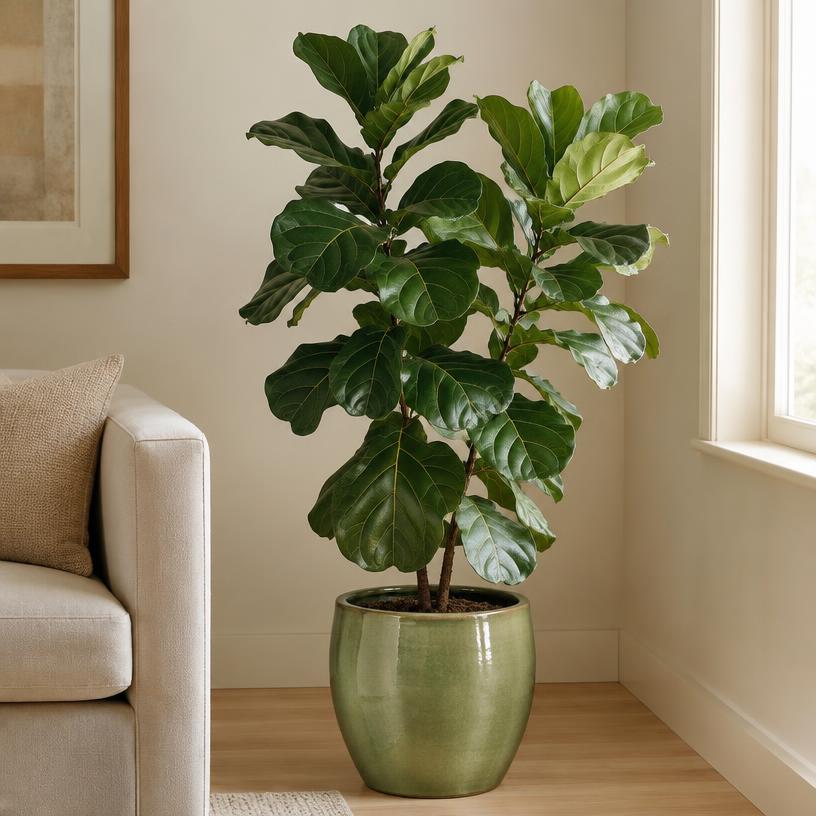
The best pot for a fiddle leaf fig is one that is only 1 to 2 inches (2.5 to 5 cm) wider than the root ball and features at least one large drainage hole. For tall trees, a heavy material like ceramic or terracotta is essential to provide a stable base and prevent the top-heavy canopy from tipping over.
What size pot does a fiddle leaf fig need?
Selecting the correct size is the most important decision you will make for your fiddle leaf fig. A common mistake is choosing a pot that is much larger than the current one. This often leads to disaster because a fiddle leaf fig needs a pot that is only 1 to 2 inches (2.5 to 5 cm) wider in diameter than its current container. If you move a plant from a 10 inch (25 cm) pot into a 16 inch (40 cm) pot, the massive volume of new soil will hold far more water than the roots can drink, leading directly to root rot.
When determining the size, look at the root ball itself rather than just the height of the plant. A tall tree might still have a relatively small root system. If the roots are tightly circling the bottom, it is time for that small 1 to 2 inch (2.5 to 5 cm) upgrade. If the roots still have plenty of room to grow, do not change the pot size yet. You can find more details in our guide on what size pot for repotting.
| Plant Height | Ideal Pot Diameter | Soil Volume Needed |
|---|---|---|
| Under 2 feet (60 cm) | 6 to 8 inches (15 to 20 cm) | 3 to 6 cups (710 to 1420 ml) |
| 2 to 4 feet (60 to 120 cm) | 10 to 12 inches (25 to 30 cm) | 12 to 20 cups (2840 to 4730 ml) |
| 4 to 6 feet (120 to 180 cm) | 14 to 16 inches (35 to 40 cm) | 30 to 45 cups (7100 to 10650 ml) |
While width is the standard measurement, the pot should also be deep enough to cover the root system with about 1 inch (2.5 cm) of fresh soil at the bottom. If you use a very deep pot, ensure you are using a very airy mix, like our recommended 6 parts potting mix, 2 parts orchid bark, and 2 parts perlite. Use the soil mix calculator to figure out exactly how much of each ingredient you will need for your specific pot dimensions.
Terracotta, plastic, or ceramic: which is best?
Terracotta is a classic choice because the clay is porous, allowing air to reach the roots and moisture to evaporate through the walls. This is an excellent safeguard against over-watering. If you tend to water too often, terracotta is your best friend. However, the soil will dry out faster, which might be a challenge in very dry homes.
Plastic nursery pots are lightweight and hold moisture for a long time. They are often used as liners inside a more decorative outer cachepot. This system is convenient because you can take the plastic pot to the sink to water it and let it drain completely. However, plastic provides zero stability for a tall tree. If your fiddle leaf fig is over 3 feet (90 cm) tall, a plastic pot alone is likely to tip over.
Ceramic pots, especially glazed ones, offer a middle ground. They are heavy and stable, which is perfect for large trees. Glazed ceramic does not breathe like terracotta, so it holds moisture similarly to plastic. Always ensure your ceramic pot has a pre-drilled drainage hole. Some decorative ceramic pots do not have holes; these should only be used as outer cachepots. For more on soil behavior, check out the best soil for a fiddle leaf fig article.
How do you keep a tall fiddle leaf fig from tipping over?
Fiddle leaf figs are notoriously top-heavy. They grow large leaves on relatively thin trunks. To keep your tree stable, the weight of the pot and soil should be significant enough to act as an anchor. A heavy ceramic or stone pot is usually sufficient for trees up to 5 feet (150 cm) tall.
For exceptionally tall trees, you can place a few heavy, clean stones at the very bottom of the pot before adding your soil mix. Note that this is for weight only, not for drainage. Another option is to use a wide-based pot. A pot that tapers significantly toward the bottom is much less stable than a cylinder. If your plant is already in a light pot, you can place it inside a much larger, heavy decorative pot and fill the gap with stones.
Stability is also a matter of safety. If a fiddle leaf fig tips over, it often snaps branches. The shock of the fall can cause the plant to drop all its leaves. Investing in a heavy pot is cheaper than replacing a mature tree. If you notice your plant is leaning, review the signs your plant needs repotting for more help.
Do fiddle leaf figs need drainage holes and saucers?
A drainage hole is the single most important feature of a fiddle leaf fig pot. Without a hole, excess water pools at the bottom, creating a death zone where roots cannot breathe. In this anaerobic environment, rot-causing bacteria and fungi thrive. It is almost impossible to estimate how much water the soil is holding at the bottom without a drainage hole.
If you find a pot you love that has no hole, you can use a masonry drill bit to carefully drill one yourself, or use it as a cachepot. To use a cachepot, keep the plant in a slightly smaller plastic nursery pot with holes, and place that inside the decorative pot. When you water, you can lift the inner pot out, water it at the sink, and return it once it has stopped dripping.
Saucers are equally important for protecting your home. A high-quality plastic or glazed ceramic saucer will catch any runoff. Just be sure to empty the saucer about 30 minutes after watering. If the plant sits in a saucer full of water for days, the soil will wick that moisture back up, keeping the bottom roots constantly saturated. For more on the mechanics of moving your plant, read how to repot a fiddle leaf fig.
Is adding a gravel layer at the bottom a myth?
For decades, the standard advice was to add a layer of gravel to the bottom of a pot to improve drainage. We now know that this is a myth and can actually harm your plant. This practice creates what is known as a perched water table. Water does not move easily from the fine-textured soil into the coarse-textured gravel. Instead, the water saturates the soil at the boundary until the entire soil column above the gravel is completely soaked.
By adding a layer of rocks, you are effectively moving the bottom of the pot higher up, closer to the roots. This leaves less room for healthy root growth and keeps the roots in the danger zone of wet soil for longer. Instead of rocks at the bottom, the best way to ensure good drainage is to mix aerating materials like perlite and orchid bark directly into your soil. Our recommended ratio for fiddle leaf figs uses 2 parts perlite and 2 parts bark for every 6 parts of potting mix.
If you are worried about soil falling out of a large drainage hole, do not use rocks. Instead, cover the hole with a small piece of fine mesh or a coffee filter that allows water to pass through but keeps the soil inside. This keeps your drainage functional without the risks of a perched water table. If your soil seems to be staying wet too long, you might be dealing with compaction. See our guide on how to fix compacted soil for solutions.
Advice by situation
For Absolute Beginners
Use a plastic nursery pot inside a heavy ceramic cachepot. This allows you to easily check soil moisture and remove the plant for watering.
For Dry Homes
Choose a glazed ceramic or plastic pot. These materials hold moisture longer than terracotta, preventing the soil from drying out too quickly.
For Humid Homes
Unglazed terracotta is ideal. The porous walls allow moisture to escape, preventing the soil from staying soggy for too long.
For Chronic Over-Waterers
Stick to terracotta and use a very chunky soil mix with extra perlite. This provides the best protection against root rot.
Common mistakes to avoid
- Using a pot with no drainage holes. Always ensure there is a hole for excess water to escape, or use a plastic liner pot.
- Choosing a pot that is too large. Only go up 1 to 2 inches (2.5 to 5 cm) in diameter at a time to keep the soil-to-root ratio balanced.
- Using a lightweight pot for a tall tree. Select heavy ceramic, stone, or terracotta to provide a low center of gravity.
- Leaving water in the saucer for days. Empty the saucer within 30 to 60 minutes of watering to prevent moisture wicking.
- Adding a layer of rocks at the bottom. Mix drainage ingredients like perlite and bark throughout the soil instead.
Quick checklist
- Measure the current pot diameter before shopping.
- Look for a new pot that is 1 to 2 inches (2.5 to 5 cm) wider.
- Verify the presence of at least one functional drainage hole.
- Check that the pot material matches your watering style.
- Ensure the pot is heavy enough to support the height of the tree.
- Get a saucer that is wide enough to catch all runoff.
- Prepare a soil mix of 6 parts potting mix, 2 parts bark, and 2 parts perlite.
Frequently asked questions
Can I use a self-watering pot for a fiddle leaf fig?
Self-watering pots can be risky for fiddle leaf figs because they often keep the soil consistently moist. If you use one, ensure you use a very airy soil mix.
What should I do if my favorite pot has no hole?
The safest method is to use it as a cachepot. Keep your tree in a plastic nursery pot with drainage holes and simply set it inside the decorative pot.
How heavy should the pot be?
For a 5 foot (150 cm) tree, the pot and soil combined should ideally weigh at least 20 to 30 pounds (9 to 14 kg) to prevent tipping.
Does the shape of the pot matter?
Yes, cylinder-shaped pots are generally more stable than highly tapered ones. Tapered pots have a narrower base, making them easier to tip over.
Is a 12 inch (30 cm) pot big enough for a mature fiddle leaf fig?
A 12 inch (30 cm) pot is usually fine for a tree that is 3 to 4 feet (90 to 120 cm) tall.
Can I use a metal pot?
Metal pots can work but they often lack drainage holes and can rust. They also conduct heat quickly, which can stress roots.