Best Soil for Fiddle Leaf Fig: Ideal Mix & DIY Recipe
By Sara Linwood, houseplant writerLast updated
The best soil for a fiddle leaf fig is a well-draining blend of 60% potting soil, 20% orchid bark, and 20% perlite to ensure the roots receive adequate oxygen while retaining necessary moisture. Fiddle leaf figs (Ficus lyrata) are notorious for dropping leaves if their roots remain wet or suffocate, so a chunky, airy structure is vital for their health.
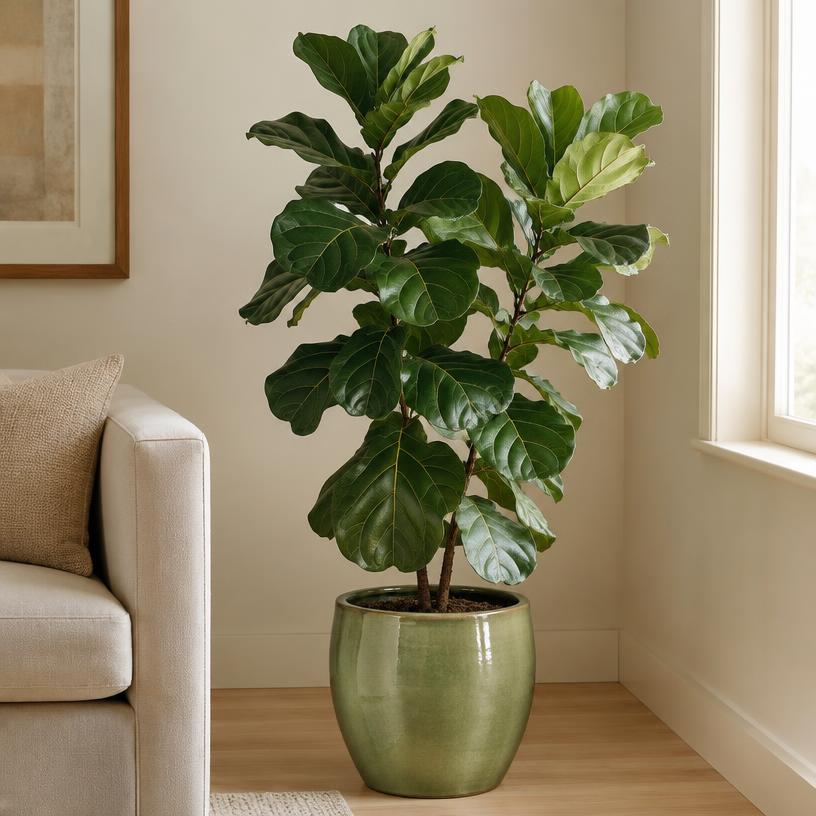
Why is soil drainage critical for fiddle leaf figs?
Fiddle leaf figs are native to the tropical forests of Western Africa, where they grow as large trees. They are extremely sensitive to the moisture levels in their root zone. They need a steady supply of water to support their large, broad leaves, but they absolutely cannot tolerate stagnant water at the root zone for more than a day or two.
When soil is too heavy, the small air spaces between particles collapse under the weight of the water. Without oxygen, the roots start to die, which almost always triggers leaf spotting, browning, or sudden leaf drop. A well-mixed soil prevents this by maintaining structural integrity even when wet.
What is the best soil ratio for Fiddle Leaf Fig?
The most successful ratio for Fiddle Leaf Figs is 60% high-quality potting soil, 20% orchid bark, and 20% perlite. This blend is slightly more moisture-retentive than a Monstera mix, which is helpful given how much water these large-leaved plants transpire. However, it still contains enough grit and bark to keep the soil from compacting.
| Component | % of mix | Function |
|---|---|---|
| Potting soil | 60% | Provides the main nutrient and moisture base |
| Orchid bark | 20% | Improves drainage and aeration by creating gaps |
| Perlite | 20% | Prevents soil compaction and ensures light texture |
Before you begin mixing, consider using the soil mix calculator to adjust for your specific environment, especially if you have very humid or dry indoor conditions that might require more or less drainage.
Your fiddle leaf fig soil, measured
Fiddle Leaf Fig recipe
6 inch (15 cm) plastic pot, normal home
- Potting mix 60%4.25 cups (1007 ml)
- Orchid bark 20%1.5 cups (356 ml)
- Perlite 20%1.5 cups (356 ml)
Total about 7 cups. Rich, structured mix that drains well and supports a tall plant.
How to prepare your own DIY Fiddle Leaf Fig soil
Step by step
DIY Fiddle Leaf Fig Soil
You'll need
- 6 cups indoor potting soil
- 2 cups orchid bark
- 2 cups perlite
- Mixing bucket
- Watering can
- Combine ingredients. Add the 6 parts soil, 2 parts bark, and 2 parts perlite to a large mixing container.
- Mix thoroughly. Use your hands or a scoop to blend the materials until the mix looks uniform and there are no large pockets of just one ingredient.
- Check moisture. The mix should be slightly damp but not wet. If it is bone dry, add a small splash of water to help the components bond together.
- Potting. Fill the pot to the proper level, place the tree, and backfill gently without packing the soil down hard, as this would defeat the purpose of the aeration.
What are common soil mistakes with Fiddle Leaf Figs?
The most common mistake is using a pot that is far too large for the plant's current root ball. This leads to a situation where the plant cannot use up the water in the surrounding soil fast enough, leaving the roots to sit in cold, wet dirt. Another mistake is forgetting that soil loses its nutritional value over time; even the best mix needs refreshing every couple of years.
| Issue | Impact | Fix |
|---|---|---|
| Soil is too tight | Root rot and leaf drop | Add 20% more perlite to the mix |
| Ignoring drainage holes | Sudden leaf drop from bottom up | Only use pots with large drain holes |
| Watering too early | Browning leaf tips and edges | Test soil with a finger to a depth of 3 inches (7.5 cm) |
| Fertilizer buildup | Salt damage to roots | Flush the soil with clean water every 6 months |
Advice by situation
Small plants
You can increase potting soil to 70% as smaller plants in small pots dry out very quickly in high-drainage mixes compared to large trees.
Large floor trees
Ensure the base is very sturdy, as the plant can become top-heavy. Use slightly larger grade orchid bark for better stability and longer life.
Humid climates
Increase perlite to 30% and reduce soil to 50% to prevent the mix from staying damp for too long in the moist air.
Dry indoor air
The soil may dry out fast; check moisture levels at least twice a week and consider a thin layer of decorative moss on top.
Common mistakes to avoid
- Repotting too often. Only repot every 2 years; fiddle leaf figs are sensitive to change and dislike having their roots disturbed.
- Packing the soil too tightly. Always keep the soil loose around the roots to allow for maximum oxygen flow.
- Using topsoil or garden dirt. Only use high-quality indoor potting mix to avoid pests and compaction issues.
- Never pruning the roots. When repotting, if the roots are circling, tease them apart gently to encourage outward growth.
- Sitting in water. Always drain the saucer completely after watering to prevent root suffocation.
Quick checklist
- Use 60% potting soil, 20% orchid bark, 20% perlite.
- Verify pH is between 6.0 and 7.0.
- Use a pot with excellent drainage capability.
- Check moisture with a finger before every watering.
- Repot every 2 years to refresh the soil structure.
- Avoid large jumps in pot size.
Frequently asked questions
Can I use succulent soil for Fiddle Leaf Figs?
It is usually too gritty and dries out way too fast for the needs of a Fiddle Leaf Fig. Stick to the 60/20/20 mix.
Why are my leaves getting brown spots in the middle?
This is most often a sign of root rot due to poor soil drainage or overwatering. Check your soil quality immediately.
Do I need to fertilize my FLF?
Yes, use a balanced liquid houseplant fertilizer during the growing season to replace the nutrients the tree consumes.
Should I add charcoal to the mix?
It can help with soil freshness and odor control, but it is not strictly required if you follow our standard recipe.
How do I know when the soil is compacted?
If water takes a long time to soak in or if the soil has pulled away from the sides of the pot, it is likely compacted.