How to Repot a Fiddle Leaf Fig Without Shocking It
By Sara Linwood, houseplant writerLast updated
Repot a fiddle leaf fig only when it is truly root bound, moving it just 1 to 2 inches (2.5 to 5 cm) wider into a mix of 6 parts potting mix, 2 parts orchid bark, and 2 parts perlite. Keep the root ball at the same depth it was growing at before, water lightly, and avoid moving the plant again for several weeks so it can recover without dropping leaves.
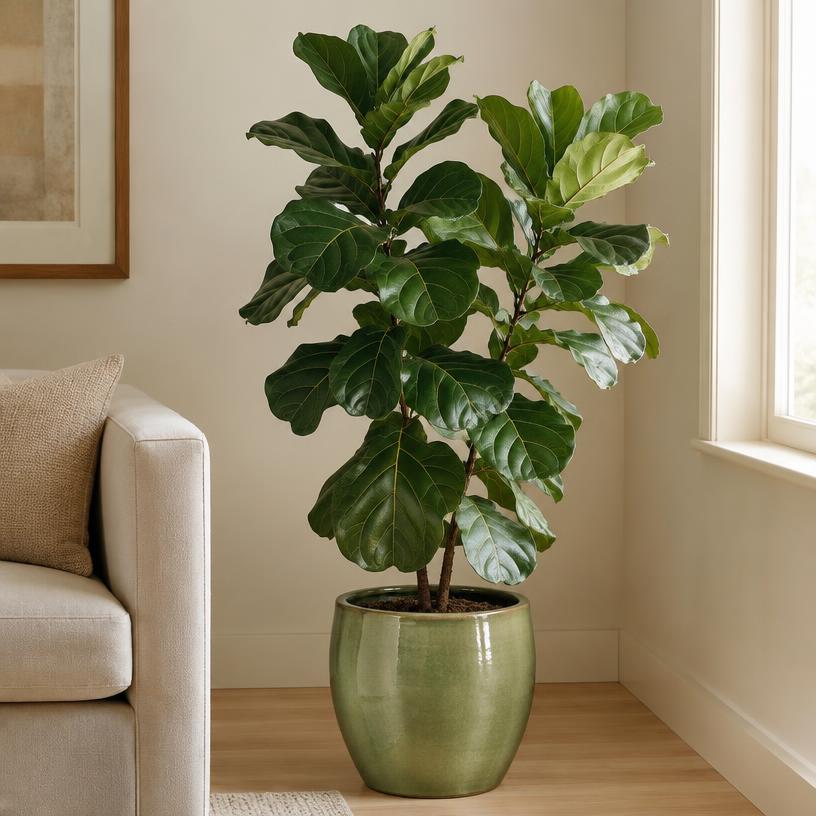
When does a fiddle leaf fig actually need repotting?
Fiddle leaf figs hate being disturbed and will often drop a few leaves just from being moved across a room, so repotting should never be done on a routine schedule out of habit. Most plants only need a new pot roughly every 2 years, ideally in spring when the plant is putting out new growth and can recover quickly from the root disturbance.
The clearest sign it is time is water running straight through the drainage holes within seconds of pouring, which means the root mass has filled the pot and there is almost no soil left to absorb moisture. Other clues include roots circling visibly at the surface or poking out of the drainage holes, and a plant that dries out much faster than it used to. For a broader checklist, see signs your plant needs repotting.
What is the best soil ratio for repotting a fiddle leaf fig?
A fiddle leaf fig needs a mix that holds some moisture and nutrients but still drains fast enough to keep the thick roots from sitting wet. The recipe we recommend is 6 parts potting mix, 2 parts orchid bark, and 2 parts perlite, which gives you a rich, structured base with plenty of air pockets for a tall, top-heavy plant.
| Ingredient | Parts | Function |
|---|---|---|
| Potting mix | 6 | Organic base that holds moisture and nutrients |
| Orchid bark | 2 | Chunky structure that keeps air pockets open as the mix settles |
| Perlite | 2 | Lightweight aeration that speeds drainage and prevents compaction |
For a 10 inch (25 cm) pot, this works out to roughly 9 cups (2130 ml) of potting mix, 3 cups (710 ml) of orchid bark, and 3 cups (710 ml) of perlite, though exact volumes depend on your pot shape. Use the soil mix calculator to get an exact amount for your pot size, or read best soil for fiddle leaf fig for more on why this ratio works so well for the species.
| Property | 6-2-2 fiddle leaf mix | Bagged all-purpose soil |
|---|---|---|
| Drainage speed | Fast, dries in 7 to 10 days | Slow, can stay wet 14+ days |
| Structure over time | Holds shape for 2+ years | Compacts within months |
| Root rot risk | Low | Higher, especially in large pots |
How do you repot a fiddle leaf fig step by step?
Step by step
Fiddle Leaf Fig Repotting Process
Time: about 40 minutes
You'll need
- A new pot, only 1 to 2 inches (2.5 to 5 cm) wider than the current one
- Fresh soil mix (6 parts potting mix, 2 parts orchid bark, 2 parts perlite)
- Clean, sharp pruning shears
- A trowel or scoop
- A helper if the plant is tall, since fiddle leaf figs can be top-heavy
- Watering can with room temperature water
- Prepare the new pot. Choose a heavy pot, ideally ceramic or terracotta, since a heavy base keeps a tall plant from tipping. Add a 1 to 2 inch (2.5 to 5 cm) layer of fresh soil mix at the bottom.
- Tip the plant out carefully. Lay the pot on its side and gently slide the root ball out, supporting the trunk rather than pulling on branches. Avoid shaking the whole plant around, since sudden movement is what triggers leaf drop.
- Inspect and trim the roots. Loosen any tightly circling roots with your fingers. Trim off roots that are mushy, dark, or foul smelling with clean shears, but leave healthy white or tan roots untouched.
- Set the plant at the same depth. Place the root ball in the new pot so the top of the roots sits at the same soil depth as before. Never bury the trunk deeper, since this can cause rot at the base.
- Backfill and settle the soil. Pour soil mix around the sides, tapping the pot on the floor every so often to settle it. Avoid pressing the soil down hard, since this mix needs its air pockets to work properly.
- Water lightly and place carefully. Give the plant a light watering, just enough to settle the soil, and place it back in its original spot away from cold drafts and heating vents while it recovers.
What size and type of pot should you use for a fiddle leaf fig?
A too large pot is the single most common cause of root rot and leaf drop in fiddle leaf figs, because the extra soil around the roots holds water far longer than the plant can use it. Always size up by just 1 to 2 inches (2.5 to 5 cm) in diameter, even if the plant looks like it could use much more room.
| Current Pot Diameter | Recommended New Diameter | Notes |
|---|---|---|
| 6 inches (15 cm) | 8 inches (20 cm) | Good for young plants under 3 feet (90 cm) tall |
| 10 inches (25 cm) | 12 inches (30 cm) | Use a heavy ceramic or terracotta pot for stability |
| 14 inches (35 cm) | 16 inches (40 cm) | Consider a weighted base or plant caddy for very tall specimens |
Always confirm drainage holes are present, since standing water around the roots is the fastest route to rot in this species. If you are unsure about exact sizing math, what size pot for repotting has a general formula you can apply here.
How do you care for a fiddle leaf fig after repotting to prevent leaf drop?
The weeks right after repotting are when a fiddle leaf fig is most likely to sulk and drop a few leaves, which is a normal stress response rather than a sign of failure. Keep the plant in the same bright, indirect light spot it was in before, and resist the urge to move it around the house while it adjusts.
Hold off on fertilizing for 4 to 6 weeks, since fresh soil mix already has enough nutrients and feeding stressed roots too soon can burn them. Keep the plant away from cold drafts, open windows, and heating vents, both of which can compound transplant stress and cause more leaves to yellow and fall. If leaf drop continues for more than a month or the soil stays compacted, see how to fix compacted soil for troubleshooting steps.
Advice by situation
Root Bound and Water Runs Straight Through
If water drains through in a few seconds, the roots have filled the pot. Move up only 1 to 2 inches (2.5 to 5 cm) and refresh the soil fully.
Tall, Top-Heavy Plant
For plants over 4 feet (120 cm), use a heavy ceramic or terracotta pot rather than lightweight plastic, since a heavy base prevents tipping as the canopy grows.
Recent Purchase in a Nursery Pot
A plant bought within the last 6 months rarely needs repotting right away. Let it settle into your home's light and humidity first before disturbing the roots.
Signs of Root Rot
If roots are mushy or smell sour, trim away all affected roots, repot into fresh 6-2-2 mix, and hold off watering for a few extra days.
Winter Emergency Repot
If a pot cracks or rot forces a repot outside of spring, do it anyway but keep the plant warmer, skip fertilizer, and expect slower recovery.
Common mistakes to avoid
- Jumping up several pot sizes at once. Limit the increase to 1 to 2 inches (2.5 to 5 cm) in diameter so the roots can use the available soil before it stays wet too long.
- Burying the trunk deeper than it was growing. Keep the root ball at the exact same depth as before, since a buried trunk base is prone to rot.
- Fertilizing right after repotting. Wait 4 to 6 weeks before feeding so stressed roots have time to recover first.
- Moving the plant to a new room right after repotting. Keep it in its original light and temperature while it settles to limit additional leaf drop.
- Using a lightweight plastic pot for a tall plant. Choose a heavy ceramic or terracotta pot so the plant stays stable as it grows taller.
- Repotting on a fixed yearly schedule regardless of need. Only repot when the plant shows real signs of being root bound, generally every 2 years.
Quick checklist
- Confirm the plant is root bound before disturbing it.
- Mix 6 parts potting mix, 2 parts orchid bark, and 2 parts perlite.
- Choose a pot only 1 to 2 inches (2.5 to 5 cm) wider than the current one.
- Keep the root ball at the same depth as before.
- Use a heavy pot for stability if the plant is tall.
- Skip fertilizer for 4 to 6 weeks after repotting.
- Keep the plant away from cold drafts and heating vents while it recovers.
Frequently asked questions
How often should I repot my fiddle leaf fig?
Most fiddle leaf figs only need repotting about every 2 years, and only when they show real signs of being root bound rather than on a fixed schedule.
Why did my fiddle leaf fig drop leaves after repotting?
Some leaf drop is a normal stress response to root disturbance. It usually stops within a few weeks as long as light, temperature, and watering stay consistent.
Can I use a pot that is much bigger to avoid repotting again soon?
No, a too large pot is one of the main causes of root rot and leaf drop in this plant, since the extra soil stays wet far longer than the roots can use.
Should I water my fiddle leaf fig right after repotting?
Yes, a light watering right after repotting helps settle the soil around the roots, but avoid soaking it heavily until you see new growth.
What soil should I avoid for a fiddle leaf fig?
Avoid dense, all-purpose potting soil with no added bark or perlite, since it compacts quickly and holds too much water around the roots.
Is it normal for the pot to feel heavy and unstable after repotting a tall plant?
A tall fiddle leaf fig needs a heavy pot on purpose, since the weight keeps it from tipping over as the canopy fills out.