Best Pot for a Calathea: Size, Material, Drainage
By Sara Linwood, houseplant writerLast updated
The best pot for a calathea is a wide, shallow container with ample drainage holes that is only 1 to 2 inches (2.5 to 5 cm) wider than the root ball. Plastic or glazed ceramic pots are superior to terracotta for these plants because they prevent the soil from drying out too quickly, which is critical for maintaining the even moisture calatheas crave.
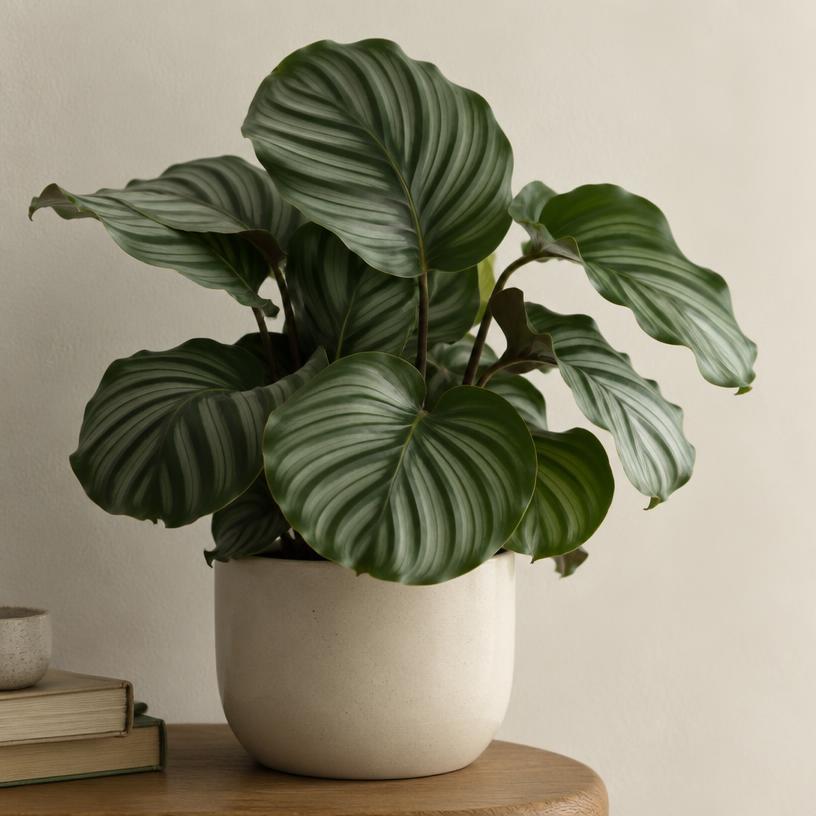
What size pot does a Calathea need?
Finding the right pot size for a calathea is about managing the volume of soil rather than just providing room to grow. Calatheas have shallow, fibrous root systems that spread horizontally near the surface. Because of this, they thrive best in pots that are wide and shallow, often called azalea pots.
If you place a calathea in a pot that is too deep, you create a large zone of unused soil at the bottom. This soil stays wet for much longer than the plant can utilize, which quickly leads to root rot. You should only increase the pot size by 1 to 2 inches (2.5 to 5 cm) in diameter. If you are moving from a 4 inch (10 cm) pot, a 6 inch (15 cm) pot is the maximum size you should consider.
When you use a pot that is too large, the plant often stops growing new leaves as the roots struggle to breathe in a waterlogged environment. For more detailed advice on sizing up, read what size pot for repotting to ensure you do not overwhelm your plant's root system.
| Plant Diameter | Ideal Pot Diameter | Ideal Pot Depth |
|---|---|---|
| 4 inches (10 cm) | 5 to 6 inches (13 to 15 cm) | 3 to 4 inches (7 to 10 cm) |
| 6 inches (15 cm) | 7 to 8 inches (18 to 20 cm) | 5 to 6 inches (13 to 15 cm) |
| 8 inches (20 cm) | 9 to 10 inches (23 to 25 cm) | 6 to 7 inches (15 to 18 cm) |
| 10 inches (25 cm) | 12 inches (30 cm) | 7 to 8 inches (18 to 20 cm) |
Always measure the root ball before buying a container. If the roots have not yet circled the current pot or pushed through the drainage holes, it might not be time to size up. Check the signs your plant needs repotting before making the move. A plant that is slightly snug in its pot is usually safer than one in a container that is too big.
Plastic vs. terracotta vs. ceramic: Which is best for moisture-loving plants?
The material of the pot has a direct impact on how often you water. Because these plants are native to the forest floors of tropical regions, they prefer soil that remains consistently moist. They do not have the same drought tolerance as a snake plant, and they will quickly show their displeasure with curled leaves if the soil dries out.
Plastic pots are arguably the best choice for calatheas. Plastic is non porous, meaning it does not allow water to evaporate through the walls. This keeps the moisture locked inside for a longer period. Many growers keep their calathea in a plastic nursery pot and then place that inside a more decorative ceramic or stone cachepot.
Unglazed terracotta is generally the worst choice for a calathea. Terracotta is porous and acts like a wick, pulling moisture out of the soil and releasing it into the air. This causes calathea soil to dry out too fast. If you must use terracotta, ensure it is glazed on the inside. Glazed ceramic is a middle ground that works well; it is beautiful but keeps the moisture inside much better than unglazed clay.
| Material | Moisture Retention | Pros for Calathea | Cons for Calathea |
|---|---|---|---|
| Plastic | High | Keeps soil moist longer, lightweight | Can look cheap without a decorative outer pot |
| Glazed Ceramic | High | Excellent moisture retention, heavy | Can be expensive and heavy to move |
| Unglazed Terracotta | Low | Allows roots to breathe | Dries out too fast, leads to leaf curling |
| Fiberstone / Composite | Medium to High | Lightweight but looks like stone | Often lacks enough drainage holes |
If you live in a very humid environment, you might be able to get away with a glazed ceramic pot more easily. However, for most indoor settings, plastic remains the gold standard for maintaining the balance of damp but not soggy soil.
Do Calatheas need drainage holes?
Yes, calatheas require drainage holes. There is a common misconception that because a plant loves moisture, it can live in a pot without drainage. This is dangerous. Without holes at the bottom, any excess water will collect at the base of the pot. This creates a stagnant pool where roots will rot within days.
Root rot is the number one killer of prayer plants. When the roots are submerged in water, they cannot take in oxygen. They begin to decay, and the plant loses its ability to transport water to the leaves. Ironically, a plant with root rot often looks thirsty because its leaves will wilt and curl, leading many owners to add more water.
If you have a decorative pot that does not have a hole, do not plant the calathea directly into it. Instead, keep the plant in a plastic nursery pot with holes and use the decorative one as a cover. When you water, take the plastic pot to the sink, let it drain completely, and then place it back in the cover pot. If you find your soil is staying wet for too long even with holes, you may need to learn how to fix compacted soil to restore airflow.
Are self-watering pots and humidity trays good for Calatheas?
Self watering pots can be a useful tool for calathea owners, but they require the right soil mix. These pots work by using a reservoir and a wick to pull water into the soil as it dries. This can provide the constant moisture they love. However, if the soil is too dense, a self watering pot will keep it too wet. If you use this type of pot, ensure your mix has plenty of aeration, such as the 4:3:2:1 ratio of potting mix, coco coir, perlite, and orchid bark.
Humidity trays, also known as pebble trays, are highly recommended. These are shallow trays filled with pebbles and water that you place the pot on top of. As the water evaporates, it increases the local humidity around the leaves. This is vital for preventing the brown, crispy edges that calatheas are known for. Just ensure the bottom of the pot is sitting on the pebbles and not directly in the water.
When setting up a humidity tray, use a tray that is at least 2 inches (5 cm) wider than the base of the pot. Fill it with about 1 inch (2.5 cm) of river stones. Add water until it reaches just below the top of the stones. This setup can make a significant difference in a dry home, especially during the winter months when heaters are running.
Should you put a gravel layer in the bottom of a Calathea pot?
There is an old gardening myth that putting a layer of gravel at the bottom of a container improves drainage. Science has shown that this is actually counterproductive. Water does not move easily from a fine material (like potting soil) into a coarse material (like gravel). Instead, the water pools in the soil at the junction between the two layers, creating a perched water table.
For a calathea, a perched water table is disastrous. It effectively raises the level of saturated soil closer to the roots, giving them less room to breathe. Instead of using rocks, you should fill the entire pot with an airy soil mix. If you want to improve drainage, the solution is more holes in the pot and more grit in the soil mix.
If you are mixing your own soil, follow the proven calathea recipe: 4 parts potting mix, 3 parts coco coir, 2 parts perlite, and 1 part orchid bark. This mix allows water to flow through the entire profile and exit the drainage holes. You can use the soil mix calculator to find the exact amounts for your pot size, whether you are measuring in cups (237 ml) or larger volumes.
Advice by situation
Absolute beginners
Stick to a plastic nursery pot with a decorative cachepot. It is the easiest way to monitor moisture levels and ensures you never leave the plant in standing water.
Dry or desert homes
Use a plastic pot and a large humidity tray. You may also want to use a slightly higher ratio of coco coir in your mix to help the soil hold onto moisture.
Very humid homes
You have more flexibility and can use glazed ceramic pots safely. Be careful not to overwater, as high humidity means the soil takes longer to dry out.
Chronical over-waterers
Choose a pot with extra drainage holes and increase the amount of perlite and orchid bark in your soil to 3 parts each for a safety net.
Common mistakes to avoid
- Using a deep pot for shallow roots. Choose a wide, shallow pot that matches the horizontal growth of calathea roots.
- Planting directly into a pot without drainage holes. Use a nursery pot inside the decorative container or drill holes into the bottom.
- Using unglazed terracotta for a moisture lover. Switch to plastic or glazed ceramic to prevent the soil from drying out too fast.
- Adding a layer of rocks at the bottom for drainage. Remove the rocks and use a consistent, well draining soil mix throughout the entire pot.
- Sizing up to a pot that is more than 2 inches (5 cm) larger. Only go up one size at a time to avoid a large volume of wet, unused soil.
Quick checklist
- Check that the pot is only 1 to 2 inches (2.5 to 5 cm) wider than the root ball.
- Verify the pot has at least two or three drainage holes.
- Select plastic or glazed ceramic over unglazed terracotta.
- Ensure the pot is wider than it is deep if possible.
- Clean the new pot with soap and water if it was previously used.
- Prepare a humidity tray if your home humidity is below 50 percent.
- Avoid the use of gravel or stones at the bottom of the container.
Frequently asked questions
Can I use a self-watering pot for a calathea?
Yes, as long as you use an airy soil mix with plenty of perlite and bark to prevent the soil from becoming too compacted.
Is a tall pot okay if I only fill the bottom with rocks?
No, this creates a perched water table that can lead to root rot. It is better to use a shallower pot or fill the entire height with soil.
Why are my calathea's leaves turning brown in a plastic pot?
This is usually caused by low humidity or tap water sensitivity. Try using a humidity tray and filtered water.
How many drainage holes should a calathea pot have?
Ideally, it should have at least one large hole or several smaller ones. More holes are always better than fewer.
Should I use a saucer under my calathea pot?
Yes, but always empty the saucer about 20 minutes after watering so the plant does not sit in stagnant water.
Can I plant calathea in a glass jar?
It is not recommended because glass jars lack drainage holes and light can reach the roots, which may encourage algae growth.