How to Repot a Calathea Without Shocking Its Leaves
By Sara Linwood, houseplant writerLast updated
Repot a calathea every 1 to 2 years in spring into a pot that is wide and shallow rather than deep, since its roots are fibrous and spread sideways rather than down. Use an evenly moist but airy mix such as 4 parts potting mix, 3 parts coco coir, 2 parts perlite, and 1 part orchid bark, and water the new pot in with filtered or rainwater to avoid brown leaf tips.
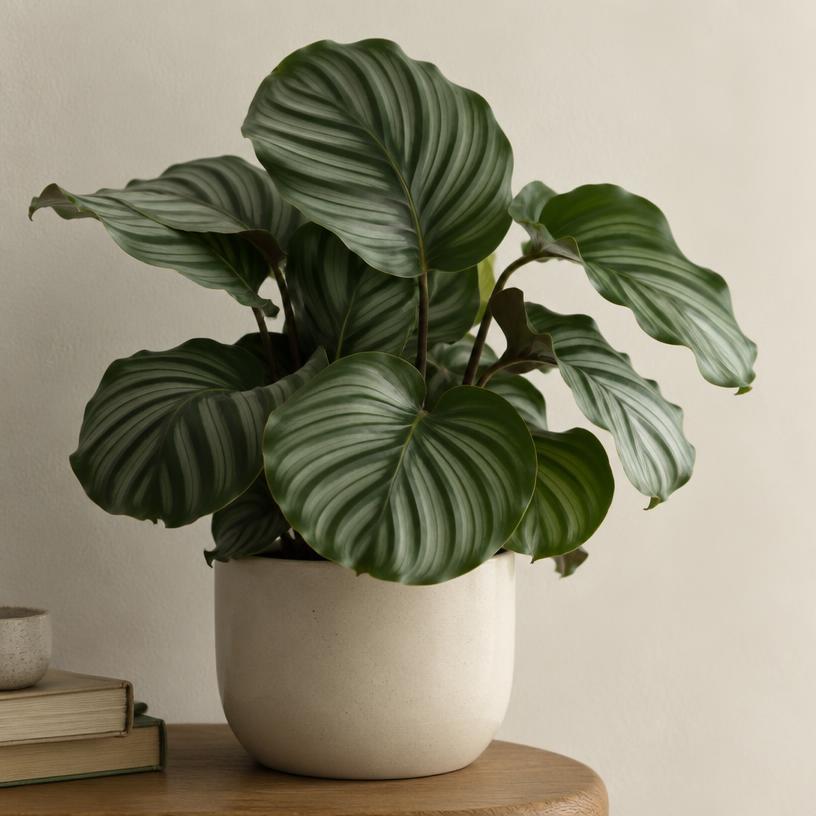
When should you repot a calathea?
Calathea generally needs repotting every 1 to 2 years. It grows at a moderate pace and builds a dense mat of thin, fibrous roots that fill a pot faster than many people expect. A rootbound calathea often stops producing new leaves, even though the older foliage still looks fine, because there is no fresh soil left to pull nutrients from.
Spring through early summer is the best window, since the plant is entering active growth and recovers from root disturbance quickly. Look for roots circling the drainage holes, water running straight through the pot without being absorbed, or a plant that dries out within a day or two of watering. For the full list of cues, see signs your plant needs repotting.
| Current Pot Diameter | Typical Time Before Repotting | Notes |
|---|---|---|
| 4 inches (10 cm) | 10 to 14 months | Small pots dry fast and fill with roots sooner |
| 6 inches (15 cm) | 14 to 20 months | Standard mature houseplant size |
| 8 to 10 inches (20 to 25 cm) | 20 to 24 months | Large clumps may need dividing instead of upsizing |
What is the best soil ratio for repotting a calathea?
Calathea wants soil that stays evenly moist without ever turning waterlogged, which is a harder balance than it sounds. The recipe that works well is 4 parts potting mix, 3 parts coco coir, 2 parts perlite, and 1 part orchid bark. The potting mix supplies nutrients, the coco coir holds moisture evenly without compacting the way peat does, the perlite keeps air pockets open around the roots, and the orchid bark adds structure so the mix does not collapse into a dense layer over time.
| Ingredient | Parts | Function |
|---|---|---|
| Potting mix | 4 | Base nutrients and organic matter |
| Coco coir | 3 | Even moisture retention without waterlogging |
| Perlite | 2 | Aeration and drainage at the root zone |
| Orchid bark | 1 | Structure that resists compaction |
If you want to measure by volume, scale the parts into cups or milliliters: for a 6 inch (15 cm) pot you typically need around 4 cups (950 ml) of mix, 3 cups (710 ml) of coir, 2 cups (475 ml) of perlite, and 1 cup (237 ml) of bark. Use the soil mix calculator to get exact amounts for your pot size, or read best soil for calathea for more on why this plant is fussier than most aroids.
What pot shape and size is best for a calathea?
Calathea has shallow, fibrous roots that spread outward rather than growing deep, so a wide, shallow pot almost always works better than a deep, narrow one. A deep pot leaves unused soil below the root zone that stays wet for too long and invites root rot. At the same time, calathea dislikes being rootbound but also sulks in a pot that is dramatically oversized, so stick to modest increases.
Choose a pot only 1 to 2 inches (2.5 to 5 cm) wider in diameter than the current one, and favor width over depth whenever you have the choice. For general pot sizing logic that applies across houseplants, see what size pot for repotting.
| Current Diameter | New Diameter | Shape Preference |
|---|---|---|
| 4 inches (10 cm) | 5 to 6 inches (13 to 15 cm) | Wide and shallow |
| 6 inches (15 cm) | 7 to 8 inches (18 to 20 cm) | Wide and shallow, or divide instead |
| 8 inches (20 cm) | 9 to 10 inches (23 to 25 cm) | Shallow bowl-style pot if available |
How do you repot a calathea step by step?
Step by step
Calathea Repotting Process
Time: about 25 minutes
You'll need
- A wide, shallow pot with drainage holes, 1 to 2 inches (2.5 to 5 cm) larger than the current one
- Fresh soil mix (4 parts potting mix, 3 parts coco coir, 2 parts perlite, 1 part orchid bark)
- Clean, sharp knife or shears for dividing rhizomes
- Filtered water or rainwater
- A small trowel
- Ease the plant out. Tip the pot sideways and gently slide the root mass out, supporting the base of the leaves rather than pulling on the stems.
- Loosen and inspect the roots. Gently tease apart the fibrous roots and remove old, compacted soil. Trim any mushy or blackened roots with clean shears.
- Divide the clump if needed. If the plant has multiple rhizomes or crowns, separate them by hand or with a clean knife, making sure each division keeps some healthy roots attached.
- Add fresh soil to the new pot. Place about an inch (2.5 cm) of the fresh 4:3:2:1 mix in the base of the shallow pot.
- Set the plant and backfill. Center the plant or division so the crown sits at the same depth as before, then fill in around the roots with soil, tapping the pot to settle it.
- Water thoroughly with filtered water. Water slowly until it runs from the drainage holes, using filtered water or rainwater rather than tap water to avoid stressing the roots.
How do you care for a calathea after repotting?
Calathea is notably fussy about water quality. Tap water often contains fluoride and chlorine, and fluoride in particular is a common cause of brown, crispy leaf tips on calathea. After repotting, water only with filtered water or rainwater, and keep doing so going forward to protect the new roots while they settle in.
Keep humidity elevated for the first 2 weeks after the move, either with a pebble tray, a humidifier, or a cluster of other plants nearby, since freshly disturbed roots struggle to supply enough moisture to the leaves. Place the pot out of direct sun during this period, since calathea leaves scorch easily and the added stress of repotting makes them more sensitive than usual. If the soil ever feels dense or water starts pooling on the surface, see how to fix compacted soil for ways to restore drainage without a full repot.
Advice by situation
Rootbound and no new leaves
If growth has stalled and the roots are circling tightly, repot immediately even if it is slightly outside the spring window, since a starved root system will not recover on its own.
Large clump with multiple crowns
Use the repotting session to divide the plant into 2 or 3 separate pots, giving each division a wide, shallow container of its own.
Brown, crispy leaf tips
Before blaming soil or light, switch to filtered water or rainwater for several waterings, since fluoride in tap water is a common cause of this symptom.
Dry home or heated rooms
Lean toward the higher end of coco coir in the mix and consider a pebble tray, since calathea in dry air dries out and curls faster than the mix alone can fix.
Recently purchased nursery plant
Check the nursery soil first; many calathea arrive in dense peat that drains poorly, so repotting into the 4:3:2:1 mix within a few weeks of purchase often helps.
Common mistakes to avoid
- Choosing a deep pot instead of a wide one. Pick a shallow, wide pot that matches the plant's sideways-spreading fibrous roots.
- Watering the new pot with straight tap water. Use filtered water or rainwater to avoid fluoride-related brown tips, especially right after the stress of repotting.
- Sizing up more than 2 inches (5 cm) at once. Keep the diameter increase to 1 to 2 inches (2.5 to 5 cm) so the mix does not stay wet for longer than the roots can use.
- Using a heavy, peat-only mix with no coir or bark. Blend in coco coir, perlite, and orchid bark so the soil stays evenly moist but airy.
- Placing the freshly repotted plant in direct sun. Keep it in bright, indirect light for at least 2 weeks while roots recover.
- Ignoring overcrowded rhizomes for years. Divide the clump at repotting time instead of letting it fight itself for space and nutrients.
Quick checklist
- Confirm it has been 1 to 2 years or that the roots are visibly crowded.
- Prepare the 4:3:2:1 mix of potting mix, coco coir, perlite, and orchid bark.
- Choose a wide, shallow pot only 1 to 2 inches (2.5 to 5 cm) larger.
- Divide any crowded rhizome clumps with a clean knife.
- Trim mushy or blackened roots before repotting.
- Water in with filtered water or rainwater, not tap water.
- Keep humidity up and avoid direct sun for 2 weeks after the move.
Frequently asked questions
How often does a calathea need repotting?
Most calathea need repotting every 1 to 2 years, once the fibrous roots fill the pot and new leaf growth slows down.
Why does calathea need a shallow pot instead of a deep one?
Its roots are fibrous and spread outward near the surface rather than growing deep, so a deep pot just leaves wet, unused soil below the root zone.
Can I use tap water on a newly repotted calathea?
It is better to avoid it. Many calathea react to fluoride and chlorine in tap water with brown, crispy tips, so filtered water or rainwater is safer, especially while roots are recovering.
Should I divide my calathea when I repot it?
Yes, if it has grown into a dense clump with multiple rhizomes, dividing at repotting time gives each section room to grow and is easier on the plant than doing it separately later.
Why did my calathea's leaves curl after repotting?
Curling is usually a stress response to root disturbance combined with low humidity. Keep humidity elevated and avoid direct sun for about 2 weeks and the leaves should relax again.
Is coco coir necessary in a calathea soil mix?
It helps a lot, since it holds moisture evenly without compacting the way straight peat does, which matches calathea's need for soil that is moist but still airy.