Snake Plant Root Rot: Signs, Fixes and the Soil That Stops It
By Sara Linwood, houseplant writerLast updated
If your snake plant's leaves feel soft, fold over at the base, or the soil smells sour, it almost certainly has root rot. Unpot it, cut away every brown, mushy root and rhizome, and repot into a dry, gritty mix of 40% potting mix, 30% perlite and 30% coarse sand.
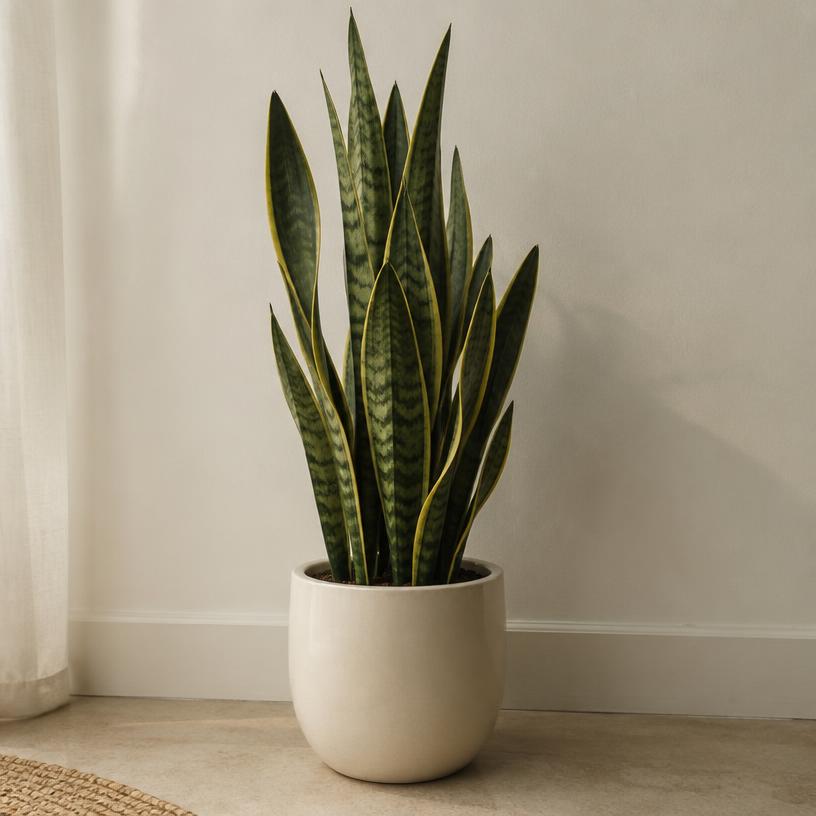
What does root rot look like on a snake plant?
The clearest sign is a leaf that goes soft and folds over at the soil line. Snake plant leaves are stiff and upright when healthy, so a leaf that flops is telling you the tissue at its base is breaking down. Press it gently with your fingers. If it feels like a ripe banana instead of a firm cucumber, rot is there.
Other signs show up in a rough order. First the lower part of the leaf turns a dull yellow. Then a dark, water-soaked patch appears just above the soil. Finally the base goes brown and mushy and the leaf may lift out with almost no pull. The soil often smells sour or like rotting vegetables.
- Soft, folding leaves at the base, often the oldest outer leaves first.
- Yellowing from the bottom up, not from the leaf tips.
- Dark, wet-looking patches on the leaf just above the soil.
- Wobbly plant: the whole clump rocks in the pot because the roots no longer anchor it.
- Sour smell when you lift the pot or poke the soil.
Why does a snake plant get root rot?
Root rot happens when soil stays wet longer than the roots can handle. A snake plant's mix should dry out in about 7 to 14 days. If yours is still damp after two weeks, the roots run out of air, start to die, and soil fungi move in to finish the job. Pythium and Fusarium are the usual culprits.
Watering too often is the trigger, but the soil and pot decide how forgiving the plant is. Most cases come down to one of these:
- Dense soil. Plain bagged potting mix holds water for weeks around a snake plant's small root system. See the best soil for snake plants for a gritty fix.
- No drainage hole. Water collects at the bottom and the lowest roots sit in it.
- Oversized pot. A big pot means lots of soil the roots cannot reach, so it stays wet. Go up only 1 to 2 inches (2.5 to 5 cm).
- Glazed or plastic pots in a cool room. Less evaporation means slower drying.
- Old, broken-down mix. After 3 or more years, peat and bark break down and pack tight. Read how to fix compacted soil.
- Winter watering on a summer schedule. Growth slows in low light and cold, so the plant drinks far less.
| Setup | Typical dry time | Rot risk |
|---|---|---|
| Gritty mix, terracotta pot | 7 to 10 days | Low |
| Gritty mix, plastic pot | 10 to 14 days | Low to medium |
| Plain potting mix, plastic | 3 to 4 weeks | High |
| Any mix, no drainage hole | Often never fully dry | Very high |
How do you check a snake plant's roots?
Slide the plant out of its pot and look. It is the only way to be sure. Tip the pot on its side, hold the plant at the base of the leaves, and tap or squeeze the pot until the root ball slides free. If it is stuck, run a butter knife around the inside edge.
Shake off loose soil and look at the roots and the thick horizontal rhizomes. Healthy ones are firm, pale orange, tan or white. Rotten ones are dark brown or black, slimy, and the outer skin slides off when you pinch it, leaving a thin string behind. Rotten rhizomes feel soft and may smell bad.
| Feature | Healthy | Rotten |
|---|---|---|
| Color | Orange, tan or white | Brown to black |
| Feel | Firm, springy | Soft, slimy |
| Rhizome | Hard like a carrot | Mushy, may collapse |
| Smell | Earthy or none | Sour or rotten |
How do you save a snake plant with root rot?
Cut out every bit of rot, let the cuts dry, and replant in fresh gritty mix. Snake plants recover well if some firm roots or rhizome remain. Here is the full process.
Step by step
How to treat snake plant root rot
Time: about 60 minutes
You'll need
- Clean, sharp shears or a knife
- Rubbing alcohol to sterilize blades
- Potting mix, 2 3/4 cup (652 ml) for a 6 inch pot
- Perlite, 2 cups (474 ml)
- Coarse sand or grit, 2 cups (474 ml)
- Terracotta pot with a drainage hole
- Unpot and rinse. Remove the plant and rinse the roots under room-temperature water so you can see every root and rhizome clearly.
- Cut the rot. Wipe your shears with rubbing alcohol. Cut off every brown, mushy root and rhizome, going back into firm, pale tissue. Wipe the blade again between cuts. Remove any leaf that is soft at the base.
- Decide: repot or propagate. If at least a third of the root system or a firm piece of rhizome with roots is left, repot it. If everything below the soil is mushy, cut the healthy upper part of a firm leaf into 3 inch (8 cm) sections and root them in water or dry gritty mix instead.
- Let it dry. Lay the trimmed plant on newspaper in bright shade for 1 to 2 days so the cuts callus over. This seals them against new infection.
- Repot in fresh gritty mix. Mix 40% potting mix, 30% perlite and 30% coarse sand, slightly damp but not wet. Use a clean pot no more than 1 to 2 inches (2.5 to 5 cm) wider than the root mass. Never reuse the old soil.
- Wait, then water lightly. Wait about 7 days, then water until it runs from the hole. After that, water only when the mix is dry all the way down, usually every 2 to 3 weeks.
Not sure how much mix your pot needs? The soil mix calculator gives exact cups for your pot size. For general repot technique, see how to repot a snake plant.
What other soil problems do snake plants get?
Most other snake plant soil problems are early warnings of the same thing: soil that stays too wet. Fix the moisture and most of them go away on their own.
| Problem | Cause | Fix |
|---|---|---|
| White fuzz on soil | Harmless mold on damp surface | Scrape off, let soil dry longer |
| Fungus gnats | Top inch stays wet | Dry out fully, use sticky traps |
| Water runs straight through | Dry, compacted old mix | Soak from below, then repot |
| White crust on soil or pot | Salts from tap water and fertilizer | Flush with water, scrape top layer |
| Sour or rotten smell | Waterlogged soil, early rot | Unpot and check roots now |
Advice by situation
Beginners
Use a terracotta pot and the gritty 40/30/30 mix from day one. Water only when a wooden skewer pushed to the bottom comes out dry and clean.
Dry homes
Gritty mix dries in about a week here. You can water every 10 to 14 days in summer, but still check first.
Humid homes
Soil dries slower. Add a little extra grit and stretch watering to every 3 to 4 weeks, more in winter.
Over-waterers
Set a calendar reminder for every 2 weeks and check, do not water, on that date. A snake plant would rather be forgotten than fussed over.
Common mistakes to avoid
- Putting the rescued plant back in its old soil. Throw out the old mix. It holds the fungi that caused the rot.
- Watering right after repotting. Wait about a week so cut roots can seal.
- Moving to a bigger pot to give it room to recover. Go smaller if anything. Fewer roots need less soil.
- Leaving soft leaves on. Cut off any leaf that is mushy at the base. It will not firm up again.
- Using unsterilized shears. Wipe blades with rubbing alcohol before and between cuts.
Quick checklist
- Squeeze the base of each leaf to find soft spots
- Unpot and rinse the roots
- Cut back to firm, pale tissue with clean shears
- Let cuts dry for 1 to 2 days
- Repot in fresh 40/30/30 gritty mix
- Use a pot with a drainage hole, only slightly bigger than the roots
- Wait about 7 days before watering
Frequently asked questions
Can a snake plant recover from root rot?
Yes, if some firm roots or rhizome remain. Cut out all the rot, let it dry, and repot in gritty mix. New roots usually appear within 4 to 8 weeks. If nothing firm is left, propagate healthy leaf sections instead.
Should I use hydrogen peroxide on snake plant root rot?
It is optional. Some growers dip trimmed roots in household 3% hydrogen peroxide diluted with 2 parts water. It will not save rotten tissue, and cutting the rot out and using fresh, fast-draining soil does far more.
Does root rot spread to other plants?
It can spread through shared soil, dirty tools, reused pots, and runoff water in a shared tray. Throw out the old mix, scrub the pot with soapy water, and clean your shears.
How long can a snake plant sit in wet soil?
Its mix should dry in 7 to 14 days. If it is still wet after about 3 weeks, the roots are at real risk.
Can I propagate a snake plant leaf with rot?
Only the healthy part. Cut well above any soft or discolored tissue, let the cut dry for a day or two, and root the firm section.
Is cactus soil good for a snake plant after root rot?
It is better than plain potting mix, but many bagged cactus mixes are still peat-heavy. Adding perlite or grit makes it safer. See cactus soil vs potting soil.