Peace Lily Root Rot: Signs, Fixes and the Soil That Stops It
By Sara Linwood, houseplant writerLast updated
If your peace lily wilts while the soil is still wet, and the leaves yellow and brown from the base, it likely has root rot. Trim the brown, mushy roots, divide off any healthy crowns, and repot into a moist but airy mix of 50% potting mix, 25% perlite and 25% coco coir.
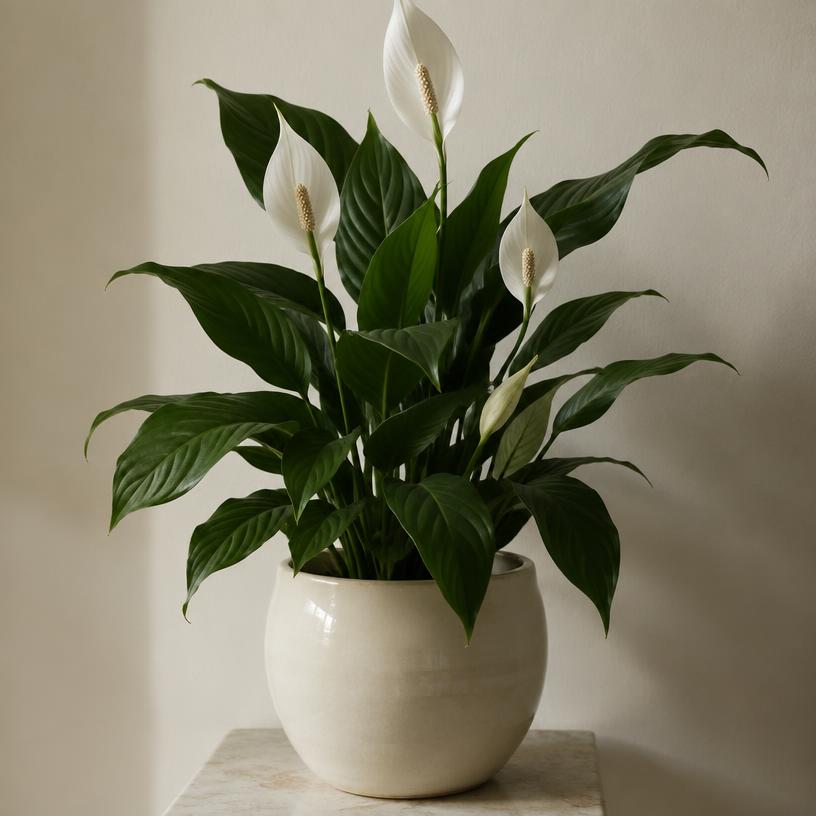
What does root rot look like on a peace lily?
The key sign is wilting in wet soil. Peace lilies are famous for drooping dramatically when dry and bouncing back within hours of a drink. That makes them easy to overwater: you see a droop, you water, and if the droop came from rotting roots, you make it worse. Wilting that stays even when the soil is damp means the roots cannot take up water.
Other signs follow. Lower leaves turn yellow, then brown, starting near the base. Leaf tips go brown and dry. Stems feel soft or dark where they meet the soil, and flowering stops.
- Drooping in damp soil that does not recover.
- Yellow lower leaves turning brown from the base.
- Soft, brown stems at the soil line.
- No new leaves or flowers for weeks in the growing season.
- Sour smell from the pot.
Why does a peace lily get root rot?
Peace lilies like steady moisture, but not soggy soil. A good peace lily mix stays damp below the surface yet dries in the top inch within about 5 to 8 days. When it stays sopping wet longer than that, roots run out of air.
- Overwatering after a droop. The most common trigger by far.
- Dense, peat-heavy mix that never drains. The best soil for peace lilies holds moisture but has perlite for air.
- Standing water in a cachepot or saucer. Tip it out after 15 minutes.
- Pots without holes. Peace lilies are often sold in decorative pots with no drainage.
- Overcrowded, root-bound clumps where the center stays wet and airless.
- Cold rooms below about 60°F (15°C), where roots barely use water.
| Soil state | What it means | Action |
|---|---|---|
| Top inch dry, below damp | Ideal | Water now |
| Damp throughout | Fine | Wait 1 to 2 days |
| Soggy, water pools | Rot risk | Fix drainage |
| Dry all the way down | Too dry | Soak and drain |
Bottom-watering is worth trying once the plant recovers. Stand the pot in a few inches of water for 20 to 30 minutes, then let it drain fully. The mix soaks evenly and you are less likely to leave a soggy layer at the bottom where rot starts.
How do you check peace lily roots?
Ease the plant out of its pot and rinse the roots. Peace lilies have thick, fleshy roots that are white to cream when healthy. Many clumps are several plants growing together, each with its own crown.
Rotten roots are brown to black, mushy, and the outer layer peels off. Check the base of each crown too. A crown that is soft and brown is lost, but the healthy crowns next to it can be divided off and saved.
| Feature | Healthy | Rotten |
|---|---|---|
| Color | White to cream | Brown to black |
| Texture | Thick and firm | Soft, hollow |
| Crown base | Firm and pale | Brown, mushy |
How do you save a peace lily with root rot?
Trim the rot, divide out healthy crowns if needed, and repot into a smaller pot of fresh mix. Peace lilies recover well because healthy crowns regrow roots quickly in warm conditions.
Step by step
How to treat peace lily root rot
Time: about 45 minutes
You'll need
- Clean, sharp scissors or knife
- Rubbing alcohol
- Potting mix, 3 1/2 cup (830 ml) for a 6 inch pot
- Perlite, 1 3/4 cup (415 ml)
- Coco coir, 1 3/4 cup (415 ml)
- Pot with a drainage hole
- Unpot and rinse. Remove the plant and wash the old soil off the roots with lukewarm water.
- Cut the rot. Sterilize your blade. Cut away every brown, mushy root. Remove yellow and brown leaves at their base.
- Divide if needed. If one crown is rotten, gently pull or cut the clump apart and keep only crowns with firm roots. Each healthy crown can go in its own small pot.
- Repot in airy mix. Mix 50% potting mix, 25% perlite and 25% coco coir. Use a clean pot that fits the remaining roots with about 1 inch (2.5 cm) to spare.
- Water lightly after 2 to 3 days. Peace lilies dislike drying out, so do not wait long. Water lightly after 2 to 3 days, then whenever the top inch is dry.
- Give it warmth and shade. Keep it at 65 to 80°F (18 to 27°C) in bright, indirect light. Leaves may droop for a week while roots regrow.
The soil mix calculator gives exact amounts for your pot. For dividing and potting technique, see how to repot a peace lily.
What other soil problems do peace lilies get?
Because peace lilies live in damp soil, they are more prone than most to surface mold, gnats and mineral buildup. Most of these are fixable without repotting.
| Problem | Cause | Fix |
|---|---|---|
| White mold on soil | Constantly damp surface | Scrape off, let top inch dry |
| Fungus gnats | Wet top layer | Dry top inch, bottom-water |
| Brown leaf tips | Salts or fluoride in tap water | Flush soil, use filtered water |
| Water runs straight through | Root-bound, dried-out peat | Soak pot 30 minutes, repot |
| Sour smell | Waterlogged soil | Check roots now |
How do you stop root rot coming back?
The secret with peace lilies is moist, not wet. A mix with air in it lets you keep the plant happy without drowning it.
- Water when the top inch (2.5 cm) is dry, not when the plant droops. Waiting for a droop every time stresses the roots and leads to overwatering.
- Use a pot with drainage holes and empty the saucer or cachepot 15 minutes after watering.
- Divide crowded clumps every 2 to 3 years. Dense, root-packed centers stay wet and airless.
- Keep it warm and away from cold drafts in winter, when it needs much less water.
Bottom-watering suits peace lilies well. Stand the pot in a few inches of water for 20 to 30 minutes, then let it drain fully. The mix soaks evenly and you are less likely to leave a soggy layer at the bottom.
Advice by situation
Beginners
Let the plant droop slightly before watering, but always check the soil first. Wet soil plus droop means a root problem, not thirst.
Dry homes
The coir keeps the mix from drying too fast. You may water every 5 days in summer.
Humid homes
Use more perlite and water only when the top inch is dry, perhaps every 8 to 10 days.
Over-waterers
Use a plastic pot with plenty of holes and empty the saucer every time. Never let it stand in water.
Common mistakes to avoid
- Watering every droop. Check the soil. Droop in wet soil needs a root check.
- Repotting into a much bigger pot. Fit the pot to the remaining roots.
- Letting it dry out fully after repotting. Peace lilies need steady moisture. Water lightly after 2 to 3 days.
- Keeping a mushy crown attached. Divide it off and discard it.
- Using a decorative pot with no hole. Use it as an outer cover only.
Quick checklist
- Check if it droops while the soil is wet
- Unpot and rinse the roots
- Cut brown, mushy roots and rotten crowns
- Divide healthy crowns if needed
- Repot in fresh 50/25/25 mix
- Water lightly after 2 to 3 days
- Empty saucers 15 minutes after watering
Frequently asked questions
Can a peace lily recover from root rot?
Yes, if some firm roots or healthy crowns remain. Trimmed and repotted plants usually push new leaves within 3 to 6 weeks.
Should I use hydrogen peroxide on peace lily roots?
It is optional. A quick rinse with 3% household peroxide diluted with 2 parts water will not hurt, but trimming and fresh soil do the real work.
Does root rot spread to other plants?
It can spread through shared soil, saucers and tools. Throw out the old mix and clean everything.
Why is my peace lily drooping after watering?
If it droops right after watering in wet soil, the roots are likely damaged and cannot take up water. Check them for rot.
Should I cut off yellow peace lily leaves?
Yes. Cut them off at the base. They will not turn green again, and removing them helps you see new growth.
How often should I water a peace lily after root rot?
Water when the top inch (2.5 cm) of soil is dry, usually every 5 to 8 days in a good airy mix.