How to Repot a Peace Lily: Step-by-Step Guide to Fewer Droopy Days
By Sara Linwood, houseplant writerLast updated
Repot a peace lily every 1 to 2 years in spring, moving up to a pot only 1 to 2 inches (2.5 to 5 cm) wider and using an airy mix of 4 parts potting mix, 2 parts perlite, and 2 parts coco coir. Peace lilies actually prefer being a bit snug in their pot, so only repot when roots are circling the root ball, poking through drainage holes, or pushing the whole plant upward out of the soil.
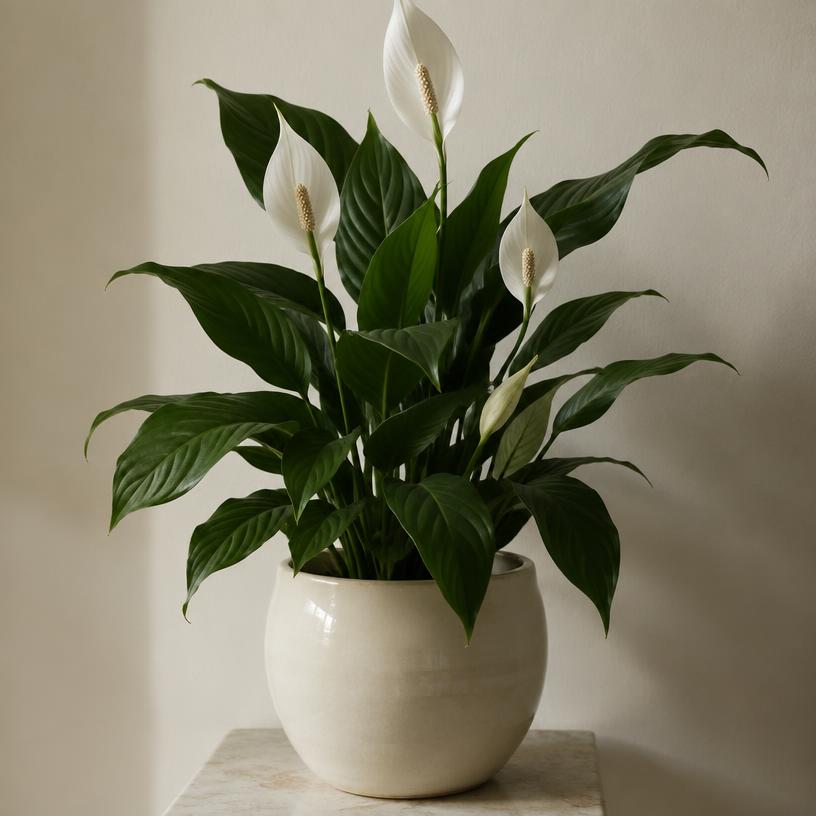
When is the best time to repot a peace lily?
Peace lilies (Spathiphyllum) grow at a moderate pace and are happiest when their roots have some room to fill before you intervene again. Most plants only need repotting every 1 to 2 years, and spring through early summer is the best window because the plant is entering active growth and will recover quickly from root disturbance.
One advantage with this plant is that it tells you exactly when it is thirsty or stressed by drooping dramatically, and the same logic applies to repotting. If the leaves flop within a day of watering even though you watered thoroughly, the roots have likely filled the pot and are drinking it dry too fast. Other clues include roots visible at the drainage holes, roots circling the surface, or the whole root mass pushing the plant upward so it sits higher in the pot than it used to. For a fuller rundown of cues across plants, see signs your plant needs repotting.
Avoid repotting while the plant is flowering if you can help it, since the stress can shorten bloom life. Wait until blooms fade, then repot before the next flush begins.
What is the best soil ratio for repotting a peace lily?
Peace lilies like consistent moisture, but their roots still need oxygen, and dense, compacted soil suffocates them even if you are watering correctly. The goal is a mix that holds moisture evenly without ever turning into a dense brick. A reliable ratio is 4 parts potting mix, 2 parts perlite, and 2 parts coco coir.
| Ingredient | Parts | Function |
|---|---|---|
| Potting mix | 4 | Organic base that holds nutrients and some moisture |
| Perlite | 2 | Keeps the mix airy and prevents compaction around roots |
| Coco coir | 2 | Holds and releases moisture evenly without going soggy |
In measured amounts, that works out to about 8 cups (1900 ml) of potting mix, 4 cups (950 ml) of perlite, and 4 cups (950 ml) of coco coir for a medium-sized pot, which you can scale up or down with the soil mix calculator. If you want a deeper breakdown of ingredient choices and brand options, read best soil for peace lily.
Avoid plain garden soil or straight potting soil out of the bag with no amendments, since both compact over time in a container and squeeze out the air pockets roots need. If your current soil already feels dense and water pools on top before draining, see how to fix compacted soil for a quick diagnosis before you even get to repotting.
How do you repot a peace lily step by step?
Step by step
Peace Lily Repotting Process
Time: about 25 minutes
You'll need
- A new pot with drainage holes, 1 to 2 inches (2.5 to 5 cm) wider than the current one
- Fresh peace lily soil mix (4 parts potting mix, 2 parts perlite, 2 parts coco coir)
- Gardening gloves to protect skin from the sap
- A clean, sharp knife for dividing clumps
- A watering can with room-temperature water
- Put on gloves and remove the plant. Peace lily sap can irritate skin, so gloves protect your hands. Tip the pot sideways, squeeze the sides to loosen it, and slide the plant out while supporting the base of the leaves.
- Inspect and loosen the roots. Gently tease apart any roots that are tightly circling the root ball. Trim away roots that are mushy, dark brown, or smell sour, since these are signs of rot.
- Divide if the clump is crowded. If you see several distinct stem clusters, separate the clump into sections of 4 to 6 stems each using your hands or a clean knife through the root mass. Each division needs its own healthy roots to survive.
- Add a base layer of fresh mix. Pour a layer of your prepared soil into the new pot so the crown of the plant will sit at the same depth it was at before, roughly 1 inch (2.5 cm) below the rim.
- Position and backfill. Center the plant or each division, then fill in around the sides with your 4-2-2 mix, pressing lightly to remove large air gaps without compacting the soil.
- Water thoroughly and settle in. Water until it runs from the drainage holes to help the roots make contact with the new soil. Keep the plant out of direct sun for about a week while it recovers.
What size and type of pot is best for a peace lily?
Because peace lilies prefer being slightly snug, resist the urge to size up dramatically. A jump of more than 2 inches (5 cm) in diameter leaves a ring of soil the roots cannot reach, and that soil stays wet for too long and invites root rot. For general sizing logic you can apply across plants, see what size pot for repotting.
| Current Pot Diameter | Recommended New Diameter | Why? |
|---|---|---|
| 6 inches (15 cm) | 7 to 8 inches (18 to 20 cm) | Small step keeps moisture balance in check |
| 8 inches (20 cm) | 9 to 10 inches (23 to 25 cm) | Gives room for another year or two of growth |
| 10 inches (25 cm) | 11 to 12 inches (28 to 30 cm) | Large clumps may be better divided than upsized further |
Plastic or glazed ceramic pots work well since peace lilies like to stay evenly moist, unlike plants that need the fast drying terracotta provides. Whatever material you choose, drainage holes are non-negotiable, because even a moisture-loving mix like this one will eventually sour without an escape route for excess water.
How do you care for a peace lily after repotting?
Keep the newly repotted plant out of direct sun for about a week, even though peace lilies tolerate low light well in general. Direct sun right after repotting adds stress on top of root disturbance and slows recovery, while low, filtered light gives the roots time to settle without extra demand on the leaves.
Watch for the classic droop in the days after repotting. A little wilting is normal transplant stress and usually resolves within a few days once new roots start exploring the fresh mix. Hold off on fertilizer for about 4 weeks to avoid stressing the roots further, then resume a diluted, balanced feed during the growing season.
If you divided the plant, expect the smaller divisions to droop more noticeably at first since each one has fewer roots to support its leaves. This is temporary as long as each division had at least 4 to 6 healthy stems and some intact roots.
Advice by situation
Plant pushing itself out of the pot
If the crown now sits noticeably higher than the pot rim and roots are visible at the surface, the root mass has expanded and needs a larger pot right away rather than waiting for the next spring.
Daily drooping between waterings
If the plant droops every single day even with regular watering, the roots have likely filled the pot completely. Repot into a pot only 1 to 2 inches (2.5 to 5 cm) larger using the 4-2-2 mix to restore some water-holding buffer.
Large, crowded clumps
If a single pot now contains many stem clusters crowding each other, divide into sections of 4 to 6 stems during repotting rather than keeping everything in one increasingly large pot.
Low light rooms
Peace lilies tolerate low light, but recovery after repotting is slower there. Repot in spring when natural light is strongest and keep the plant away from cold drafts while it adjusts.
Compacted or old soil
If the existing soil feels dense, dries unevenly, or has shrunk away from the pot's edges, replace it fully rather than just sizing up the pot, since old compacted mix will keep suffocating the roots.
Common mistakes to avoid
- Repotting into a pot far larger than the current one. Limit the increase to 1 to 2 inches (2.5 to 5 cm) in diameter so the mix dries at a pace the roots can keep up with.
- Handling the plant without gloves. Peace lily sap can irritate skin and is toxic to cats and dogs, so wear gloves and keep cuttings and scraps away from pets.
- Using a dense, compacted potting soil straight from the bag. Blend in perlite and coco coir using the 4-2-2 ratio so the roots get both moisture and air.
- Repotting as soon as any root is visible at the drainage hole. Wait until roots are clearly circling or the plant is drooping daily, since peace lilies do best slightly pot-bound.
- Putting the freshly repotted plant in direct sun to 'help it recover'. Keep it in bright, indirect light for about a week, since direct sun adds stress on top of root disturbance.
- Dividing a clump into single, thin stems. Keep each division to 4 to 6 stems with intact roots so it has enough support to recover quickly.
Quick checklist
- Confirm the plant droops daily or shows roots at the surface before repotting.
- Mix 4 parts potting mix, 2 parts perlite, and 2 parts coco coir.
- Choose a pot only 1 to 2 inches (2.5 to 5 cm) wider than the current one.
- Wear gloves to protect skin from the sap.
- Divide crowded clumps into sections of 4 to 6 stems if needed.
- Water thoroughly right after repotting to settle the new soil.
- Keep the plant out of direct sun for about a week to recover.
Frequently asked questions
How often should I repot a peace lily?
Most peace lilies need repotting every 1 to 2 years. They prefer being slightly pot-bound, so wait for clear signs like daily drooping or roots circling the pot before moving up a size.
Why does my peace lily droop so much after repotting?
Some wilting is normal transplant stress and usually resolves within a few days as new roots settle into the fresh soil. Keep it out of direct sun and avoid fertilizing for about 4 weeks while it recovers.
Can I divide a peace lily when repotting?
Yes, and it is a good way to manage a crowded clump. Separate the root mass into sections of 4 to 6 stems each, making sure every division keeps some healthy roots attached.
Is peace lily sap dangerous?
The sap contains calcium oxalate crystals that can irritate skin and mouths, and the plant is toxic to cats and dogs if chewed. Wear gloves when repotting or dividing and keep pets away from cuttings.
What soil should I avoid for a peace lily?
Avoid plain garden soil or soil without added perlite or coir, since it compacts in containers and starves the roots of oxygen even if you water correctly.
Can a peace lily handle low light after repotting?
It can tolerate low light long term, but recovery after repotting is slower in dim conditions. Bright, indirect light for the first week or two helps it bounce back faster.