How to Make Spider Plant Soil: Ingredients, Ratio and Swaps
By Sara Linwood, houseplant writerLast updated
To make spider plant soil, mix 5 parts potting mix, 3 parts perlite and 2 parts orchid bark. This light 50/30/20 blend keeps air around thick, tuberous roots and dries in about 5 to 8 days, and it matches our calculator and spider plant hub.
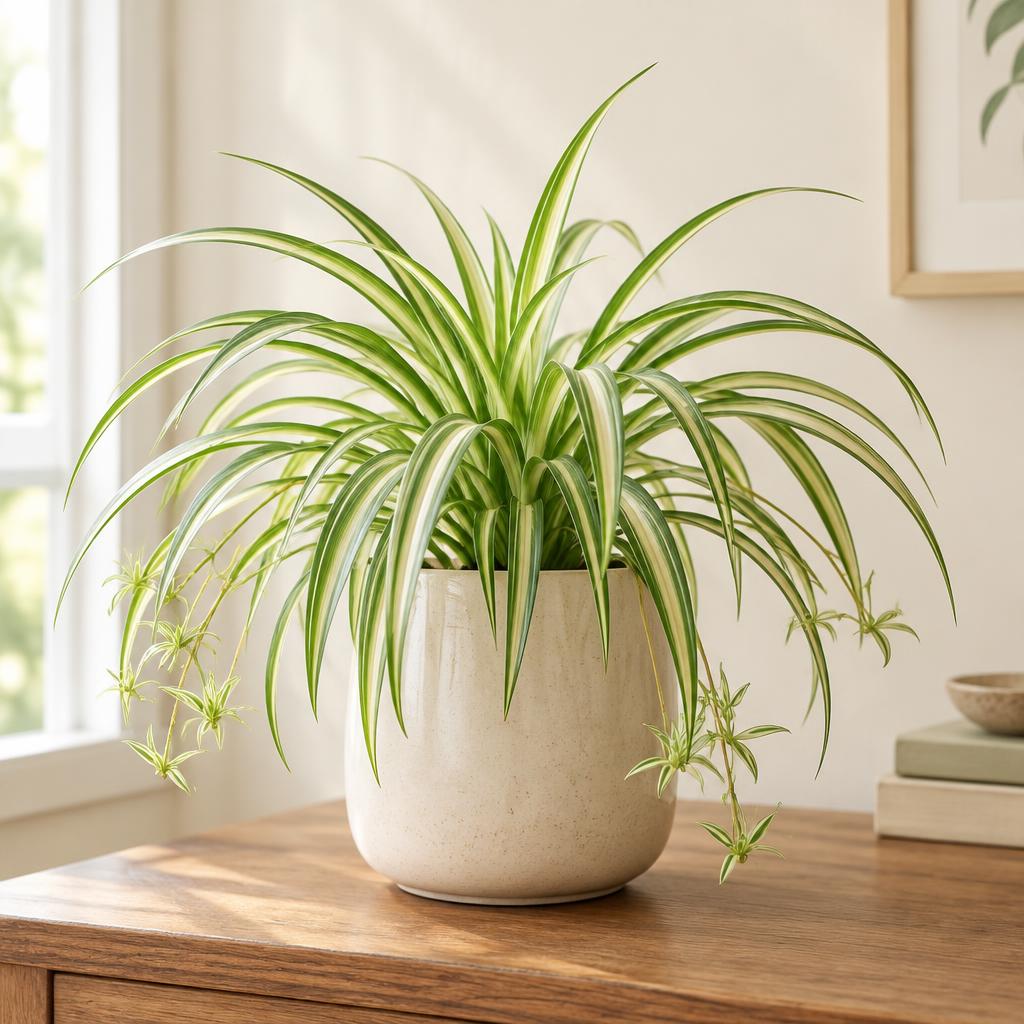
What ingredients do you need for spider plant soil?
You need a base, a light drainage material and a chunky bark. Spider plants store water in fat, tuberous roots. They forgive a missed watering but hate soggy soil, so the mix needs air more than extra water holding. This is the hands-on recipe. For how it compares with other blends, see the best soil for spider plants.
| Ingredient | Job in this mix | Share | Good swap |
|---|---|---|---|
| Potting mix | Base, nutrients, some moisture | 50% | Coir-based indoor mix |
| Perlite | Air and drainage | 30% | Pumice |
| Orchid bark | Room for swelling roots | 20% | Coco husk chips |
Use one scoop for every part. For exact cups per pot size, open the soil mix calculator.
Why is potting mix half of spider plant soil?
Spider plants grow fast and throw out runners and babies, which takes steady food and moisture. Half the mix as potting soil gives them that.
Choose a basic indoor potting mix. Spider plants are sensitive to fluoride and salt buildup, which shows as brown leaf tips. Mixes with added fertilizer are fine but do not add extra slow-release pellets. Skip moisture-control blends.
Spider plants also tolerate a wide pH range, roughly 6.0 to 7.0, so almost any bagged indoor mix is a safe base. What matters more is texture. Rub a pinch between your fingers. If it feels like fine dust or smooth mud when wet, it will pack down around the tubers. If it has visible fibers and small chunks, it will stay open. Pick the second kind when you can.
Why does spider plant soil need perlite?
Perlite keeps air around the tuberous roots. Those thick roots already hold water, so wet soil around them is the main risk. Perlite drains excess water and leaves air pockets.
Medium perlite works well. Pumice is a fine swap and adds weight, which helps a hanging basket hang straight. Some perlite contains small amounts of fluoride, so if leaf tips brown badly, pumice is worth trying. See perlite vs pumice.
Why add orchid bark to spider plant soil?
Bark gives the swelling tuberous roots room to push without compacting the mix. Spider plants fill a pot with thick roots fast. In a fine mix, those roots squeeze the soil into a dense mass that stays wet. Bark keeps gaps open as the roots grow.
Use small bark, about 1/4 to 1/2 inch (6 to 12 mm). Coco husk chips last longer and are a good swap.
How do you mix spider plant soil step by step?
Allow about 20 minutes, including soaking the bark.
Step by step
How to make spider plant soil
Time: about 20 minutes
You'll need
- Indoor potting mix, 5 parts
- Perlite, 3 parts
- Small orchid bark, 2 parts
- Bucket or tub
- One scoop to measure parts
- Dust mask
- Soak the bark. Soak bark for 15 to 30 minutes, then drain so it does not float later.
- Moisten the potting mix. Sprinkle water on the potting mix and stir until lightly damp.
- Measure in parts. Add 5 scoops of potting mix, 3 of perlite and 2 of bark. For a 6 inch (15 cm) pot, 1 part is about 0.7 cup (170 ml). The soil mix calculator gives exact cups.
- Mix and squeeze test. Mix well. Squeeze a handful. It should hold a loose shape and break apart when poked.
- Store leftovers. Keep in a lidded tub or vented bag. Save some for potting up rooted babies.
How much spider plant soil do you need?
Use this table as a quick guide for a standard plastic pot filled to about an inch below the rim. Amounts come straight from our soil mix calculator, which also adjusts for dry or humid homes and terracotta or ceramic pots. Round up a little. Spare mix is useful for topping up after the soil settles.
| Pot diameter | Total mix | Each ingredient |
|---|---|---|
| 4 in (10 cm) | 2 cups (0.5 L) | 1 potting mix, 0.5 perlite, 0.5 orchid bark (cups) |
| 6 in (15 cm) | 7 cups (1.7 L) | 3.5 potting mix, 2 perlite, 1.5 orchid bark (cups) |
| 8 in (20 cm) | 16 1/2 cups (3.9 L) | 8.25 potting mix, 5 perlite, 3.25 orchid bark (cups) |
| 10 in (25 cm) | 32 cups (7.6 L) | 16 potting mix, 9.5 perlite, 6.5 orchid bark (cups) |
| 12 in (30 cm) | 55 1/2 cups (13.2 L) | 27.75 potting mix, 16.75 perlite, 11 orchid bark (cups) |
Wide, shallow pots need less than these numbers, and tall, narrow ones need more. If you are between sizes, mix for the larger pot and store what is left in a covered tub.
What should you not put in spider plant soil?
Avoid anything that keeps the tuberous roots wet or adds salts:
| Ingredient | Problem | Use instead |
|---|---|---|
| Garden soil | Dense, pests | Bagged potting mix |
| Water-retaining crystals | Soggy roots | Leave them out |
| Moisture-control mix | Stays wet | Basic indoor mix |
| Extra slow-release fertilizer | Salt buildup, brown tips | Light liquid feed |
| Fine sand | Packs around roots | Perlite |
A brown, mushy crown means the soil stayed too wet. See spider plant root rot.
Can you start from a store-bought mix?
Yes. Spider plants are easy to please from a bag.
- From indoor potting mix: mix 7 parts mix with 3 parts perlite if you skip the bark.
- From aroid mix: use as is. It is close to the recipe already.
- From cactus mix: mix half and half with indoor mix. Cactus mix alone is a little dry.
Learn more in soil ingredients explained, and see how bagged blends compare in cactus soil vs potting soil.
How do you adjust spider plant soil for babies and baskets?
Spider plants are grown in more ways than most houseplants: in pots, in hanging baskets, and as rooted babies. The recipe works for all of them with small changes.
| Setup | Change | Why |
|---|---|---|
| Hanging basket | Swap perlite for pumice | Adds weight, hangs straight |
| Rooted babies | Use 6 mix, 3 perlite, 1 bark | Finer mix for small roots |
| Large, crowded clump | Add 1 part bark | Room for swelling tubers |
| Terracotta pot | Add 1 part potting mix | Clay dries the soil fast |
Babies rooted in water have fragile roots at first. Pot them in a 3 to 4 inch (8 to 10 cm) pot of the finer mix and keep it lightly moist for 2 weeks, then water normally.
Because spider plants are sensitive to fluoride and salts, flush every pot with plenty of water every few months. Let it drain fully. This rinses out buildup from tap water and fertilizer without changing the soil.
Advice by situation
Beginners
Use the 50/30/20 recipe and water when the top 2 inches (5 cm) are dry.
Dry homes
Raise potting mix to 6 parts and drop bark to 1.
Humid homes
Raise perlite to 4 parts and drop potting mix to 4.
Over-waterers
Use 4 mix, 4 perlite, 2 bark and water around the edge of the pot.
Common mistakes to avoid
- Using heavy garden soil in a hanging basket. Use the light 50/30/20 mix.
- Adding slow-release fertilizer. Feed lightly with liquid fertilizer in spring and summer.
- Mixing bark in dry. Soak it first.
- Packing soil around the crown. Keep the crown at soil level, not buried.
- Ignoring brown tips. Flush the soil and try rain or filtered water.
Quick checklist
- Buy potting mix, perlite and small bark
- Soak and drain the bark
- Moisten the potting mix
- Measure 5 parts mix, 3 perlite, 2 bark
- Mix evenly
- Squeeze test: loose shape, crumbles
- Save leftovers for babies
Frequently asked questions
Can I use cactus soil for a spider plant?
Mixed half and half with indoor potting mix, yes. Alone it is a little dry for a fast grower.
Is perlite or pumice better for a spider plant?
Both work. Pumice adds weight for baskets and avoids the small fluoride content some perlite has.
Can I use regular potting soil for a spider plant?
Yes. Spider plants tolerate it, but adding perlite and bark lowers the risk of rot.
Does soil cause brown tips on spider plants?
Salt and fluoride buildup can. Flush the soil every few months and avoid extra fertilizer.
What soil should I use for spider plant babies?
The same 50/30/20 mix in a small 3 to 4 inch (8 to 10 cm) pot.
How often should I replace spider plant soil?
Every 1 to 2 years when you repot or divide.