How to Make Snake Plant Soil: Ingredients, Ratio and Swaps
By Sara Linwood, houseplant writerLast updated
To make snake plant soil, mix 4 parts potting mix, 3 parts perlite and 3 parts coarse sand or grit. That 40/30/30 blend drains fast, dries in about 7 to 14 days, and is the same ratio our calculator and snake plant hub use.
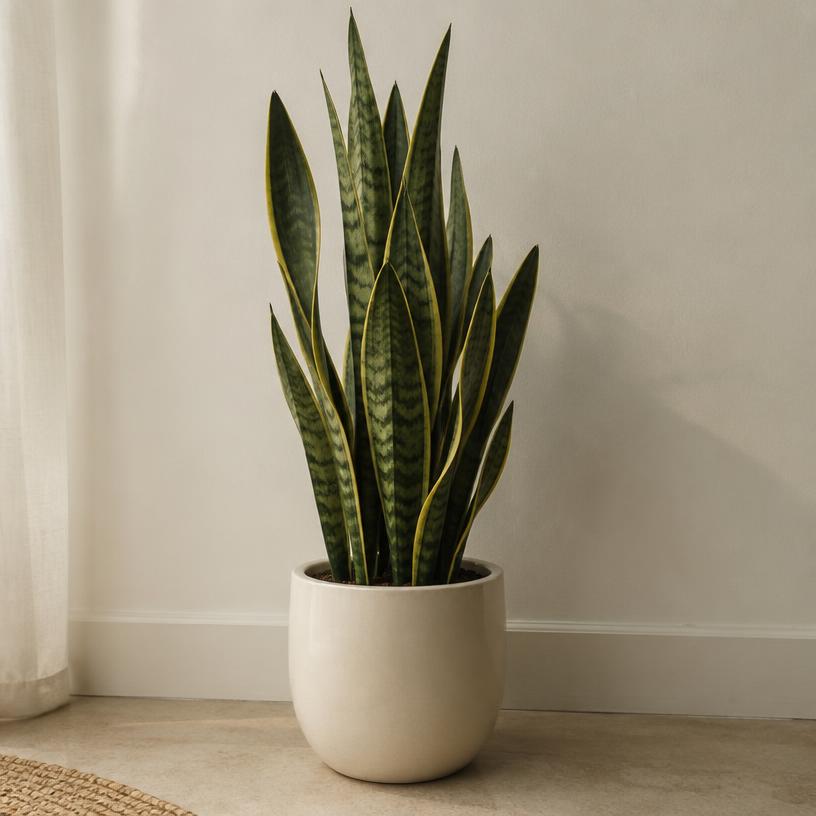
What ingredients do you need for snake plant soil?
You need three things: a base that holds some water and nutrients, a light drainage material, and a heavy mineral grit. Snake plants come from dry, rocky ground, so more than half the mix should be mineral. This page is the hands-on recipe. If you want to compare it with other mixes first, read the best soil for snake plants.
| Ingredient | Job in this mix | Share | Good swap |
|---|---|---|---|
| Potting mix | Holds a little water and feeds roots | 40% | Coir-based indoor mix |
| Perlite | Adds air, speeds drying | 30% | Pumice |
| Coarse sand or grit | Weight and fast drainage | 30% | Poultry grit, crushed granite |
Parts can be any measure: a yogurt cup, a coffee can, a garden scoop. Keep the same scoop for every ingredient and the ratio stays right. For exact cups by pot size, use the soil mix calculator.
Why does a snake plant need some potting mix at all?
The potting mix gives roots something to grip and holds the small amount of water and nutrients a snake plant needs between waterings. Pure grit would dry in a day or two and the plant would struggle to feed.
Pick a basic indoor potting mix. Avoid anything labeled moisture control, because those contain extra water-holding materials that work against you here. A mix with some fertilizer already in it is fine, since snake plants feed lightly anyway. If your bag is very fine and dusty, sift out the biggest clumps and twigs before measuring.
Why does snake plant soil need perlite?
Perlite makes air pockets. Snake plant roots rot when they sit in airless, wet soil, and perlite keeps gaps open so oxygen reaches them and water drains through. It is very light, so it also keeps a big pot from getting too heavy.
Choose coarse perlite if you can find it. Fine perlite works, but coarse grades leave bigger gaps. Perlite can float to the top over time. That is normal and harmless. Pumice does the same job, weighs more and does not float, so it is a good swap. Compare them in perlite vs pumice.
Why does snake plant soil need coarse sand or grit?
Coarse grit adds weight and drainage. Snake plants grow tall, stiff leaves that can tip a light pot over. A heavy mineral layer in the mix keeps the pot stable and helps water rush straight through instead of lingering.
The size of the grains matters. Coarse horticultural sand, builder's sharp sand, poultry grit or crushed granite have grains around 1 to 3 mm (roughly 1/16 to 1/8 inch). Fine play sand or beach sand is the opposite of what you want. Its tiny grains fill the gaps between other particles and turn the mix into something close to concrete. If you squeeze a handful of your sand and it packs into a smooth lump, it is too fine.
How do you mix snake plant soil step by step?
Mixing takes about 10 minutes. Do it outside or over a tarp, and wear a dust mask when pouring dry perlite.
Step by step
How to make snake plant soil
Time: about 15 minutes
You'll need
- Indoor potting mix, 4 parts
- Perlite, 3 parts
- Coarse sand or grit, 3 parts
- A bucket or tub
- One scoop or cup to measure parts
- Dust mask
- Spray bottle or watering can
- Lightly moisten the potting mix. Peat-based mix repels water when bone dry. Spray or sprinkle it with water and stir until it feels like a wrung-out sponge, not wet.
- Measure in parts. Add 4 scoops of potting mix, 3 scoops of perlite and 3 scoops of rinsed coarse sand to the bucket. For a 6 inch (15 cm) pot, 1 part is about 0.7 cup (170 ml). The soil mix calculator gives exact cups for your pot.
- Mix thoroughly. Stir with your hands or a trowel for a minute or two until the white perlite and the grit are spread evenly through the dark mix.
- Do the squeeze test. Grab a handful and squeeze. Good snake plant soil holds a loose shape, then falls apart when you poke it. If it stays in a tight ball, add another part of grit or perlite.
- Pot up or store. Use it right away, or store leftovers in a lidded bucket or a bag with a few air holes. Slightly damp mix keeps for months. Let it dry a little if it starts to smell musty.
How much snake plant soil do you need?
Use this table as a quick guide for a standard plastic pot filled to about an inch below the rim. Amounts come straight from our soil mix calculator, which also adjusts for dry or humid homes and terracotta or ceramic pots. Round up a little. Spare mix is useful for topping up after the soil settles.
| Pot diameter | Total mix | Each ingredient |
|---|---|---|
| 4 in (10 cm) | 2 cups (0.5 L) | 0.75 potting mix, 0.5 perlite, 0.5 coarse sand (cups) |
| 6 in (15 cm) | 7 cups (1.7 L) | 2.75 potting mix, 2 perlite, 2 coarse sand (cups) |
| 8 in (20 cm) | 16 1/2 cups (3.9 L) | 6.5 potting mix, 5 perlite, 5 coarse sand (cups) |
| 10 in (25 cm) | 32 cups (7.6 L) | 12.75 potting mix, 9.5 perlite, 9.5 coarse sand (cups) |
| 12 in (30 cm) | 55 1/2 cups (13.2 L) | 22.25 potting mix, 16.75 perlite, 16.75 coarse sand (cups) |
Wide, shallow pots need less than these numbers, and tall, narrow ones need more. If you are between sizes, mix for the larger pot and store what is left in a covered tub.
What should you not put in snake plant soil?
Avoid anything that holds water for a long time or packs down. These are the usual mistakes:
| Ingredient | Problem | Use instead |
|---|---|---|
| Garden soil | Packs tight, may carry pests | Bagged potting mix |
| Fine play or beach sand | Fills air gaps, salt in beach sand | Coarse grit |
| Moisture-control mix | Stays wet for weeks | Basic indoor mix |
| Water-retaining crystals | Hold water near roots | Leave them out |
| Lots of compost | Holds water, breaks down fast | A handful at most |
Pebbles in the bottom of the pot also do not help. They raise the wet layer closer to the roots instead of draining it. Mix the grit through the soil instead. If you are dealing with soft, folding leaves already, read snake plant root rot before repotting.
Can you start from a store-bought mix?
Yes. The easiest shortcut is a bag of cactus and succulent mix, then add extra grit. Many bagged cactus mixes are still mostly peat, so they are better than regular potting mix but not gritty enough alone.
- From cactus mix: use 6 parts cactus mix plus 2 parts perlite and 2 parts coarse grit.
- From regular indoor mix: follow the full 40/30/30 recipe above.
- From a gritty bonsai or succulent blend: these are often fine as is. Check that water drains through within a few seconds.
Not sure what a cactus mix really contains? See cactus soil vs potting soil. For a deeper look at each material, browse soil ingredients explained.
Advice by situation
Beginners
Stick to the exact 40/30/30 ratio and a terracotta pot. It is very hard to overwater a snake plant in this mix.
Dry homes
Swap 1 part of the grit for 1 more part of potting mix so the soil does not dry in just a few days.
Humid homes
Add 1 extra part of grit or pumice. Slow drying is the main risk here.
Over-waterers
Go even grittier: 3 parts potting mix, 3 perlite, 4 grit. It drains so fast that extra water runs straight out.
Common mistakes to avoid
- Using fine play sand. Use coarse sand or grit with grains you can see and feel.
- Measuring by eye. Use one scoop for every part so the ratio stays true.
- Mixing bone-dry peat. Moisten the potting mix first so it blends and takes water later.
- Adding a gravel layer at the bottom. Mix grit through the soil instead.
- Skipping the dust mask. Dry perlite dust irritates lungs. Wear a mask or moisten it first.
Quick checklist
- Buy potting mix, perlite and coarse grit
- Rinse dusty grit
- Moisten the potting mix
- Measure 4 parts mix, 3 perlite, 3 grit
- Mix until evenly speckled
- Squeeze test: loose shape that crumbles
- Store leftovers in a lidded bucket
Frequently asked questions
Can I use cactus soil for a snake plant?
Yes, and it is a good start, but most bagged cactus soils still need extra grit or perlite. Add about 2 parts perlite and 2 parts grit to 6 parts cactus mix.
Is perlite or pumice better for a snake plant?
Both work. Pumice is heavier, so it helps keep tall snake plants upright, and it does not float. Perlite is lighter and easier to find.
Can I use regular potting soil for a snake plant?
Not on its own. Plain potting soil holds water for weeks around a snake plant's roots. Use it as the 40% base and add perlite and grit.
What kind of sand is safe for snake plant soil?
Coarse horticultural sand, sharp builder's sand, poultry grit or crushed granite. Avoid fine play sand and beach sand.
Should I add charcoal to snake plant soil?
It is optional. A small amount adds structure, but it does not prevent root rot. Drainage does that.
How long does homemade snake plant soil last?
Mixed soil keeps for months in a covered container. In the pot, it stays in good shape for 2 to 3 years before it needs replacing.