How to Make Calathea Soil: Ingredients, Ratio and Swaps
By Sara Linwood, houseplant writerLast updated
To make calathea soil, mix 4 parts potting mix, 3 parts coco coir, 2 parts perlite and 1 part orchid bark. This 40/30/20/10 blend stays evenly moist, dries in the top inch in about 4 to 7 days, and matches our calculator and calathea hub.
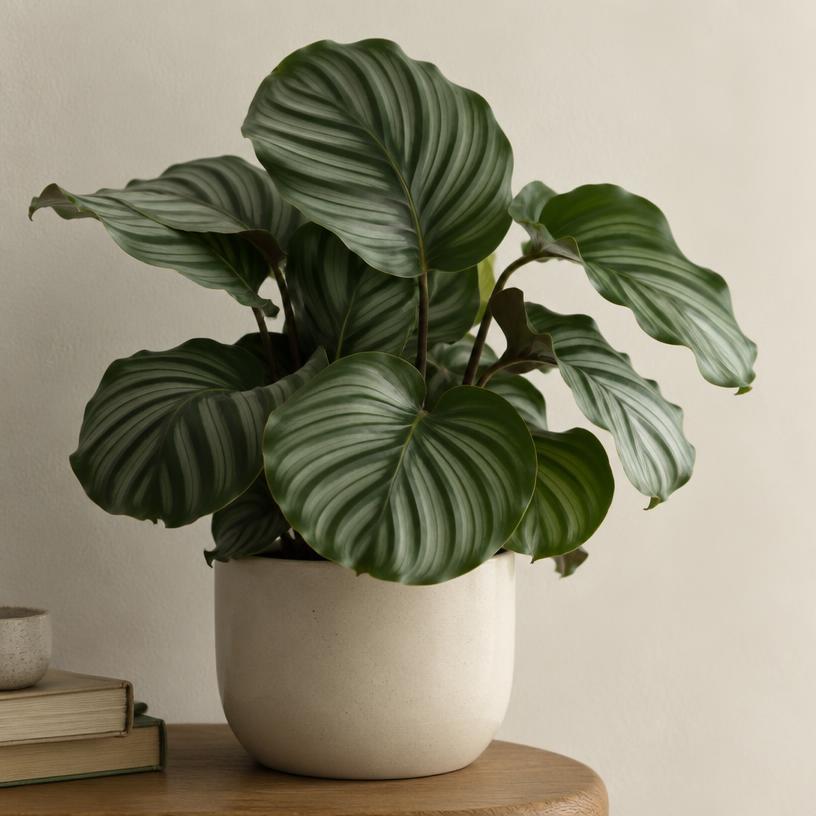
What ingredients do you need for calathea soil?
You need four ingredients: a base, a lot of coir for steady moisture, perlite for air and a little bark to stop the mix packing down. Calatheas want soil that never dries out fully and never stays soggy. This page is the hands-on recipe. For how it compares with other mixes, see the best soil for calatheas.
| Ingredient | Job in this mix | Share | Good swap |
|---|---|---|---|
| Potting mix | Base and nutrients | 40% | Peat-free indoor mix |
| Coco coir | Even, steady moisture | 30% | Peat moss |
| Perlite | Air for fine roots | 20% | Pumice |
| Orchid bark | Stops compaction | 10% | Coco husk chips |
Measure everything with one scoop. For exact cups per pot size, use the soil mix calculator.
Why do calatheas need coir over peat?
Coir holds moisture more evenly and rewets more easily than peat. Calatheas react fast to any dry spell with curled, crispy leaves. Peat holds a lot of water, but once it dries it shrinks and repels water, so the next watering runs down the sides. Coir soaks water back in, keeping the root ball evenly damp.
Coir also has a pH of roughly 5.5 to 6.8, which suits calatheas well. Rinse it once if it is not pre-washed, because some coir carries salts. Calatheas are sensitive to salts and minerals, which show as brown leaf edges. Peat can replace coir if you must, but water more carefully.
Why does calathea soil need perlite?
Perlite keeps air in a mix built to hold water. Calathea roots are fine and shallow. Without air pockets, a coir-rich mix stays saturated and those roots rot. At 20%, perlite balances the coir without making the mix dry too fast.
Medium perlite is ideal. Pumice works too and does not float. Compare them in perlite vs pumice.
Why add a little orchid bark to calathea soil?
A small share of bark stops the soft coir mix from packing down. Coir and fine potting mix settle over time, especially in a plant you water often. A few bark chips hold the structure open between repots.
Use small bark, about 1/4 inch (6 mm). Keep it to 10%. More bark makes the mix dry too fast for a calathea.
How do you mix calathea soil step by step?
Allow about 25 minutes, including hydrating the coir.
Step by step
How to make calathea soil
Time: about 25 minutes
You'll need
- Indoor potting mix, 4 parts
- Coco coir, 3 parts (hydrated)
- Perlite, 2 parts
- Small orchid bark, 1 part
- Bucket or tub
- One scoop to measure parts
- Filtered or rain water
- Hydrate and rinse the coir. Soak the coir brick in warm water, break it up, and rinse once. Squeeze until damp, not dripping. Use filtered or rain water if your tap water is hard.
- Moisten base and bark. Dampen the potting mix. Soak the bark for 15 minutes and drain.
- Measure in parts. Add 4 scoops of potting mix, 3 of coir, 2 of perlite and 1 of bark. For a 6 inch (15 cm) pot, 1 part is about 0.7 cup (170 ml). The soil mix calculator gives exact cups.
- Mix and squeeze test. Mix gently. Squeeze a handful. It should feel soft and springy, hold a loose shape and not drip.
- Store leftovers. Keep in a lidded tub or vented bag. Use within a few months, and air it out if it smells musty.
How much calathea soil do you need?
Use this table as a quick guide for a standard plastic pot filled to about an inch below the rim. Amounts come straight from our soil mix calculator, which also adjusts for dry or humid homes and terracotta or ceramic pots. Round up a little. Spare mix is useful for topping up after the soil settles.
| Pot diameter | Total mix | Each ingredient |
|---|---|---|
| 4 in (10 cm) | 2 cups (0.5 L) | 0.75 potting mix, 0.5 coco coir, 0.5 perlite, 0.25 orchid bark (cups) |
| 6 in (15 cm) | 7 cups (1.7 L) | 2.75 potting mix, 2 coco coir, 1.5 perlite, 0.75 orchid bark (cups) |
| 8 in (20 cm) | 16 1/2 cups (3.9 L) | 6.5 potting mix, 5 coco coir, 3.25 perlite, 1.75 orchid bark (cups) |
| 10 in (25 cm) | 32 cups (7.6 L) | 12.75 potting mix, 9.5 coco coir, 6.5 perlite, 3.25 orchid bark (cups) |
| 12 in (30 cm) | 55 1/2 cups (13.2 L) | 22.25 potting mix, 16.75 coco coir, 11 perlite, 5.5 orchid bark (cups) |
Wide, shallow pots need less than these numbers, and tall, narrow ones need more. If you are between sizes, mix for the larger pot and store what is left in a covered tub.
What should you not put in calathea soil?
Calatheas are fussy about both moisture and minerals. Avoid these:
| Ingredient | Problem | Use instead |
|---|---|---|
| Coarse sand or grit | Dries too fast, heavy | Perlite |
| Cactus mix | Too dry | Indoor mix plus coir |
| Water-retaining crystals | Soggy pockets | Coir |
| Extra slow-release fertilizer | Salt burn, brown edges | Light liquid feed |
| Unrinsed coir | Can carry salts | Washed coir |
Curled leaves and soft stems in wet soil can mean the mix is too wet. See calathea root rot.
Can you start from a store-bought mix?
Yes. Start with a fine indoor potting mix and add coir and perlite.
- From indoor potting mix: mix 5 parts mix, 3 parts coir and 2 parts perlite. Add bark if you have it.
- From a peat-free indoor mix: add 1 part perlite to every 4 parts. Many already contain coir.
- From aroid mix: mix half and half with indoor mix plus 1 part coir. Aroid mix alone dries too fast.
Read more about each material in soil ingredients explained. For why gritty cactus blends do not suit calatheas, see cactus soil vs potting soil.
How do you know your calathea mix is right?
Calatheas show you quickly. In a good mix, leaves stay flat and open by day and fold up at night, and the top inch (2.5 cm) dries in about 4 to 7 days.
| Sign | Meaning | Adjust |
|---|---|---|
| Leaves curl 3 days after watering | Too dry | Add coir |
| Soil wet after 10 days | Too wet | Add perlite |
| Crispy brown edges | Water or salts, not soil | Use filtered water |
| Soft stems at the base | Far too wet | Repot with more perlite |
Remember that many calathea problems are about water quality and humidity, not soil. Brown edges usually come from minerals in tap water or dry air. Fix those before you change your recipe.
When you divide a calathea, make a little extra mix. Small divisions do best in 4 inch (10 cm) pots of fresh soil, kept lightly moist and warm for the first few weeks.
Advice by situation
Beginners
Use the 40/30/20/10 recipe and water with filtered water when the top inch dries.
Dry homes
Raise coir to 4 parts and drop bark. Use a humidifier too.
Humid homes
Raise perlite to 3 parts and drop coir to 2.
Over-waterers
Use 4 mix, 2 coir, 3 perlite, 1 bark and a plastic pot with good holes.
Common mistakes to avoid
- Using cactus soil for drainage. Calatheas need a moist mix. Use coir-based soil.
- Leaving out perlite. Fine roots need air. Keep 20% perlite.
- Using unrinsed coir. Rinse once to remove salts.
- Adding lots of bark. Keep bark to 10%.
- Mixing with hard tap water. Use filtered or rain water.
Quick checklist
- Buy potting mix, coir, perlite and small bark
- Hydrate and rinse the coir
- Moisten the base and soak the bark
- Measure 4 parts mix, 3 coir, 2 perlite, 1 bark
- Mix gently
- Squeeze test: soft, springy, no drips
- Store leftovers covered
Frequently asked questions
Can I use cactus soil for a calathea?
No. Cactus soil dries too fast. Calatheas need a moist, coir-rich mix.
Is perlite or pumice better for a calathea?
Both work. Perlite is lighter and common. Pumice does not float or break down.
Can I use regular potting soil for a calathea?
Yes, as the base. Add coir and perlite so it stays evenly moist but airy.
Is coco coir better than peat for calatheas?
Usually yes. Coir rewets easily and holds moisture evenly, while dry peat can repel water.
Do calatheas like acidic soil?
Slightly. They do best around pH 6.0 to 6.5, which a coir and potting mix blend provides.
Can I use orchid bark only for a calathea?
No. Bark alone dries far too fast. Keep it at about 10% of the mix.