Calathea Root Rot: Signs, Fixes and the Soil That Stops It
By Sara Linwood, houseplant writerLast updated
If your calathea's leaves curl, yellow and droop while the soil is wet, and the stems feel soft at the base, it likely has root rot. Trim the brown, mushy roots, divide off healthy sections, and repot into an airy mix of 40% potting mix, 30% coco coir, 20% perlite and 10% orchid bark.
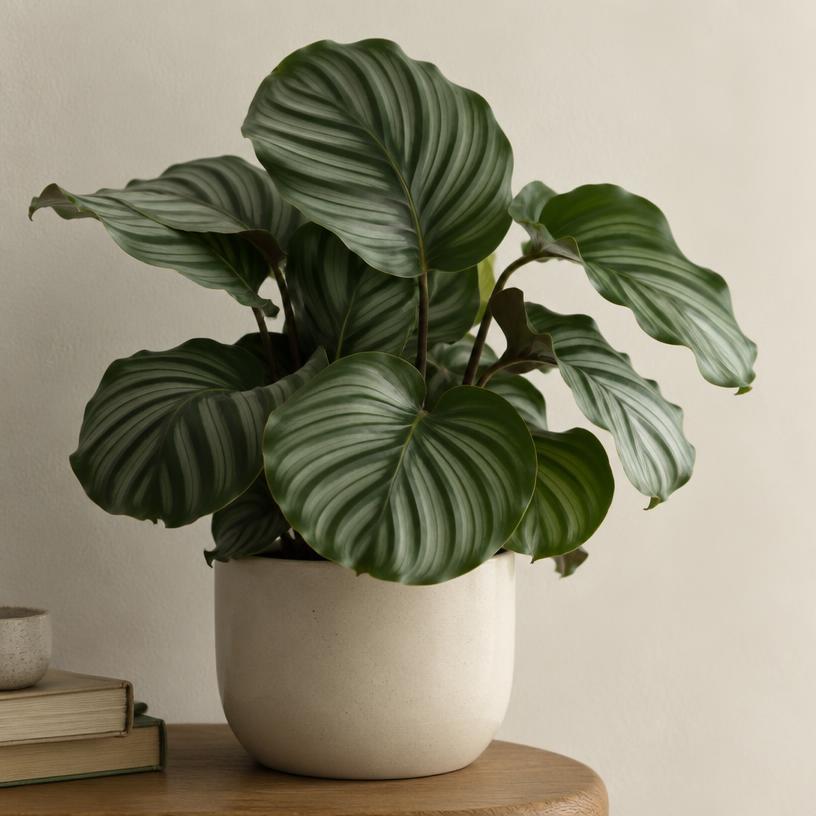
What does root rot look like on a calathea?
Calathea root rot shows as curling, drooping leaves and yellowing, while the soil is still damp. That is confusing, because curling leaves on a calathea usually mean thirst. The difference is the soil. Curling in dry soil means water it. Curling in wet soil means the roots are failing.
Stems turn soft and brown at the base and leaves fall over. Yellowing often starts on lower leaves and spreads. The plant stops its daily leaf movement, where leaves fold up at night, because damaged roots cannot keep the stems firm.
- Leaves curling and drooping in wet soil.
- Yellowing lower leaves, sometimes with brown patches.
- Soft, brown stems at the soil line.
- Leaves no longer fold up at night.
- Musty smell from the pot.
Why does a calathea get root rot?
Calatheas rot when their mix stays soggy rather than evenly moist. A good calathea mix should dry in the top inch within about 4 to 7 days. Because these plants punish dry soil with crispy leaves, owners often overcorrect and keep the mix wet all the time.
- Dense, peat-heavy mix with no perlite. The best soil for calatheas uses coir with perlite and a little bark.
- Watering on a schedule instead of when the top inch dries.
- Standing water in a saucer or cachepot.
- Too large a pot. Go up only one size.
- Cold rooms below 60°F (15°C), where roots barely take up water.
- Repotting stress. Calatheas sulk after root disturbance, and wet soil around damaged roots rots fast.
| Symptom | Soil | Likely cause |
|---|---|---|
| Curling, drooping | Dry | Thirst |
| Curling, drooping | Wet | Root rot |
| Crispy brown edges | Any | Dry air or tap water |
| Yellow lower leaves | Wet | Overwatering |
How do you check calathea roots?
Gently slide the plant out and rinse the root ball. Calathea roots are fairly fine and fibrous. Many varieties also grow small, round, white tubers on the roots. Those are healthy water stores, not a disease.
Rotten roots are brown to black, mushy and come apart easily. Check where the stems meet the roots. Soft, brown stem bases mean that section is lost, but healthy sections can be divided off.
| Feature | Healthy | Rotten |
|---|---|---|
| Color | White to light tan | Brown to black |
| Texture | Firm, fibrous | Mushy, slimy |
| Tubers | Firm, white | Soft, brown |
| Stem base | Firm, green | Soft, brown |
Work gently. Calathea roots are finer than most and tear easily, so rinse rather than pull soil away. Hold the root ball under a slow stream of lukewarm water and tease it apart with your fingers. Clean roots make it much easier to tell healthy white tissue from brown rot.
How do you save a calathea with root rot?
Trim the rot, divide out healthy sections, and repot into fresh, airy mix. Calatheas cannot be grown from leaf or stem cuttings, so division is the only way to rescue them.
Step by step
How to treat calathea root rot
Time: about 45 minutes
You'll need
- Clean, sharp scissors
- Rubbing alcohol
- Potting mix, 2 3/4 cup (652 ml) for a 6 inch pot
- Coco coir, 2 cups (474 ml)
- Perlite, 1 1/2 cup (356 ml)
- Orchid bark, 3/4 cup (178 ml)
- Pot with a drainage hole
- Filtered or rain water
- Unpot and rinse. Remove the plant and gently rinse old soil away with lukewarm water.
- Remove rot. Sterilize your scissors. Cut every brown, mushy root and remove stems that are soft at the base. Keep firm tubers.
- Divide if needed. If part of the clump is rotten, gently separate the healthy sections. Each needs at least a few leaves and firm roots.
- Repot in airy coir mix. Mix 40% potting mix, 30% coco coir, 20% perlite and 10% orchid bark. Use a clean pot that fits the roots with about 1 inch (2.5 cm) of space.
- Water lightly after 2 to 3 days. Water with filtered or rain water. Then water whenever the top inch (2.5 cm) dries.
- Keep humid and warm. Keep it at 65 to 80°F (18 to 27°C) with good humidity and bright, indirect light. Expect a week or two of sulking.
Use the soil mix calculator for exact amounts, and see how to repot a calathea for dividing clumps gently.
What other soil problems do calatheas get?
Calatheas are sensitive to what is in their water and soil, so mineral buildup and moisture problems are common. Most fixes are simple.
| Problem | Cause | Fix |
|---|---|---|
| White mold on soil | Constantly wet surface | Remove, let top inch dry |
| Fungus gnats | Damp top layer | Bottom-water, sticky traps |
| Brown leaf edges | Salts, fluoride, chlorine | Flush soil, use filtered water |
| Water runs straight through | Dry, hydrophobic peat | Soak pot from below |
| Sour smell | Waterlogged soil | Check roots now |
How do you stop root rot coming back?
Calatheas punish both extremes, so prevention is about steady, moderate moisture in a mix that breathes.
- Check the top inch every 3 to 4 days with your finger. Water only when it feels dry, then water until it drains and empty the saucer.
- Choose a pot just one size up, about 1 inch (2.5 cm) wider than the roots. Plastic or glazed ceramic keeps moisture even, which suits calatheas, as long as there is a hole.
- Refresh the mix every 1 to 2 years. Coir and bark break down, and an old, dense mix is the main reason a calathea that was fine for years suddenly rots.
- Keep the plant warm. Below about 60°F (15°C), roots slow down and wet soil lingers. Move it away from cold windows and drafts in winter.
If you water with hard tap water, the minerals do not cause rot, but the crispy edges they cause often lead people to water more. Filtered or rain water solves the edges, so you can water by the soil instead of by the leaves.
Calatheas also respond badly to salts in the soil, and a stressed root system rots more easily. Flush the pot with plenty of filtered or rain water every couple of months, letting it drain fully, so minerals do not build up around roots that are already working hard.
Advice by situation
Beginners
Check the top inch every few days and water when it is dry. Use filtered or rain water if your tap water is hard.
Dry homes
Soil dries in about 4 days. Raise humidity with a tray or humidifier instead of watering more.
Humid homes
Soil may take a week or more. Make sure the mix has enough perlite.
Over-waterers
Use a plastic pot with good holes and always empty the saucer. Moist is the goal, not wet.
Common mistakes to avoid
- Watering curled leaves without checking the soil. Curl in wet soil means rot. Check first.
- Trying to root stem cuttings. Calatheas only propagate by division.
- Letting the new mix dry out completely. Keep it lightly moist.
- Removing the small round tubers. Firm tubers are healthy. Keep them.
- Repotting into a much bigger pot. Go up one size at most.
Quick checklist
- Check whether leaves curl in wet or dry soil
- Unpot and rinse the roots
- Cut brown roots and soft stems
- Divide healthy sections
- Repot in fresh 40/30/20/10 mix
- Water lightly after 2 to 3 days
- Use filtered or rain water
Frequently asked questions
Can a calathea recover from root rot?
Yes, if healthy sections with firm roots remain. Divide them, repot in fresh mix, and expect new leaves in about a month.
Should I use hydrogen peroxide on calathea roots?
It is optional. Calathea roots are delicate, so if you use it, dilute 3% peroxide with at least 2 parts water. Trimming and fresh mix matter more.
Does root rot spread to other plants?
It can, through shared soil, trays and tools. Use fresh mix and clean everything.
Why are my calathea leaves curling?
In dry soil, it is thirst. In wet soil, it is usually root rot. Low humidity can also cause curling.
Can I propagate a calathea from a leaf?
No. Calatheas need a piece of root and stem, so division is the only method.
How often should I water a calathea after root rot?
Water when the top inch is dry, usually every 4 to 7 days.